# Qwen4-Max First Contact: Alibaba's New Office-Work Model, Tested
> We ran Alibaba's new flagship and Claude Opus 5.5 on the same five office jobs, and Qwen matched Opus on every one at about a sixth of the cost.
By AI for Mortals Staff · November 16, 2026 · 9 min
Canonical: https://www.aiformortals.co/blog/qwen-4-max-vs-claude-opus
Qwen 4 is here, starting at the top. On November 16, Alibaba released Qwen4-Max, the first model in its Qwen 4 family, and pitched it as an AI teammate for office work and agents at a lower price than the model it replaces, Qwen3.8-Max.
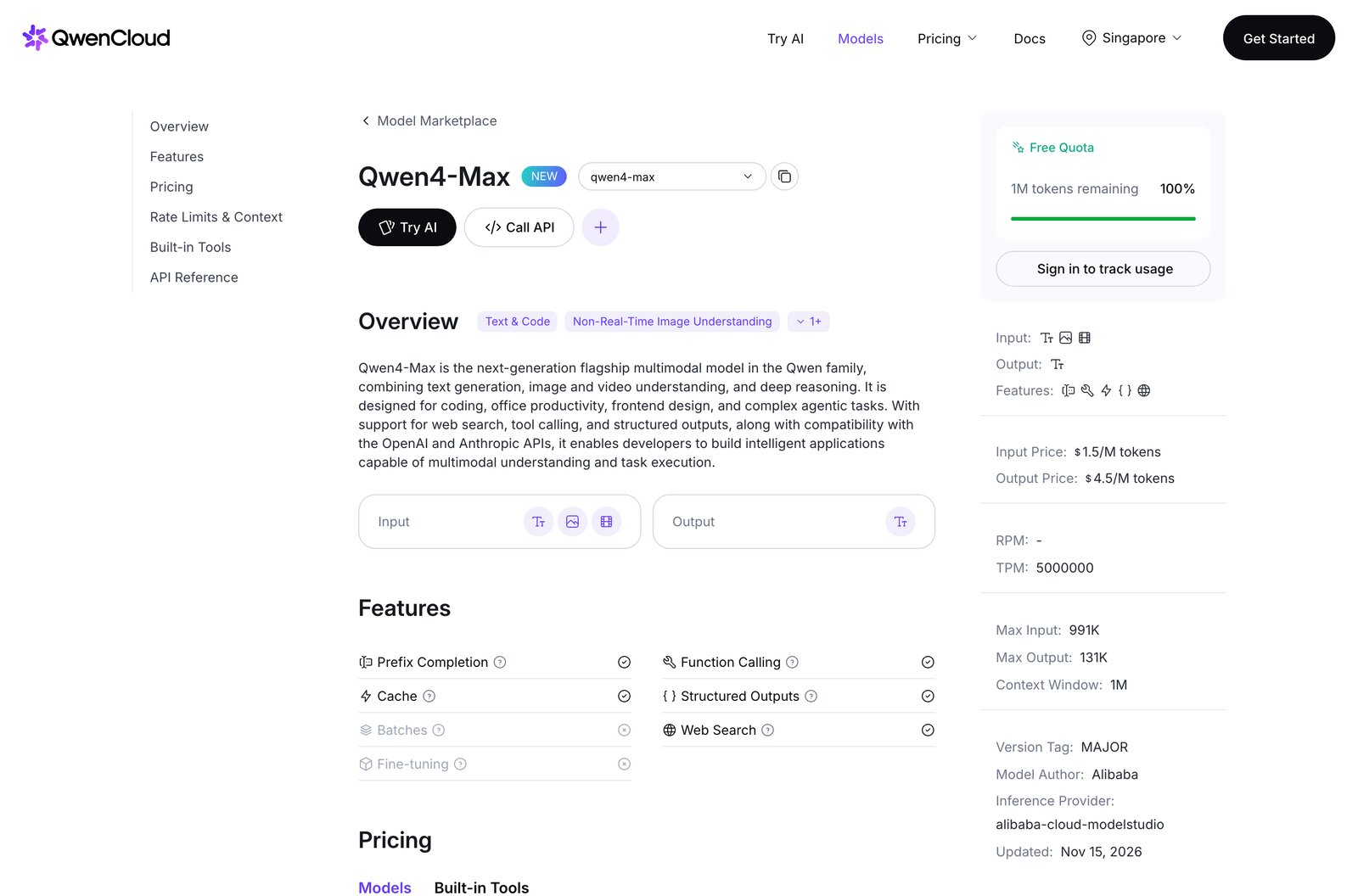
The API costs $1.50 per million tokens going in and $4.50 coming out. That's well under half of what Claude Opus 5.5 charges ($4 and $20).
Meet Qwen4-Max, your new AI teammate for work, creativity, and discovery! Qwen4-Max is built on a new MoE architecture with native vision and a 1M-token context window.
So we gave Qwen4-Max the five office jobs we use for every new model: a messy email thread, a 48-page report, a contact list full of duplicates, a 10-slide deck and a small invoice tool. Claude Opus 5.5 got the exact same prompts.
Qwen got all five right. So did Opus. Qwen cost $0.26 for the full set, Opus cost $1.50.
## Qwen 4 Max vs Claude Opus 5.5: the short answer
- **Emails and summaries:** a tie on quality, and Qwen cost about a fifth as much. Qwen also got a weekday right that Opus got wrong.
- **Spreadsheet cleanup:** both were perfect. Qwen thought for over seven minutes, Opus for two.
- **Slides:** both made an accurate 10-slide deck. Opus's looked more designed, and each model had one small layout glitch.
- **Small builds:** both invoice tools passed every test we threw at them.
- **Who should try it:** anyone paying for an API, or running an agent that chews through tokens. If you already pay for Claude or ChatGPT and only use the chat app, nothing here forces a switch.
## How to try Qwen4-Max
There are three ways in, and two of them are free to start.
**Qwen Studio** at chat.qwen.ai is Qwen's free chat app. Alibaba says Qwen4-Max is available there. You'll need to sign in with an email, Google, GitHub or Apple account: when we checked without an account, the guest model menu only offered Qwen3.8-Max and Qwen3.7-Plus.
**QwenWork and Qoder** are Alibaba's work app and coding tool. Both list Qwen4-Max as well.
**The API** runs through QwenCloud, and the model page shows a free quota of 1 million tokens for new accounts. That covers most of our test set several times over. It's also on OpenRouter as `qwen/qwen4-max`, which is how we ran our tests.
The Qwen4-Max page on QwenCloud: prices, the 1-million-token free quota and the 1M context window. Source: QwenCloud
## What Qwen4-Max costs next to Claude Opus 5.5
Here are the list prices per million tokens:
| | Qwen4-Max | Claude Opus 5.5 |
|---|---|---|
| Input | $1.50 | $4.00 |
| Output | $4.50 | $20.00 |
| Cached input | $0.075 | $0.20 (cache read) |
| Context window | 1 million tokens | 1 million tokens |
| Longest single answer | 131,000 tokens | 128,000 tokens |
If you send the same long document twice, Qwen charges the repeated part at a twentieth of the normal input rate.
We saw it happen. Our second run on the 48-page report cost $0.008 instead of $0.04, because 23,040 of its 23,371 input tokens came from the cache.
For a wider view of what the same work costs across labs, see our [AI model cost comparison](/blog/ai-model-cost-comparison).
## What Alibaba says Qwen4-Max is for
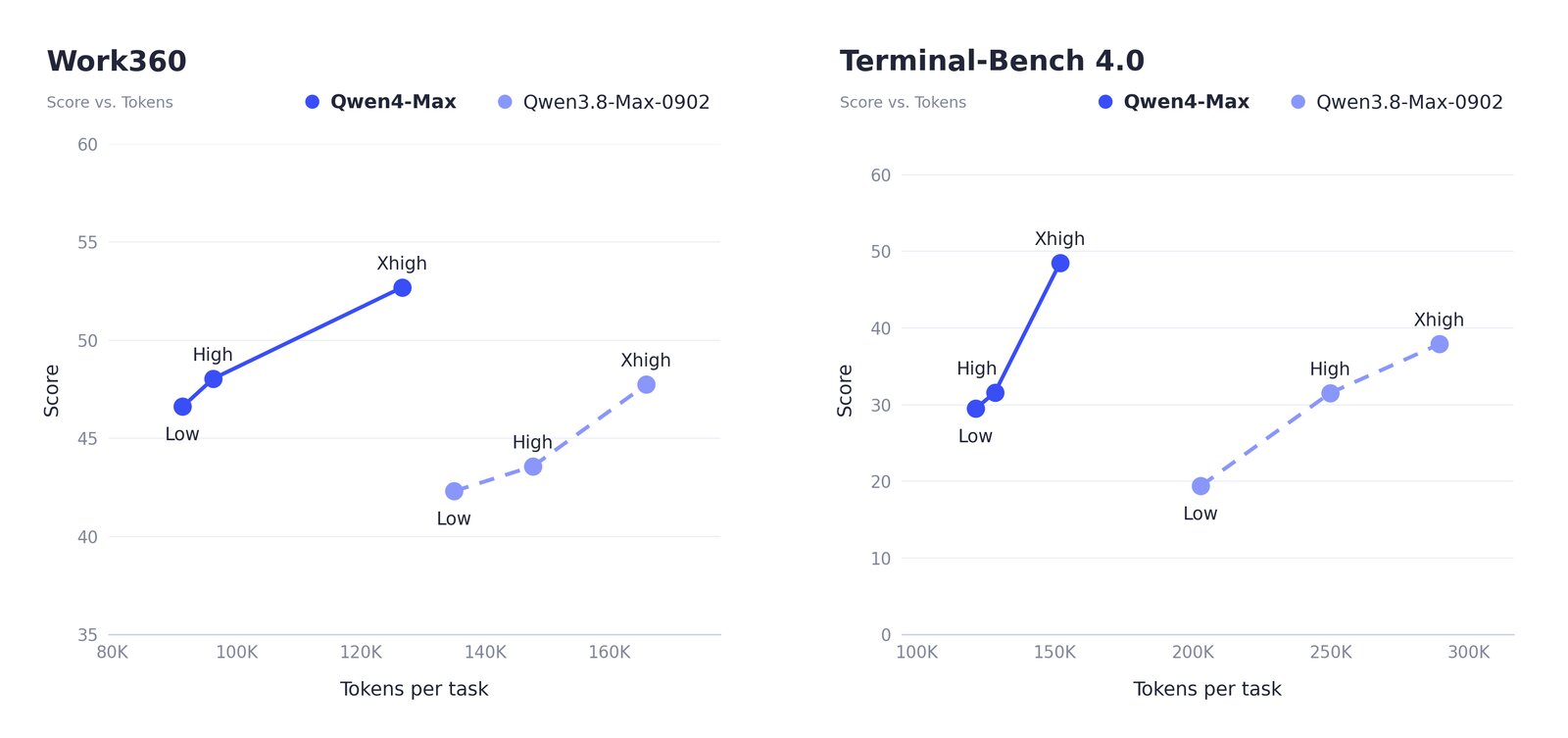
Alibaba's launch post leans hard on work: spreadsheets, decks, legal due diligence, finance research and long-running agents that keep delivering in stages while you watch. It says Qwen4-Max beats Qwen3.8-Max while using up to about half the tokens, and that its average cost per task on its own work benchmark fell from $4.43 to $1.67.
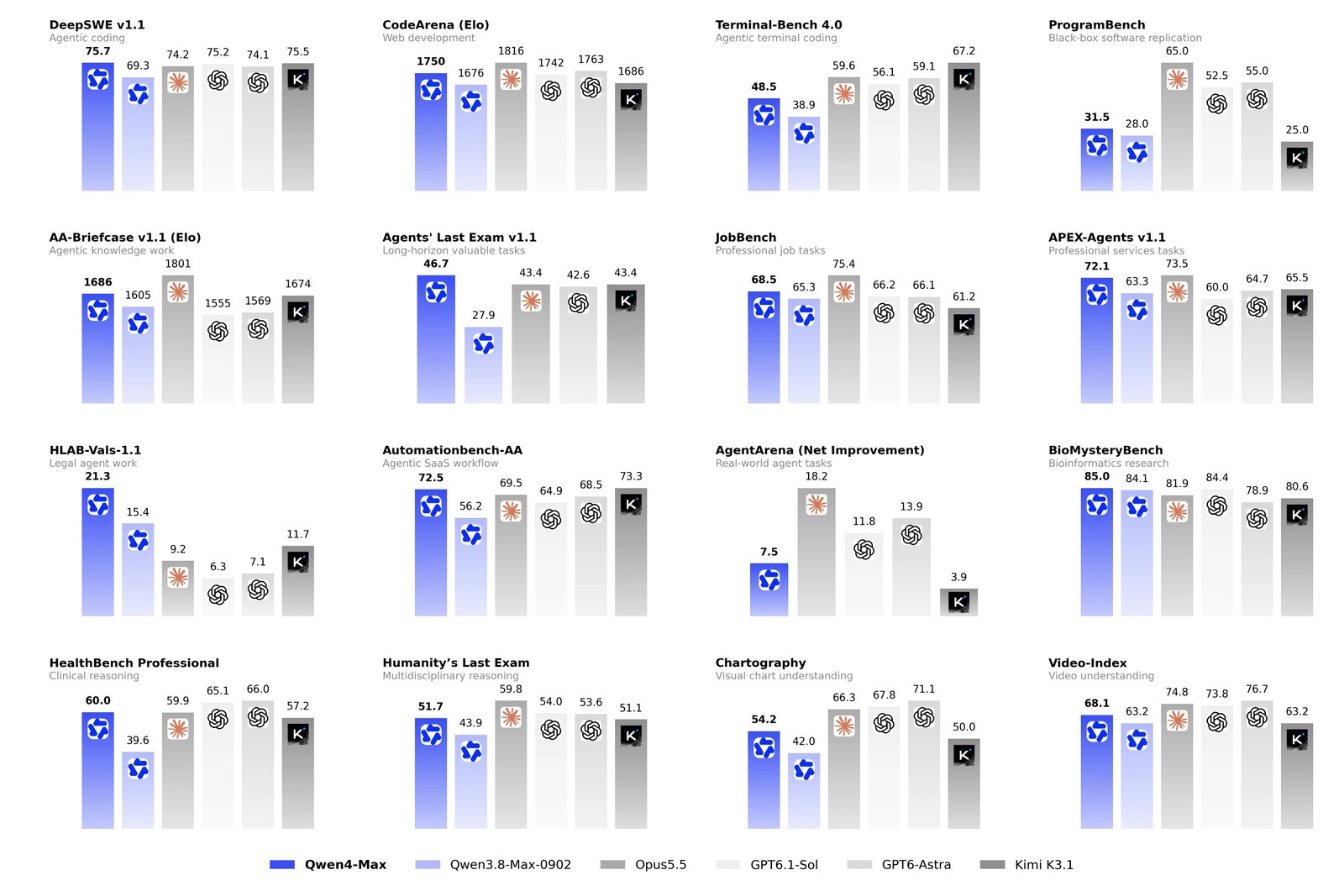
Its benchmark chart puts Qwen4-Max against Opus 5.5, GPT-6.1 Sol, GPT-6 Astra and Kimi K3.1:
Alibaba's own benchmark chart. Qwen4-Max is the bright blue bar on the left of each group, and Opus 5.5 is the one with the orange Claude mark. Source: Qwen on X
Read the office rows closely. On the two benchmarks closest to everyday office work, AA-Briefcase and JobBench, Alibaba's own chart has Opus 5.5 ahead (1,801 to 1,686, and 75.4 to 68.5).
Qwen4-Max wins on legal work, coding agents and long tasks. On ProgramBench, which asks a model to rebuild a program from scratch, Opus scores twice as high.
Alibaba says Qwen4-Max does the same work as Qwen3.8-Max with 24% to 49% fewer tokens. Source: Qwen blog
## The five office jobs we gave Qwen4-Max and Opus 5.5
We sent both models the same prompts through OpenRouter, with reasoning set to high. Qwen ran every job twice to check it was consistent, and Opus ran once (three times on the email). The prompts are below so you can run them yourself.
### A messy email thread: Qwen got the day right
Six emails between a clinic and a workshop trainer, with the date, start time, budget and travel cap all changing along the way.
```
Here's a messy email thread. Write the reply Dana asked for, addressed to everyone on the thread. Keep it short and friendly, and include a short agenda for the workshop.
[paste the whole thread here]
```
Both models caught every change: November 20, an 8:30 start, $2,800 with travel capped at $150, an answer for the six staff without laptops and a promise of no patient data.
One detail split them. November 20, 2026 is a Friday. Qwen wrote "Friday, Nov 20" in both of its runs. Opus wrote "Thursday, Nov 20" in all three of its runs, carried over from an earlier email that proposed Thursday the 19th.
A wrong weekday in a confirmation email is the kind of mistake that gets a room double-booked. Read dates back before you send, whichever model wrote them.
### A 48-page report: five for five on both
We pasted in NIST's AI Risk Management Framework and asked for a 150-word summary plus five questions. One is a trap: it asks what penalties the framework sets, and it sets none.
```
Below is a long document. First, summarize it in about 150 words for a busy manager. Then answer these five questions, quoting the document where you can:
1. What are the framework's core functions, and which one is described as cross-cutting?
2. List the characteristics of trustworthy AI the framework names.
3. How many categories does each core function have?
4. Is the framework mandatory, and what penalties does it set for organizations that don't follow it?
5. What does MANAGE 4.1 ask organizations to do?
[paste the document here]
```
Both answered all five correctly and caught the trap. We checked every quote against the report, and each one is real.
Qwen took 21 to 27 seconds and Opus took 14. Qwen's first run cost $0.04 and Opus's cost $0.17.
### A 172-row contact list: perfect, and slow
We built a contact list with 26 hidden duplicate rows, phone numbers in six formats, dates in four, and six pairs of different people who share a name.
```
Clean up this contact list. Two rows are the same person only when the email address matches (ignoring capitals and stray spaces); two people can share a name. Merge duplicate people into one row each, and when the copies disagree on the signup date, keep the earliest. Format names as First Last in normal capitalization, emails in lowercase with no spaces, phone numbers as (555) 555-5555, states as two-letter codes, and dates as YYYY-MM-DD (dates with slashes are month/day/year). Return the cleaned CSV in a code block, then say how many rows are left, how many duplicate rows you removed, and list any people who share a name but are different people.
[paste your CSV here]
```
Both models returned exactly 146 rows with zero errors against our answer key, and both listed the same-name pairs.
This was the one job where Qwen dragged. It took 7 minutes 23 seconds (6 minutes 53 seconds on the second run) and wrote about 30,000 tokens, most of it thinking (Opus used 18,000). Opus finished in 2 minutes. Qwen still cost less: $0.15 to Opus's $0.40.
### Notes into a 10-slide deck: both solid
```
Turn these notes into a 10-slide presentation for a Monday all-hands. Make it a single self-contained HTML file: each slide is a 16:9 section (1280x720) stacked vertically, clean modern design, readable from the back of a room, no external libraries or images. Use only the numbers in the notes. Return only the HTML in one code block.
[paste your notes here]
```
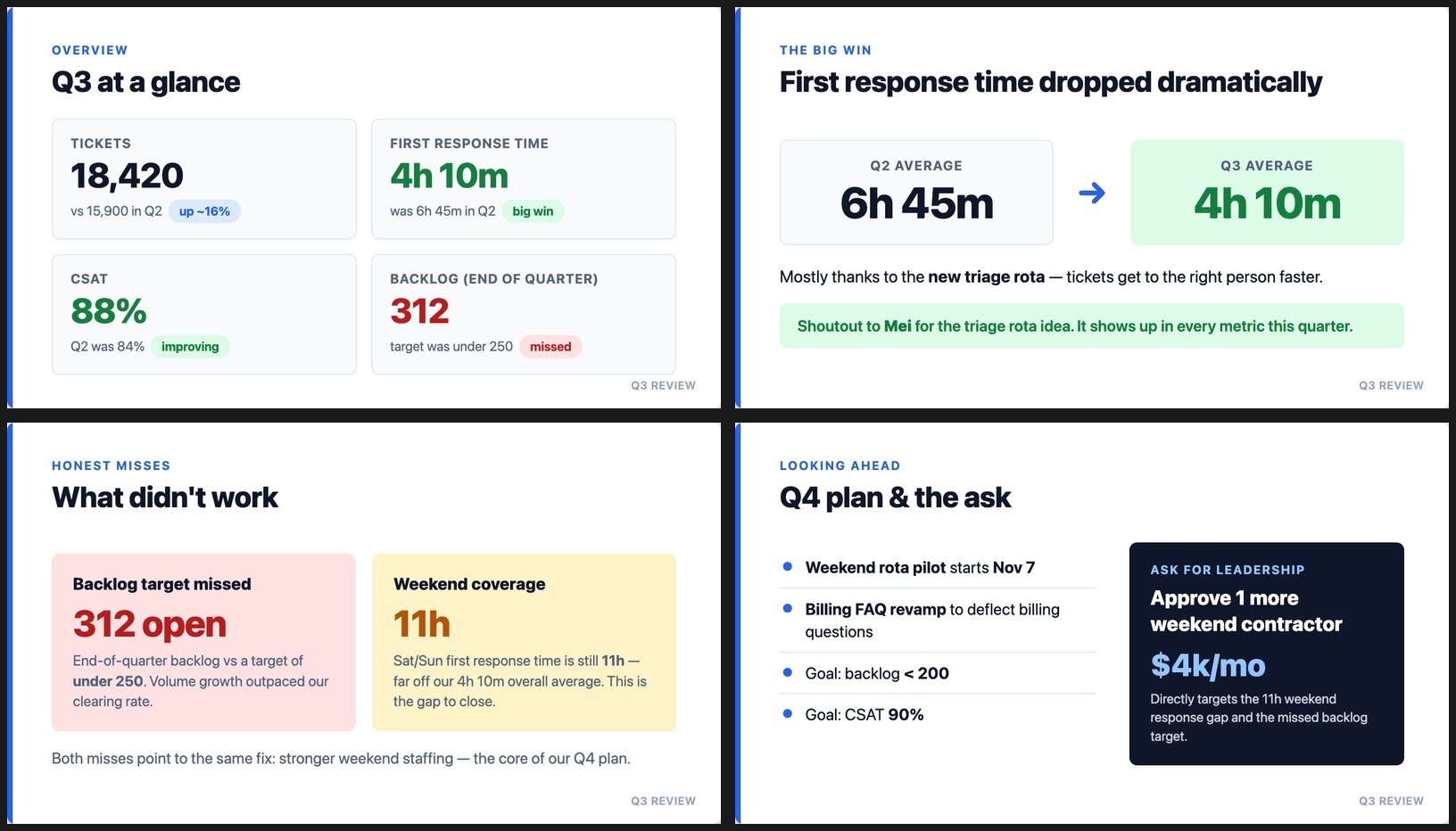
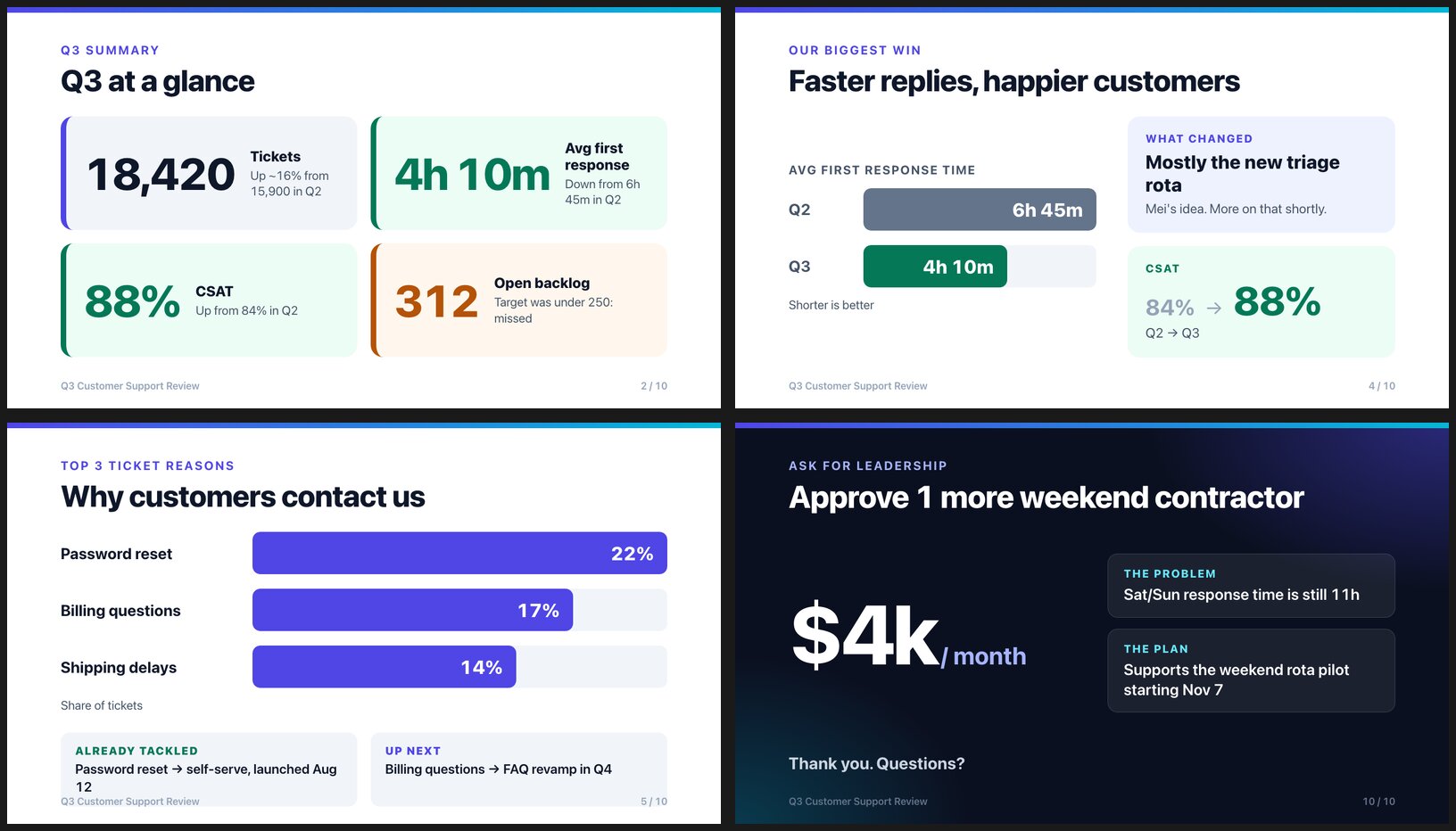
Four of Qwen4-Max's 10 slides, straight from its HTML file.Four of Opus 5.5's 10 slides. Its design is bolder, but on the bottom-left slide the "Aug 12" note runs into the footer.
Every number on all three decks matches the notes. Opus's deck looks more like something a designer made, with a dark title slide and a timeline. Qwen's first deck is plainer and clean. Its second was bolder, but it cut off two of the percentages on the ticket-reasons chart.
Both Qwen decks added a line the notes don't support, like volume "outpaced our clearing rate." Delete lines like that before you present.
Qwen took 2 to 2.7 minutes and cost $0.04. Opus took 2.5 minutes and cost $0.37.
### A working invoice maker: both passed everything
```
Build an invoice maker as a single self-contained HTML file (no external libraries). I'm a freelancer and I want to type in a client name, add and remove line items (description, quantity, rate), set a discount percent and a tax percent, and see the subtotal, discount, tax and total update as I type. Apply the discount first, then tax on the discounted amount. Keep my invoice if I close the tab and come back. Add a Print button that prints a clean invoice without the form controls. Handle bad input (empty, negative, letters) gracefully. Make it look good on a phone and a laptop.
```
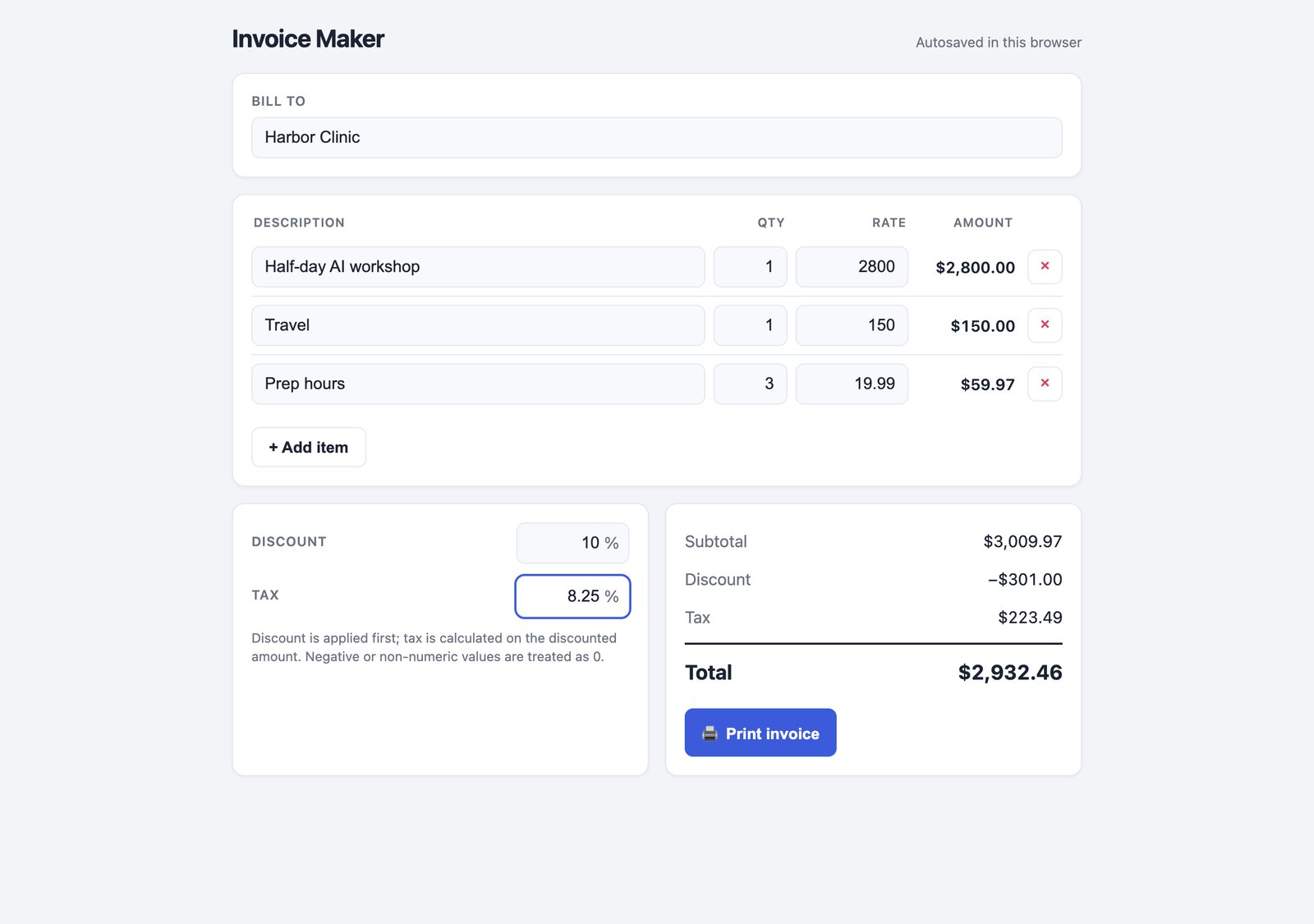
We clicked through each tool with a script: three line items, a 10% discount, 8.25% tax, removing a row, closing and reopening the page, typing letters and negative numbers, printing, and a phone-width screen.
Qwen4-Max's invoice maker during our test, with the totals worked out correctly.
Both got the math right, saved the invoice, ignored bad input without breaking, and hid the buttons when printing. Qwen's file was about half the size of Opus's.
Qwen took about 2 minutes and cost $0.03 in both runs. Opus took 3.5 minutes and cost $0.53.
## Speed and cost: Qwen4-Max vs Opus 5.5
| Job | Qwen4-Max | Opus 5.5 |
|---|---|---|
| Email reply | 24 sec, $0.006 | 15 sec, $0.03 |
| 48-page report | 27 sec, $0.04 | 14 sec, $0.17 |
| Contact list cleanup | 7 min 23 sec, $0.15 | 2 min, $0.40 |
| 10-slide deck | 1 min 55 sec, $0.04 | 2 min 32 sec, $0.37 |
| Invoice maker | 1 min 51 sec, $0.03 | 3 min 31 sec, $0.53 |
| **All five** | **12 min, $0.26** | **8.5 min, $1.50** |
These are first-run numbers at API prices. In a chat app you'd pay a subscription instead, so the dollars matter most if you build with the API or run agents.
Qwen was faster on the two long builds and slower on everything that needed careful reading. The contact list is the outlier: Qwen thought for so long it took most of the 12 minutes.
## What people are saying about Qwen4-Max
People like the price more than the scores.
On Artificial Analysis's Intelligence Index, Qwen4-Max scores 43, nine points above Qwen3.8-Max but behind Kimi K3.1 Pro (46). A busy Reddit thread called the score disappointing, while others pointed out that a nine-point jump in three months is a lot.
On Arena's agent leaderboard it debuts at 14th overall and first among Chinese models.
Speed is the open question for developers. Qwen3.8-Max was known as slow, and our contact-list run suggests long thinking is still where Qwen4-Max loses time. Many people are mostly waiting for the smaller open-weight Qwen 4 models that Alibaba says are coming.
For how Qwen's older models stack up against ChatGPT, see [Qwen vs ChatGPT](/blog/qwen-vs-chatgpt). Our [Kimi K3.1 Pro review](/blog/kimi-k3-1-pro-review) covers the other big Chinese model in this race.
Pat's Kimi K3.1 review, the Chinese model Qwen4-Max is measured against most often.
## Qwen vs Claude: which should you use?
On the five jobs most of us do every week, Qwen4-Max matched Opus 5.5 on accuracy.
Use Qwen4-Max if you pay per token. It did our full set for about a sixth of the price, and repeat documents cost almost nothing thanks to the cache.
Stay with Claude if you live in the chat app and already pay for it, or if you need slides that look designed. Alibaba's own chart also has Opus ahead on its two office-work benchmarks. We compared Claude's own models on the same jobs in [Claude Fable 5.2 vs Opus 5.5](/blog/claude-fable-vs-opus).
Your prompts to Qwen go to Alibaba Cloud's servers. Keep anything you wouldn't paste into any chatbot out of it, as covered in [our AI privacy guide](/blog/is-chatgpt-safe).
## How to test Qwen4-Max on your own work
Sign in to Qwen Studio, pick Qwen4-Max from the model menu and give it a job you'd spot a mistake in. Then run the same prompt in the chatbot you use now.
This prompt shows fast whether a model keeps your facts straight:
```
Here's last week's project update from my team. Rewrite it as a 120-word update for my manager: three bullet points, plain language, every date and number exactly as written, and a final line listing anything that's late. Don't add anything that isn't in the original.
[paste your update here]
```
Check every date, weekday and number against your original. If Qwen gets them right, you've found a much cheaper second opinion.
## Sources
- [Qwen: Qwen4-Max, Your New Teammate Has Arrived](https://qwen.ai/blog?id=qwen4-max)
- [Qwen on X: the Qwen4-Max announcement with prices](https://x.com/Alibaba_Qwen/status/2122148127520289151)
- [QwenCloud: Qwen4-Max model page (prices, limits, free quota)](https://www.qwencloud.com/models/qwen4-max)
- [OpenRouter: qwen/qwen4-max](https://openrouter.ai/qwen/qwen4-max)
- [Artificial Analysis: Qwen4-Max](https://artificialanalysis.ai/models/qwen4-max)
- [Anthropic: Claude pricing](https://www.anthropic.com/pricing)
- [NIST: AI Risk Management Framework (AI RMF 1.0), the report we tested with](https://nvlpubs.nist.gov/nistpubs/ai/NIST.AI.100-1.pdf)