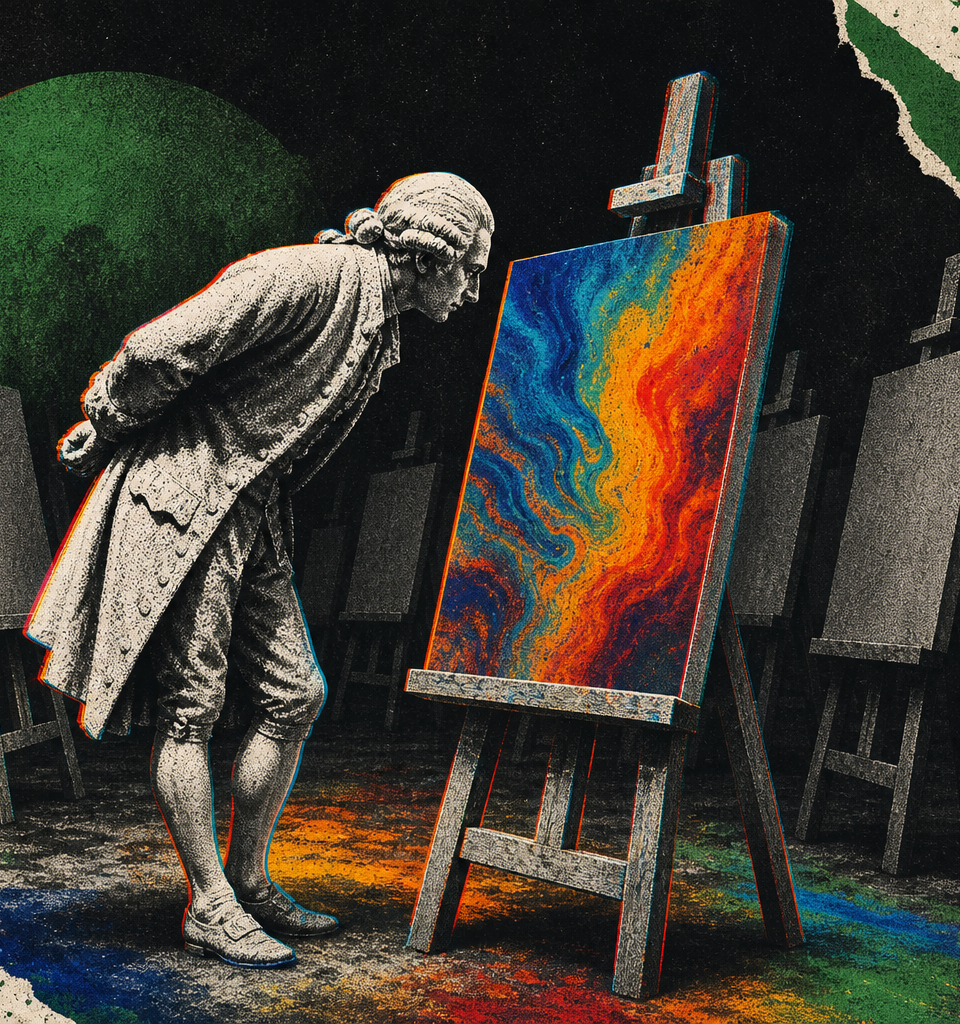
You have probably felt it already. You ask an AI to draft a landing page, design a logo, or write a product blurb, and what comes back is competent and completely forgettable. It works. It also looks like everything else. There is now a word for that flat, generic output: slop.
A new startup thinks slop is a solvable problem, and it just raised real money to prove it. Taste Labs, founded by Thais Castello Branco, closed an $18.5 million seed round co-led by the venture firms CRV and Amplify Partners. The company's whole pitch fits in two sentences from its investors: generative AI has made creation cheap, but it has not made judgment cheap. And when judgment runs out, slop fills the gap.
What Taste Labs is actually building
The bet here is that the missing ingredient in AI work is taste, which Taste Labs defines as the human judgment that separates good work from generic. A model can generate a thousand options in a second. It still has no reliable sense of which one is any good. That sense is what the company wants to bottle.
To do it, Taste Labs is building what it calls a data layer. The idea is to capture human preference, the actual choices that experts make when they decide one design beats another, and turn those choices into training data. The frontier AI labs that build the big models can then buy that data and use it for post-training, the polishing stage that happens after a model learns the basics and starts learning what people want.
The team is small, around 18 people, and hiring. It is starting with design tasks, where the difference between good and generic is easy to see and hard to fake.
Why it taps experts instead of the crowd
Most AI training data comes from crowdsourcing: pay a large pool of people a few cents to label examples, and average out the noise. Taste Labs is doing the opposite. It is building what it describes as a trust-propagation network of tastemakers, a vetted group of design and engineering experts whose judgment defines what good looks like.
The logic is that taste does not average well. If you ask a thousand random people whether a layout is good, you get a mushy consensus that points straight back at the generic middle. If you ask a handful of people who are genuinely good at the craft, you get something sharper. Taste Labs is also building tools so that ordinary apps can use this preference data to produce more on-brand, more creative output, rather than the default beige.
The honest tension: whose taste?
Here is the question even the company's own backers are asking out loud. Nazneen Rajani, an investor familiar with the space, published a piece with the blunt title "Whose Taste?" The worry is real. If you bake one small group's aesthetic into the models that millions of people use, you risk swapping one kind of sameness for another. Today's slop is the average of everything on the internet. Tomorrow's could be the average of whatever 18 curators happen to like.
Good taste is also famously personal and context-dependent. What reads as elegant for a luxury brand looks cold and empty for a children's charity. A network of vetted experts narrows the funnel, and a narrow funnel can produce a new monoculture just as easily as a wide one. The company is betting it can capture range and disagreement rather than flatten it. That is the part nobody has proven yet.
If you work in anything taste-heavy, design, writing, branding, content, this is quietly reassuring news. The whole premise is that judgment, knowing what is actually good, is now the scarce and valuable skill. The machine can produce the options. Your eye is what picks the right one and throws out the other nine. By that logic your taste gets more valuable as the tools get cheaper, not less.
The honest catch is that Taste Labs is trying to turn that exact skill into a product. If preference really can be captured as training data, the models will get better at the part you currently get paid for. That is a long way off, and "whose taste" is the open question that decides whether any of it works. For now, the useful read is simpler: the thing AI keeps failing at is the thing you are good at. So lean into being the person who knows why one version is better, because that is the judgment everyone, including an $18.5 million startup, is now scrambling to find.