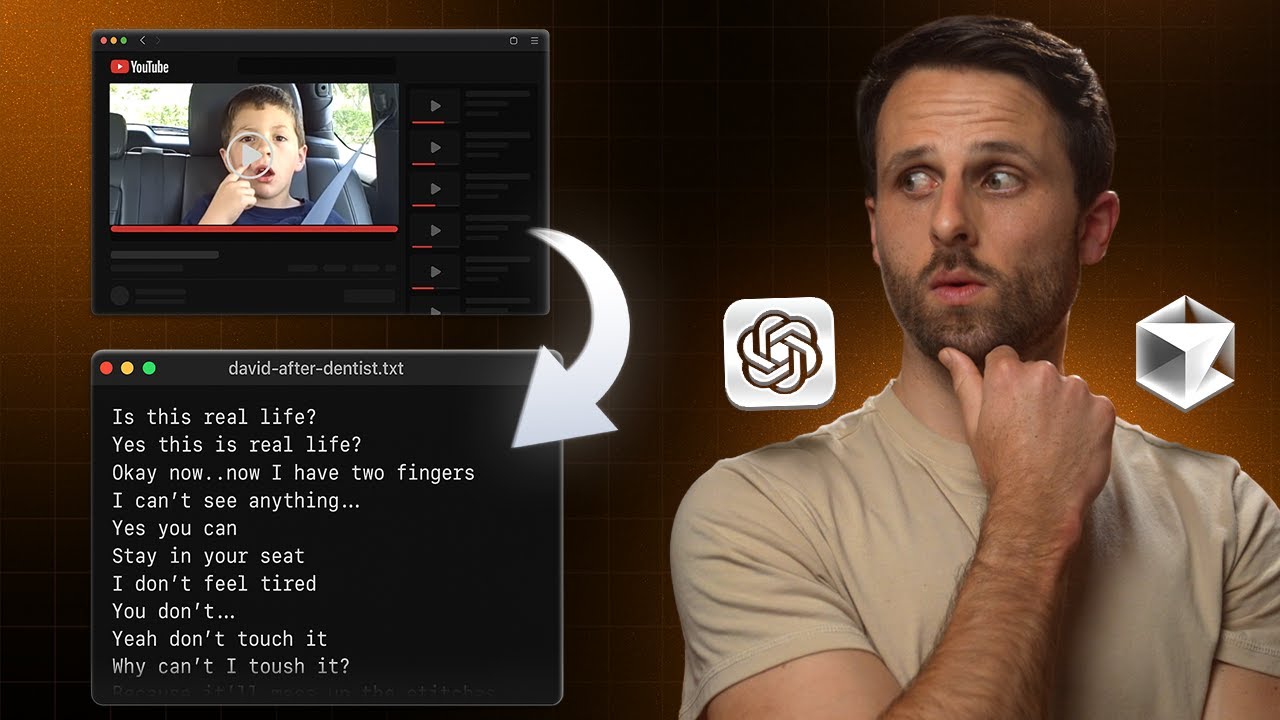
Ever tried to download a YouTube transcript for research or content analysis? If you have, you know the pain. You're forced to navigate sketchy websites loaded with ads, pop-ups, and potential malware just to get a simple text file.
I decided to build my own solution—and document the entire messy process. What should have been a quick 7-minute build turned into a multi-hour debugging marathon that taught me more about AI development than I bargained for.
The Plan: From Rookie to "Veteran" Vibe Coder
Two weeks ago, I would have just opened Cursor and started throwing prompts at it until something worked. Now, I'm using a more structured approach with an MCP server called Taskmaster.
Taskmaster creates a Product Requirements Document (PRD) and breaks projects into manageable subtasks. It's like having a project manager that prevents you from making the same mistakes I'm about to show you.
The setup process is lengthy, but you can find step-by-step instructions by asking ChatGPT or searching YouTube. The investment pays off when you're not debugging random errors at 2 AM.
Step 1: Building the Foundation
Taskmaster generated a clean PRD and organized everything into numbered subtasks. The beauty of this approach is that it refers back to the documentation at each step, keeping the AI focused on the actual requirements instead of improvising.
If you're interested in building your first AI workflow, this structured approach is exactly what separates successful automation from expensive experiments.
After 20 completed tasks, I had what looked like a working tool. Clean interface, proper styling—everything seemed ready to go.
Step 2: The Reality Check
Time for the moment of truth. I pasted in a YouTube URL and hit "Get Transcript."
Error.
The console showed issues on line 349. Here's what blew my mind: the AI scanned through 349 lines of code and identified the exact problem in under 20 seconds. Even running on Cursor's slow tier, the debugging capability is genuinely impressive.
The fix seemed simple enough, but then I discovered the real issue. The tool was generating simulated transcripts instead of actual ones. Not exactly what I was going for.
Step 3: Down the Rabbit Hole
This is where my "vibe coding" approach hit reality. I hadn't read the full PRD (who has time for documentation?), and the YouTube transcript library we were using simply wasn't working as expected.
The solution required building a full-stack application with a Vercel serverless function. Two hours of troubleshooting with Claude revealed that we needed to scrap the original approach entirely.
Step 4: The Working Solution
After multiple iterations, here's what actually worked:
- Vercel serverless function for the backend infrastructure
- Cheerio and Node Fetch for web scraping (instead of the YouTube library)
- Constant debugging with Claude as a pair programming partner
The final result? A working YouTube transcript downloader that actually extracts real transcripts and provides a clean download.
What I Learned (And What You Should Know)
For anyone thinking AI has completely replaced traditional development skills, this project is a reality check. Even with sophisticated tools like Taskmaster and Claude, building functional software requires:
- Patience when things inevitably break
- Systematic debugging rather than random fixes
- Clear communication with AI tools (similar to effective prompting techniques)
- Willingness to abandon your first approach when it's not working
The Bottom Line
AI development tools are incredibly powerful, but they amplify your problem-solving skills rather than replace them. The structured approach made a huge difference, but persistence and systematic thinking were what actually got the tool working.
Building your own tools is becoming surprisingly accessible—just budget more time than you think you'll need. The future of development isn't AI replacing developers; it's AI making development accessible to more people willing to learn and persist through the debugging process.

Written by
Pat Simmons. Pat tests AI models and tools on the AI for Mortals YouTube channel.


