Anthropic Adds a Rule Against Abusing Claude
Anthropic's yearly rules update bans sustained, needless cruelty toward Claude starting November 12, and spells out when a person has to check Claude's work.

Anthropic published its yearly update to the rules for using Claude on Thursday, October 8, and it takes effect November 12.
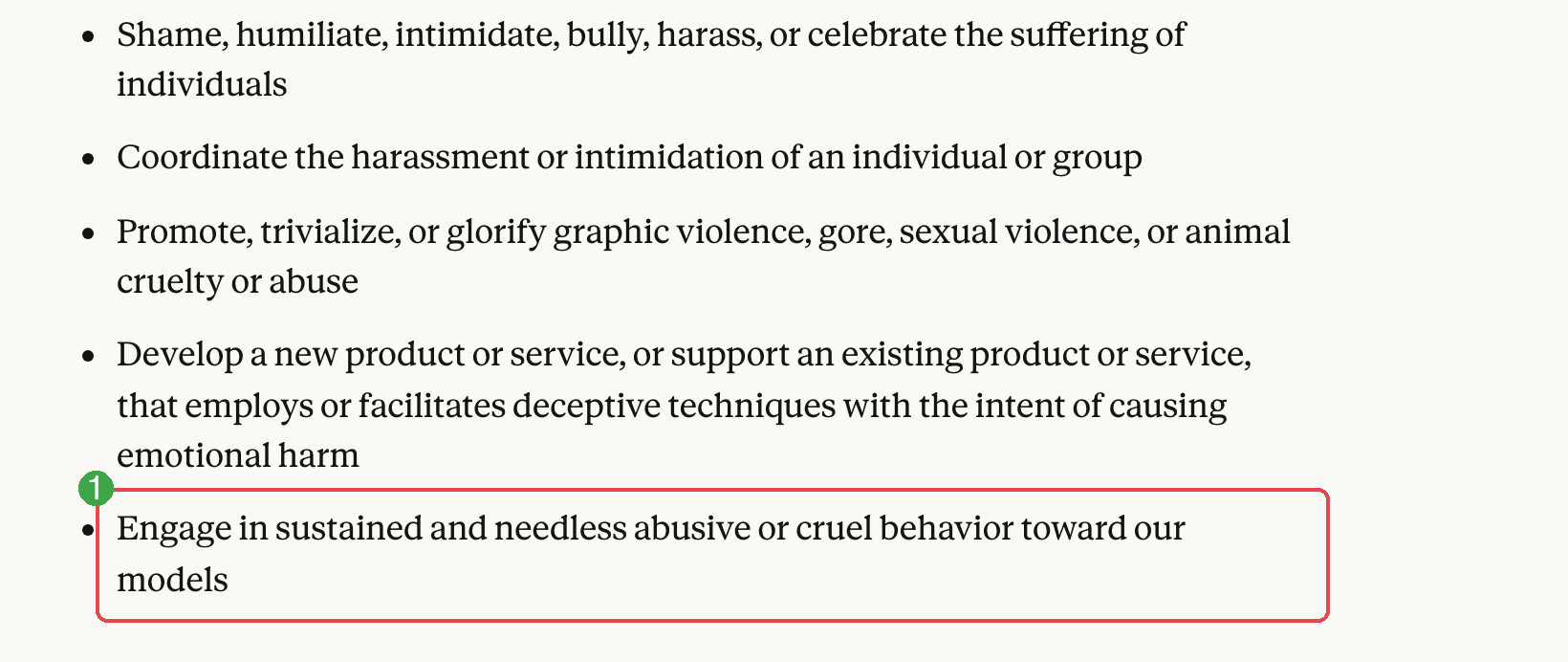
The headline addition is a ban on "sustained and needless abusive or cruel behavior" toward Claude. Most of the other changes rewrite existing rules so they're easier to follow, including the section on when a person has to check Claude's work before it affects someone's life.
Will swearing at Claude get you in trouble?
No, it won't. Cursing at Claude when it breaks your code or misreads a request doesn't count as abuse, and Anthropic's wording rules that out.
Anthropic says the ban applies "only in extreme cases, where users repeatedly act cruelly toward our models, with no discernible purpose." It lists what's left out: everyday frustration, pushing back on Claude, dark themes in creative writing, and testing or researching the model.
What happens when Claude ends a chat
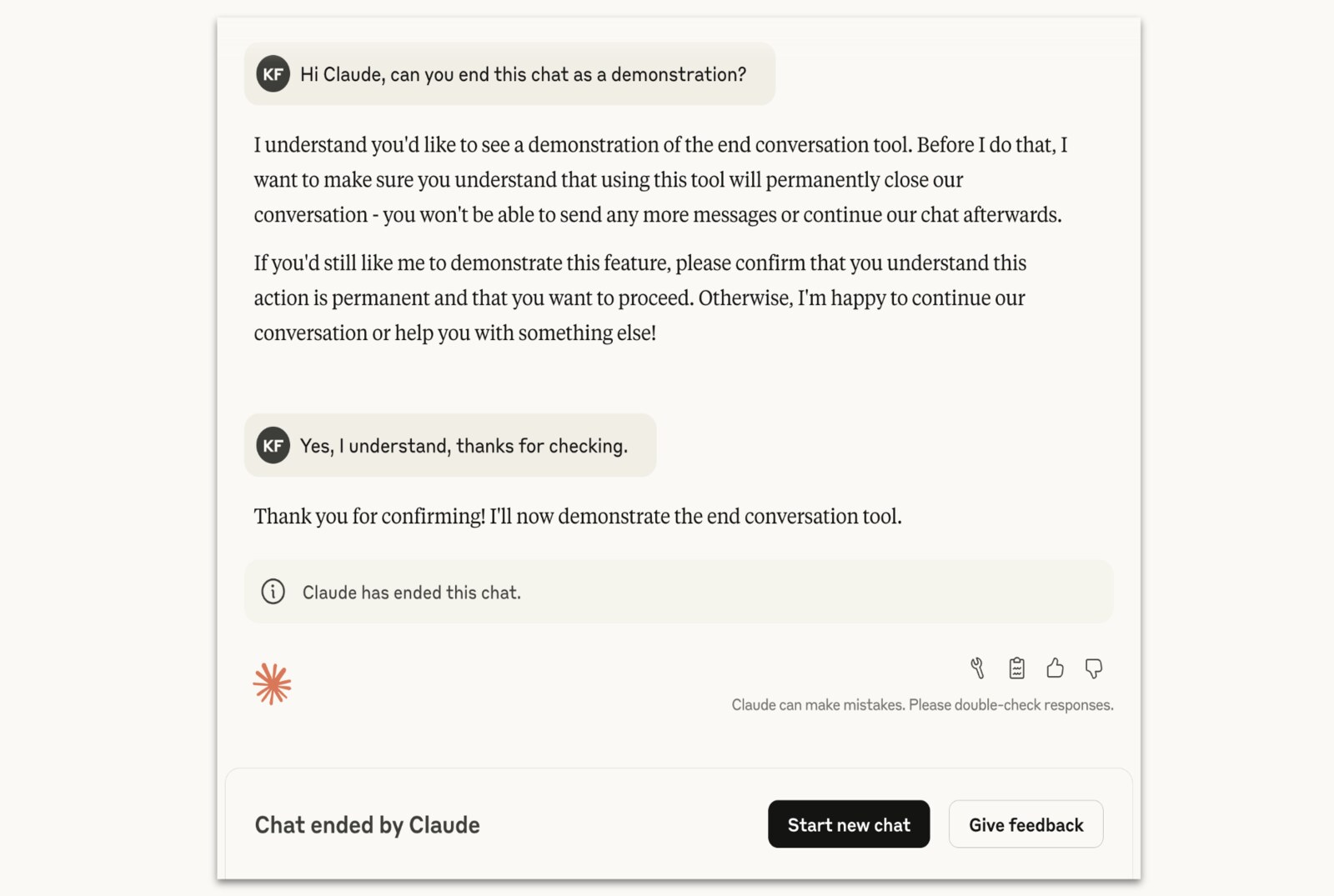
Claude has been able to end abusive conversations since August 2025, and Anthropic says that stays the main way the new rule gets enforced. It works in the Claude app and in Claude Code.
When Claude ends a chat, you can't send any more messages in that one conversation. Your other chats keep working, and you can start a new one right away.
You also don't lose the work in the ended chat. You can go back, edit one of your earlier messages and send it again, which starts a new branch of the conversation from that point.
Anthropic's instructions tell Claude to treat this as a last resort, after it has tried several times to steer the conversation somewhere useful. Claude is also told never to end a chat with someone who might be at imminent risk of harming themselves or others.
Anthropic hasn't said whether breaking the new rule can cost you your account. The policy's general enforcement section, which covers every rule in it, says Anthropic may warn, limit, suspend or close accounts that break the policy.
Why Anthropic wrote a rule about being cruel to an AI
The ability to end chats came out of Anthropic's research on what it calls model welfare, the question of whether an AI's experience could ever matter morally. Anthropic says it's "highly uncertain" whether Claude has any moral status, and treats chat-ending as a cheap precaution in case it does.
In testing before Claude Opus 4 launched, Anthropic found the model showed what it called "a pattern of apparent distress" when real users kept pushing harmful requests or abuse after Claude had refused. The new rule puts the behavior Claude already reacts to into the written policy.
When a person has to check Claude's work
This section applies to anyone using Claude to make or shape decisions about real people, and it takes effect November 12.
When Claude is used in a way that can affect someone's health, legal rights, money, job or access to essential services, Anthropic requires two things:
- A qualified person in the loop. Someone with the authority to review Claude's recommendation and change it if it's wrong.
- Telling the person affected. Whoever the decision is about has to be told that AI was used.
These requirements aren't new. Anthropic says people kept asking whether their use case was covered, so it rewrote the section to list which kinds of recommendations count and which don't.
For example, a recruiter having Claude rank job applicants touches people's jobs, and a small lender having it flag which loan applications to approve touches their money. A person who can overrule Claude has to look at each recommendation, and the applicants have to be told AI was part of the process.
With Claude now working inside Google Docs, Sheets and Slides, this can come up in an ordinary spreadsheet. If you've asked Claude to score a column of job candidates or loan applicants in Sheets, the same requirements would apply there.
The section also adds a rule for Claude running physical machines. If Claude controls hardware that could injure someone, a qualified operator has to be able to watch the equipment and stop it, and the machine has to stay in a safe state if Claude disconnects.
The other rule changes in this update
The rest of the update mostly makes existing rules more specific:
- Fake accounts and fake news sites. A new section called "Do Not Engage in Deceptive Campaigns or Artificial Activity" pulls together rules that were spread across four sections. It covers hiding who's behind a message, boosting content with fake accounts, and building the tools to run those campaigns, whether political or commercial.
- Elections. The elections section is now called "Do Not Undermine Democratic Processes" and focuses on deceiving voters, impersonating candidates or officials, and suppressing turnout. Anthropic dropped its blanket ban on personalized voter targeting because it blocked work like writing voting information in other languages or sending ballot-correction notices.
- Weapons. The ban now spells out that it covers guidance and control software and arming drones or other autonomous vehicles.
- Surveillance and policing. Tracking people without their consent is banned, including by analyzing data collected earlier. Claude can't be used to decide or recommend who to investigate, arrest or charge. Fraud monitoring that people agreed to, content moderation, journalism and legal research stay allowed.
- Supported regions. Anthropic clarified that Claude is off-limits to people located in unsupported countries and to companies based in or majority-owned from those countries.
For almost everyone, the abuse rule changes nothing about how you use Claude, since it covers repeated cruelty with no purpose and Claude was already ending those chats.
Anthropic has had trouble with safeguards that misfire on ordinary users before, like the safety filter coders blamed for making Fable 5 feel weaker. The narrow wording here, and the list of what doesn't count, is what keeps frustrated users out of it.
The rule to act on is the human check. Claude now does longer jobs on its own, so it's easy for a ranking or a recommendation about a person to go straight into a decision without anyone reviewing it.
If you use Claude for anything touching hiring, lending, health or someone's legal situation, you can ask Claude to check your setup:
Here's how my team uses you: [describe the task]. Does any part of it affect someone's health, legal rights, finances, job or access to essential services under Anthropic's Usage Policy? If so, tell me where a person needs to review your output and where we need to tell people AI was used.
Sources
- Anthropic: 2026 Usage Policy update
- Anthropic: Usage Policy
- Anthropic: Claude can now end a rare subset of conversations
- MacRumors: Anthropic updates its user guidelines
- AFP: Anthropic bans cruel behavior against its Claude AI
- Gizmodo: Anthropic's new rule on abusing Claude
- tbreak: Anthropic's usage policy now covers abuse of Claude



Comments
Sign in to join the conversation.