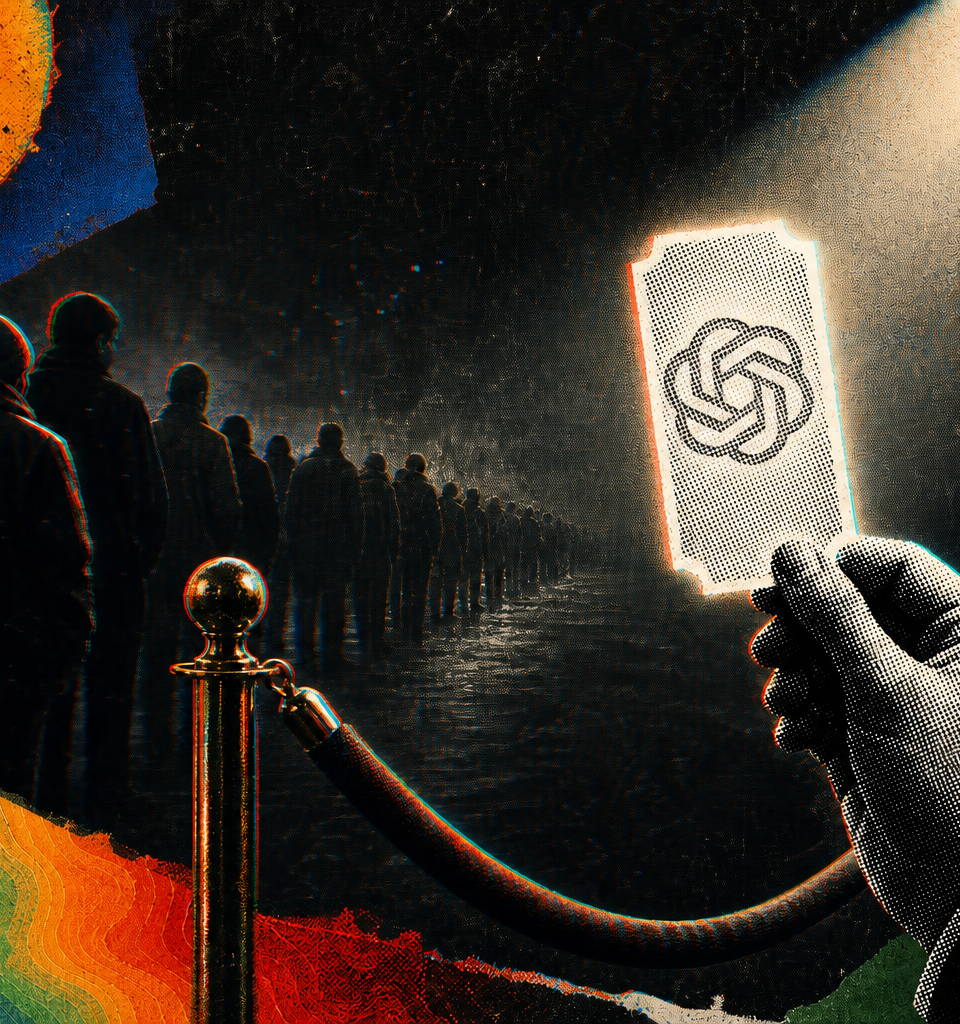
OpenAI just released its most advanced model yet. Almost no one is allowed to use it.
On June 26, the company previewed GPT-5.6 in three versions: Sol, its top-tier model, alongside Terra for balanced everyday work and Luna for fast, cheap, high-volume tasks. Then came the catch. "At the request of the U.S. government," OpenAI wrote, it would start with "a limited preview among a small group of trusted partners" in Codex and its API, with general availability promised only "in the coming weeks."
A launch with a gatekeeper
This is not how model launches usually go. For years, a new flagship meant a blog post, a demo, and a button you could click that same afternoon. GPT-5.6 arrived with a government sign-off requirement instead. OpenAI says it still believes in broad access and plans to make all three models generally available soon, but for now the gate is real and federally mandated, and the company is releasing the model customer by customer.
It is happening to everyone at once
OpenAI is not alone. The same week, the US government partly lifted its block on Anthropic's Mythos 5, allowing it back online for roughly 100 approved American organizations while keeping Anthropic's other top model, Fable 5, banned. Put the two events together and a new reality comes into focus: the country's two leading AI labs now need federal permission to decide who can use their best models.
The backlash
Developers did not take it quietly. "This is how these companies go out of business," wrote one, arguing that you cannot fund billion-dollar training runs if you have to beg the government to approve each customer. Garry Tan, who runs the startup incubator Y Combinator, called it "a solid way to salt the ground and kill all innovation by small startups." Others framed it as an unforced gift to China, whose open models cannot be switched off by any single government.
When GPT-5.6 eventually lands in ChatGPT, it will likely arrive later, and with more guardrails, than the version a handful of partners are testing now.
The longer-term shift is the one to watch. The most capable AI is starting to ship under government control, with regulators deciding access before the public sees anything. That is brand new, and it became standard at the top of the industry almost overnight.
It also reframes why a story like DeepSeek's $7.4 billion raise matters. While American labs wait for clearance, open models from elsewhere cannot be gated the same way. The harder it becomes to ship a frontier model inside the US, the more room that leaves for everyone else to fill.