
Claude Sonnet vs Opus (and Haiku): Five Identical Builds, Ranked Blind, With the Cost of Every Run
Sonnet 5.5 and Opus 5.5 on the same five builds, three of them ranked blind, with the tokens, time and cost of every run, plus where Haiku 5.5 and Fable 5.1 fit.

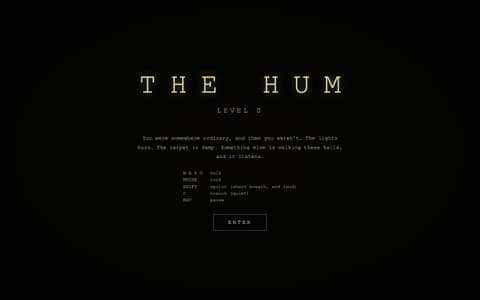
Opus 5.5 is the better Claude model, but not by much. Pat Simmons gave Sonnet 5.5 and Opus 5.5 the same five builds, and in the three that were ranked blind, Opus 5.5 placed above Sonnet 5.5 on a launch video and on a rebuild of the butter.video website, while Sonnet 5.5 placed above Opus 5.5 on a Backrooms horror game (full Sonnet 5.5 review with all five builds).
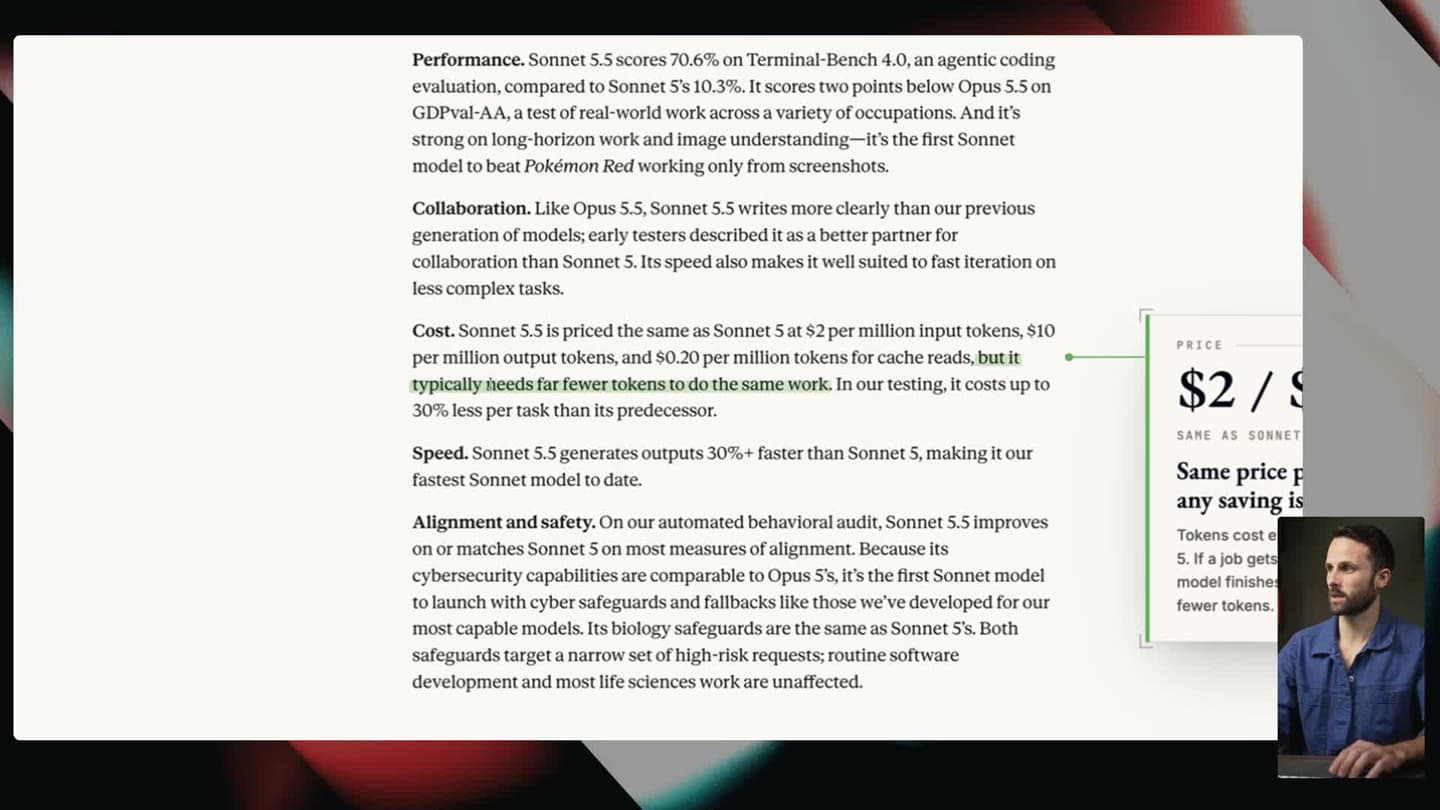
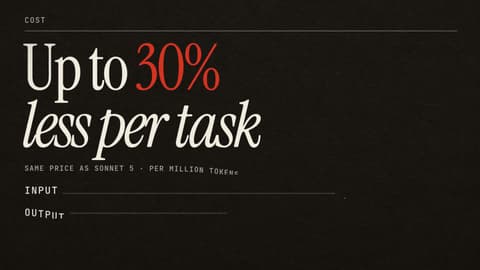
Sonnet 5.5 costs half as much per token, $2 per million input tokens and $10 per million output against $4 and $20 for Opus 5.5 (Anthropic's pricing page, checked November 2, 2026). It used more tokens on most of these builds, so it finished cheaper in only 2 of the 5 runs, and Opus 5.5 finished faster in 4 of 5.
Pat's verdict in his review video was that "Sonnet 5.5 is a good recommendation as a daily driver for your team," kept on medium effort, with heavy 3D work handed to Opus 5.5 or Fable 5.1. Haiku 5.5, at $0.10 and $0.50 per million tokens and available on every Claude plan including Free, is Anthropic's pick for quick, high-volume jobs, and it scores below Sonnet 5.5 on every test in Anthropic's own launch table.
| Build (same prompt for both) | Blind-ranked winner | Sonnet 5.5 cost and time | Opus 5.5 cost and time |
|---|---|---|---|
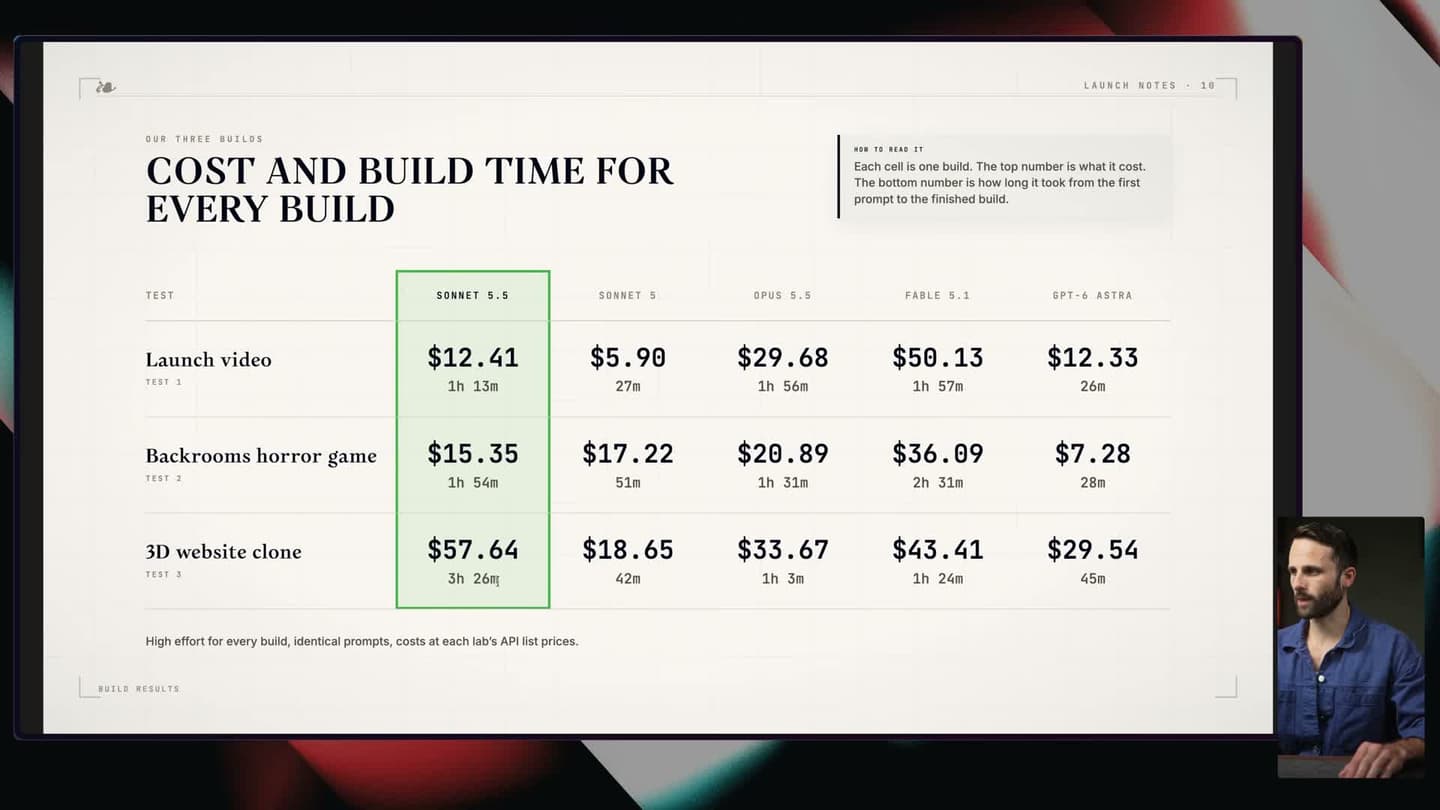
| Make a launch video for Sonnet 5.5 | Opus 5.5 (Sonnet 5.5 3rd of 5) | $12.41, 73 min | $29.68, 116 min |
| Build a realistic Backrooms horror game | Fable 5.1 (Sonnet 5.5 2nd, Opus 5.5 3rd) | $15.35, 114 min | $20.89, 91 min |
| Rebuild the butter.video website, 3D included | Opus 5.5 (Sonnet 5.5 3rd of 5) | $57.64, 206 min | $33.67, 63 min |
| Make "the most impressive demo of yourself" in code | Not ranked | $13.39, 50 min | $10.74, 47 min |
| Build a Diablo-style action RPG | Not ranked | $19.54, 81 min | $12.69, 53 min |
| Our sum of the five runs | Opus 5.5 ahead on two of three ranked builds | $118.33, 524 min | $107.67, 370 min |
All five builds ran on high effort, and the costs are API-equivalent: the real token counts from each run priced at Anthropic's published rates, even though the builds ran on a subscription (per-test tables in the Sonnet 5.5 review). The bottom row is our own addition of the five rows above.
Is Claude Opus better than Sonnet?
Yes, Opus 5.5 came out ahead overall, and the gap was small. It won two of the three blind rankings Pat ran, the launch video and the butter.video rebuild, where Sonnet 5.5 finished 3rd of five models both times. On the Backrooms horror game the order flipped, with Sonnet 5.5 in 2nd and Opus 5.5 in 3rd, behind Fable 5.1.
In the video Pat said: "This seems like the first time that a Sonnet model is performing just as good on a lot of these tasks as Opus."
Anthropic's own scores put the two close together as well. Its Sonnet 5.5 launch page lists Sonnet 5.5 at 1844 and Opus 5.5 at 1846 on GDPval-AA, a test of everyday office work across many jobs, and 55.5% against 57.8% on CursorBench 4.0, a coding test built from real coding sessions (Anthropic). Anthropic describes Opus 5.5 as the model for "complex work requiring careful judgment" and Sonnet 5.5 as "strongest at well-scoped everyday tasks."
How much cheaper is Claude Sonnet than Opus?
Per token, Sonnet 5.5 costs exactly half of Opus 5.5 on Anthropic's API. Per finished build, it depends on how many tokens the job takes, and in Pat's runs Sonnet 5.5 came out cheaper on two builds and more expensive on three.
| Model | Input, per 1M tokens | Output, per 1M tokens | Cache reads, per 1M tokens |
|---|---|---|---|
| Fable 5.1 | $10 | $50 | $0.25 |
| Opus 5.5 | $4 | $20 | $0.20 |
| Sonnet 5.5 | $2 | $10 | $0.10 |
| Haiku 5.5 (prompts up to 100,000 tokens) | $0.10 | $0.50 | $0.01 |
| Haiku 5.5 (prompts over 100,000 tokens) | $0.50 | $2.50 | $0.05 |
Prices are Anthropic's API list prices in US dollars, from Anthropic's pricing page, checked November 2, 2026. A token is a small chunk of text, and AI companies bill by the million. Cache reads are the cheaper rate for text the model already read earlier in the same job.
The half-price rate did not carry through to Pat's bills. Sonnet 5.5 was cheaper on the launch video ($12.41 against $29.68) and the Backrooms game ($15.35 against $20.89), and it cost more on the other three, most of all on the butter.video rebuild, where it read 215.5 million input tokens and spent $57.64 against $33.67 for Opus 5.5. Across all five runs, our sum comes to $118.33 for Sonnet 5.5 and $107.67 for Opus 5.5.
In the Claude app the question is which plan you pay for. The plan table on Claude's pricing page marks Sonnet and Haiku as included on the Free plan, and Opus only on Pro ($20 a month billed monthly) and up, including Max ($100 a month) and Ultra ($200 a month). For the full Opus pricing and plan details, see the Opus 5.5 review: pricing and four blind-ranked builds.
When to use Haiku vs Sonnet?
Use Haiku 5.5 for short jobs repeated many times, and Sonnet 5.5 when the work needs judgment across several steps. Anthropic's Haiku page recommends it where speed and volume come first, for work like summarizing, sorting and routing requests, and live chat and support, and says that for complex coding and knowledge work "Opus 5.5 is the daily driver, and Sonnet 5.5 is a good fit for well-scoped tasks" (Anthropic's Haiku page).
Pat hasn't tested Haiku 5.5, so every Haiku number on this page is Anthropic's. In Anthropic's launch table Sonnet 5.5 scores higher on all four of these tests:
| Anthropic's test (what it checks) | Haiku 5.5 | Sonnet 5.5 |
|---|---|---|
| GDPval-AA v2.1 (everyday knowledge work, a rating) | 1620 | 1840 |
| OSWorld 2.1 (using a computer) | 72.4% | 83.9% |
| Terminal-Bench 4.0 (coding agents in a command line) | 39.2% | 70.6% |
| FrontierCode 1.1 (code good enough to merge) | 46.4% | 52.1% (at Xhigh effort) |
These are Anthropic's own results from the Haiku 5.5 launch, collected in what Claude Haiku 5.5 costs and how it scores. The widest gap is on Terminal-Bench, the test of coding agents.
On price, Haiku 5.5 is one-twentieth of Sonnet 5.5 on short prompts: $0.10 against $2 per million input tokens (Anthropic's pricing page). Free, Pro, Max, Ultra, Team and Enterprise users can all pick it in Claude on the web, iPhone and Android (Anthropic's Haiku page).
Which Claude model is fastest?
Haiku 5.5 is the fastest, according to Anthropic, which calls it "the fastest and most efficient model in the Claude 5.5 family" on its Haiku page. Between Sonnet and Opus, Opus 5.5 finished sooner in 4 of Pat's 5 runs, even though Sonnet is the smaller model.
The one run Sonnet 5.5 finished first was the launch video, 73 minutes against 116. On the other four it kept working through more steps, and the butter.video rebuild took it 206 minutes against 63 for Opus 5.5. All of those times are on high effort, the setting where Claude reasons for longer and checks its work more thoroughly. Anthropic says lower settings answer faster, and the default in Claude Code and the Claude apps is medium (Anthropic).
Anthropic also sells a faster Opus. Fast mode for Opus 5.5 runs up to 2.5 times faster at twice the standard price, per Claude's pricing page.
Sonnet vs Opus for coding and building apps
For everyday coding, Sonnet 5.5 is close enough to Opus 5.5 that Pat recommends it as the default, and for detailed 3D web work he hands the job to Opus. All five builds ran in Claude Code, Anthropic's coding agent, with the same prompt for every model and no follow-up prompts.
The butter.video rebuild shows where the two split. Each model had to recreate the site from scratch, including the 3D keychain at the top of the page, modeled in Blender, the free 3D app. Pat said Sonnet 5.5's version "actually did the best in the rest of the website," and "the only thing it didn't do well was that 3D work."
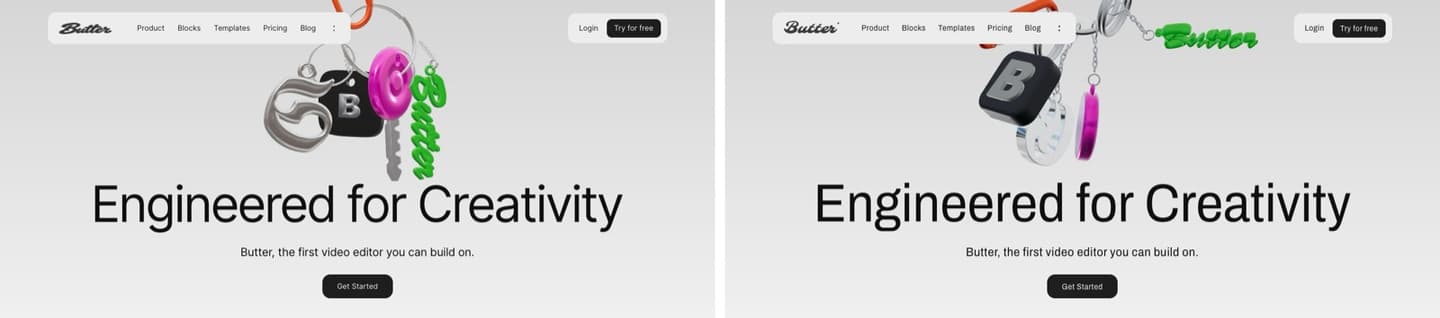
That rebuild was also the most expensive Sonnet 5.5 run, $57.64 and 206 minutes against $33.67 and 63 minutes for Opus 5.5. Pat's take was that for this kind of 3D web work "it just makes more sense to hand off to Opus or Fable 5.1."
Effort is the setting to watch in Claude Code. Medium is the default there, and Pat's advice is to keep Sonnet 5.5 on it. On turning it all the way up he said: "it just doesn't really make a whole lot of sense to run this on max when you could just instead go to Opus 5.5 or Fable."
Where does Fable 5.1 fit above Opus?
Fable 5.1 is Anthropic's top model and its most expensive, at $10 per million input tokens and $50 output, two and a half times the Opus 5.5 rate (Anthropic's pricing page). In Pat's tests Fable 5.1 beat Opus 5.5 on two builds, the Backrooms game and a website rebuild, and Opus 5.5 won more builds overall while costing less in two of his three rounds.
| Build | Fable 5.1 cost and time | Opus 5.5 cost and time | Sonnet 5.5 cost and time |
|---|---|---|---|
| Launch video (Fable 5.1 2nd of 5) | $50.13, 117 min | $29.68, 116 min | $12.41, 73 min |
| Backrooms horror game (Fable 5.1 1st) | $36.09, 151 min | $20.89, 91 min | $15.35, 114 min |
| butter.video rebuild (Fable 5.1 4th of 5) | $43.41, 84 min | $33.67, 63 min | $57.64, 206 min |
| Code-only demo (not ranked) | $14.10, 48 min | $10.74, 47 min | $13.39, 50 min |
| Diablo-style RPG (not ranked) | $15.82, 52 min | $12.69, 53 min | $19.54, 81 min |
| Our sum of the five runs | $159.55, 452 min | $107.67, 370 min | $118.33, 524 min |
In a three-build test of Opus 5.5 against Fable 5.1 and GPT-6 Astra, he ranked Opus 5.5 first on all three, scenes from Moby-Dick drawn in code, a launch film with its own sound, and a 3D skate game, though Opus 5.5 cost $106.93 and took 266 minutes against $90.99 and 143 minutes for Fable 5.1 (Opus 5.5 vs Fable 5.1 vs GPT-6 Astra on the same app).
In his four-build Opus 5.5 review, Fable 5.1 won a rebuild of an Awwwards-winning website, and Opus 5.5 placed above it on the other three: a rebuild of the Mana Yerba Mate brand site, a RollerCoaster Tycoon clone and a 3D Adidas running shoe that GPT-6 Astra won. Those four builds cost Opus 5.5 $224.24 and 322 minutes, against $403.38 and 245 minutes for Fable 5.1 (Opus 5.5 review).
Pat's conclusion in that review was "It's something you'll probably rely on over Fable 5.1," and he said he'd keep testing Fable 5.1 on "really heavy coding tasks, very long running tasks." In the Claude app, Fable is paid with usage credits on Pro and included for up to half your weekly limit on Max and Ultra (Claude's pricing page).
What Pat tested and how
Pat gave every model the same prompt with nothing added and ranked the three video builds blind, before seeing which model made which. The Claude models ran in Claude Code on high effort, each got one pass with no follow-up prompts, and nobody re-ran a build to get a luckier result (Sonnet 5.5 review).
The five jobs were a 30 to 60 second launch video for Sonnet 5.5 built from Anthropic's launch page, a first-person Backrooms horror game with rooms modeled and lit in Blender, a rebuild of the butter.video website with its 3D keychain, an audiovisual demo where every pixel and sound comes from code, and a Diablo-style dungeon game with loot and a boss. The demo and the dungeon game were cut from the video, so they have costs and times but no ranking. Fable 5.1 and GPT-6 Astra took every test, Sonnet 5 took all but the dungeon game, and every prompt is published in the review.
| Build | Sonnet 5.5 tokens in / out | Opus 5.5 tokens in / out |
|---|---|---|
| Launch video | 43.0M / 211k | 69.7M / 329k |
| Backrooms horror game | 44.9M / 306k | 53.8M / 307k |
| butter.video rebuild | 215.5M / 845k | 90.5M / 405k |
| Code-only demo | 38.0M / 257k | 19.0M / 219k |
| Diablo-style RPG | 61.2M / 475k | 18.7M / 290k |
Sonnet 5.5 read fewer input tokens than Opus 5.5 on the launch video and the Backrooms game, the two runs where it was cheaper, and more on the other three. Because Opus 5.5 charges twice as much per token, Sonnet 5.5 came out cheaper only on the runs where it also used fewer tokens.
Which Claude to pick, by job
Start on Sonnet 5.5 for everyday work and move up to Opus 5.5 when the job is a big, detailed build. The table below comes from Pat's tests and his team setup advice, plus Anthropic's guidance for Haiku, which Pat hasn't tested.
| Job | Pick | Based on |
|---|---|---|
| Follow-up emails, drafting copy, pulling together a report, lighter coding | Sonnet 5.5 on medium effort | Pat's team setup advice |
| Detailed 3D web work and big builds | Opus 5.5 or Fable 5.1 | Pat's butter.video results |
| Very heavy, long-running coding jobs | Fable 5.1, which Pat is still testing there | Pat's Opus 5.5 review |
| Short jobs repeated at volume: summaries, sorting, routing, live chat | Haiku 5.5 | Anthropic's Haiku page |
| You're on the Free plan | Sonnet or Haiku | Claude's plan table |
To save money on larger builds, Pat's suggestion in the review is to have Sonnet 5.5 take the first pass and have Opus 5.5 or Fable check its work. The one job he said he'd moved to Sonnet 5.5 right away was video editing: "I've had Sonnet 5.5 editing most of this video where it's cutting out bad takes, removing pauses." For more on the rest of the lineup, see Claude's latest features and updates.
Questions people ask
What is the difference between Claude Sonnet and Opus?
Opus is Anthropic's bigger, pricier model and Sonnet is its mid-tier model. Anthropic built Opus 5.5 for "complex work requiring careful judgment" and says Sonnet 5.5 is "strongest at well-scoped everyday tasks, fixing bugs, and creating polished documents, slides, and spreadsheets" (Anthropic).
Is Claude Haiku or Opus better?
Opus is the stronger model, and Haiku is far cheaper. Anthropic calls Opus 5.5 the daily driver for complex coding and knowledge work, while Haiku 5.5 costs $0.10 per million input tokens on short prompts against $4 for Opus 5.5 (Anthropic's pricing page). Pat hasn't tested Haiku 5.5 against either model.
Can I use Claude Opus for free?
No. Claude's plan table lists Opus on Pro, Max and Ultra but not Free, which includes Sonnet and Haiku (Claude's pricing page, checked November 2, 2026).
Does Sonnet use fewer tokens than Opus?
Not on most of Pat's builds. Sonnet 5.5 read more input tokens than Opus 5.5 on three of the five, including 215.5 million against 90.5 million on the butter.video rebuild, and fewer on the launch video and the Backrooms game.
Is Sonnet 5.5 better than Opus 5.5 at 3D games?
On one game, yes. Sonnet 5.5 placed 2nd and Opus 5.5 3rd on the Backrooms horror game, which had its rooms built in Blender, while Opus 5.5 won the butter.video rebuild with its 3D keychain.
When were Opus 5.5, Sonnet 5.5 and Haiku 5.5 released?
Anthropic released Opus 5.5 on September 22, 2026, Sonnet 5.5 on September 28 and Haiku 5.5 on October 7.
Were all five builds ranked?
No. Only the launch video, the Backrooms game and the butter.video rebuild were ranked blind. The code-only demo and the Diablo-style game were cut from the video, so only their prompts, builds and costs are published.
Sources
- Claude Platform docs: Pricing (checked November 2, 2026)
- Claude pricing and plans (checked November 2, 2026)
- Anthropic: Introducing Claude Sonnet 5.5
- Anthropic: Claude Haiku model page
- AI for Mortals: Sonnet 5.5 review, five builds against Opus 5.5
- AI for Mortals: Opus 5.5, Fable 5.1 and GPT-6 Astra on the same app




Comments
Sign in to join the conversation.