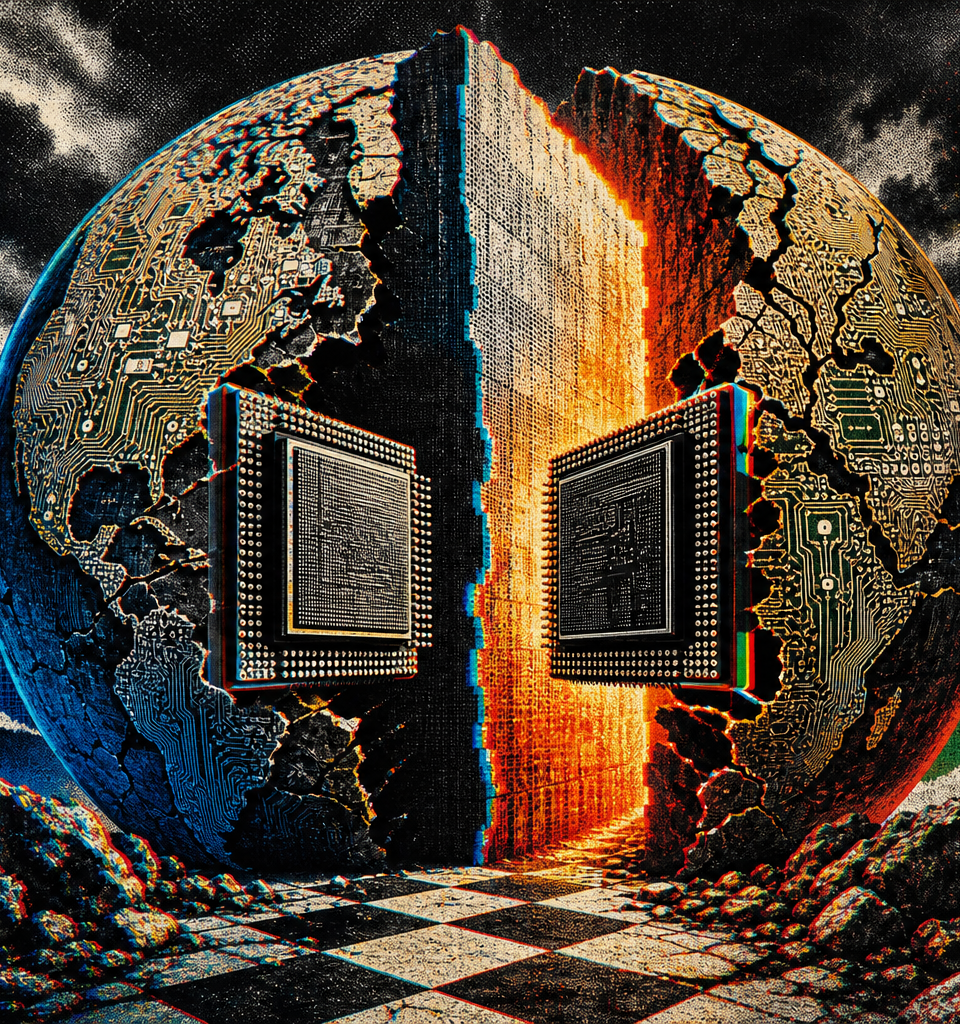
For most of the last few years, the question "which AI can I use?" had a boring answer: whichever one you felt like signing up for. This week, at a closed-door lunch in the French spa town of Évian-les-Bains, that question started getting answered somewhere else entirely. In a room with heads of state.
On June 17, the CEOs of two of the most important AI labs on the planet, Anthropic's Dario Amodei and Google DeepMind's Demis Hassabis, sat down with G7 leaders and made a pitch: the United States should lead a coalition of allied countries to write the global rules for AI. According to reporting from CNBC, citing two people with knowledge of the meeting who were not authorized to speak publicly, Amodei went further. He proposed that the coalition should control access to the most powerful AI models and the chips that run them in a way that, in his words as those people recalled it, "excludes China."
What was actually said, and what we only have secondhand
It helps to separate the confirmed from the reported, because the two are not the same.
Confirmed: the meeting happened. Around a dozen tech executives, including OpenAI's Sam Altman, joined world leaders for the lunch. The U.S. delegation included President Trump, Treasury Secretary Scott Bessent, Commerce Secretary Howard Lutnick, and Secretary of State Marco Rubio. French President Emmanuel Macron said on the record that the G7 is discussing a shared platform for cooperation on frontier AI and will announce new rules in September. None of that is in dispute.
Reported, and resting on anonymous sourcing from a single closed-door meeting: the specifics of what Amodei said inside the room. The "excludes China" framing comes from those unnamed people, with the China detail traced to one of them. CNBC reports he also said allied countries should cooperate on AI risks in areas like cyberattacks, bioterrorism, and intelligence. Canadian Prime Minister Mark Carney reportedly agreed the U.S. could lead such a coalition. Anthropic declined to comment. Google DeepMind and Carney's office did not immediately respond.
So treat the headline accordingly. This is a floated proposal recounted by people in the room, not an official G7 communiqué, and certainly not a confirmed quote you can hang on Amodei's name. Nothing was decided.
Not everyone in the room agreed
The interesting part is that the AI leaders were not reading from the same script.
Altman, per an OpenAI briefing, pitched something softer: an international forum that sets globally accepted standards for testing AI, gives expert and impartial analysis of what these systems can and cannot do, and gives nations a place to cooperate. He did not frame it around shutting anyone out. That is a meaningfully different vision from a wall.
And the allies have their own worries. According to the Financial Times, European and Indian leaders raised the concern that if the U.S. controls the stack, Washington could effectively "turn off the switch" on the AI their economies and critical systems run on. A coalition that puts one country in charge of who gets the best models is also a coalition that makes everyone else dependent on that country's politics. That tension, allied cooperation on one hand and allied dependence on the other, is the part that should matter most to you, and it went unresolved.
The week AI stopped being just a tech race
Step back and the timing tells the story. Days before the summit, the U.S. government banned foreign nationals from using Anthropic's most powerful models, the export-control move that pulled top-tier Claude access for overseas users. Then, the same week, Anthropic's CEO is at the G7 arguing to wall China out of frontier models and chips. Which AI you can get your hands on is becoming a government decision.
There is a real debate about whether the wall would even work. Critics, including researchers like Susan Zhang who pushed back publicly, argue that cutting China off does not stop China. It speeds up China's own homegrown models. The country already has capable open-weight systems like DeepSeek and the GLM models, the kind anyone can download and run for free. Wall off the official channel and you give those alternatives a reason to get better, faster. Polymarket, the prediction market, even flagged the whole episode with a "reportedly," a reminder that this is a pitch, not policy.
For a few years, picking an AI tool felt like a personal choice. This week is the moment it started turning into something governments negotiate over. The new rules Macron mentioned land in September, and they could shape which models are available where, and on what terms, for years.
You do not need to follow the geopolitics to protect yourself from it. The practical move is to stay flexible. If your daily work runs entirely on one model from one company in one country, you are exposed to decisions made in rooms you will never sit in, like the one in Évian. Keep your important prompts and workflows portable enough to move between Claude, ChatGPT, Gemini, or an open-weight model you can run yourself. The reason no single government fully controls this is that open-weight models exist and anyone can download them, and that is exactly the door worth keeping open in your own setup.
Sources
- CNBC: CEOs of Anthropic and Google DeepMind call for U.S.-led AI coalition in meeting at G7
- The Washington Post: Trump's Anthropic restrictions rattle U.S. allies as AI leaders gather at G7
- Andrew Curran on X: the closed-door report and Macron's September timeline
- Rohan Paul on X, citing the Financial Times: allies fear a U.S. "off switch"
- Susan Zhang on X: why walling China out could backfire on the supply chain
- Polymarket on X: flagging the proposal as "reportedly," not policy