Gemini 4 Argon review
I put Google's new frontier model through four hard builds against Opus 5.5, Fable 5.1 and GPT-6 Astra.

On this page
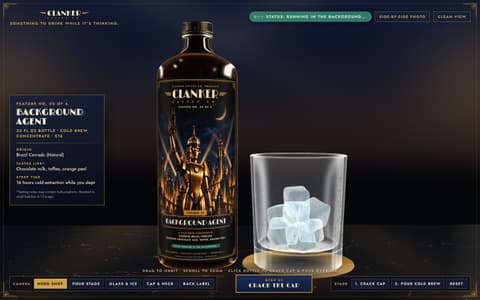
Google says Gemini 4 Argon leads on legal work, business automation and long-running coding. Its launch demos lean hard on 3D, like a temple complex the model sculpted in Blender, so the first test asked for a photoreal 3D cold brew bottle in the browser that pours over ice. Argon's bottle came out looking like an illustration and ranked last of the four, while Opus 5.5 built the most realistic one. Argon ranked last again on the second test, a product launch video for Clanker Coffee, a made-up coffee brand I built a store for, and Opus 5.5 won that one too.
Argon is the cheapest frontier model right now. Under a promotion that runs until November 30, it costs $2 per million input tokens and $10 per million output tokens, half the price of Opus 5.5, and it was the cheapest of the four on the bottle build. Usage runs out fast on the subscription. On the $99 a month plan, I got through about one build before I hit the daily limit.
The video goes on to a Rocket League clone and a rebuild of a website before the verdict.
Chapters
The full write-up
Gemini 4 Argon: No-Hype Full Review & TestingEvery prompt, every live build and the full cost tables.Read the write-upTranscript
This transcript covers the first part of the video, through the launch video test.
Show the full transcript
all right the long -awaited gemini 4 argon has finally been released to the general public the demos are looking very very impressive and the benchmarks even more so with google claiming the lead on legal work business automation and long -running coding tasks so is gemini 4 the real deal or is it just another bench maxer let's find out in this video we're going to be putting gemini 4 to the test across 3d product design a full launch video game development and web design we will compare it to fable 5 -1 opus 5 -5 and gpt -6 We'll compare it to Fable 5 .1, Opus 5 .5, and GPT -6 Astra, and we'll clock how fast each one builds, what it costs, and how many tokens it burns. By the end, you'll know if Argon actually lives up to those benchmarks and whether it's worth paying for. So we're not wasting any more time. Let's get right into it. We've got some builds being kicked off in the background right now across each of our four tasks. But first, you know, we got to go to the benchmarks.
We're going to quickly gloss over these. And in the most Google of ways, they have two different blog from blog posts, one that actually shows the demos, which will show first, and then a second posts, one that actually shows the demos, which we'll show first, and then that actually shows the benchmarks, which we'll get into as well. So first, the cool demos, they specifically called out a lot of 3d work here. And if you look at this demo, for example, I mean, look how beautiful this is. This is a 3d render of a pagoda. I mean, just look at the detail on this thing, all the ornamentation, everything.
It's just incredible. I'm very curious how long it took, because I've tried to do something similar with the other models. And I know just how long it takes to generate these. And it looks like it was all done in Blender, too. So the model autonomously sculpted a multi -building temple complex with photorealistic architecture, all in Blender. And you can see just how detailed it is.
Very impressive stuff. Another one, they have this, like, car race demo. That's actually a pretty cool idea, where it goes around your desk. I don't know if this is actually a playable game, but cool idea. Very, very realistic -looking generations. Curious to test how Argon does with developing games, which we'll do in our own demos.
games we'll do in our own demos and then some more 3d work it's always interesting the reason i'm And then some more 3D work. It's always interesting. calling this out too it's always interesting to see what the companies are highlighting because if they're highlighting these capabilities it's probably worth testing and see how well it actually holds up when we're doing these tests like who knows how long these are running how many different iterations it took all of that so this is another you know 3d chess generation pretty impressive all 3d work here here it wrote its own 3d ray tracing engine with an audio mixer this is the racing engine with an audio mixer. This is the benefit of using Google too. It has all of these other capabilities, you know, outside of the coding model. So it used Gemini 3 .8 TTS for voiceover.
It used Lyra 3 .5 for music, which are some of the best voiceover and music models. Kind of a cool use of the voiceover and then even more 3D work. So every single one of these demos they're calling out and then they get into even more 3D work below. This is mocking up an archaeological site with just like Congress CAD drawings. And then here they get into a little bit more knowledge work stuff putting it into a bit more knowledge work stuff. proposal deck so taking much unstructured data creating a deck out of it google sheets you know it's going to be very good at google sheets and the whole google suite which is a benefit this one they do a cool 3d visualization of the human body so you know could be useful for students people in the medical profession some more 3d works this is generating legs for a sofa into 3d printable files and some drug discovery above my pay grade but those are just some of the drug discovery of my pay grade.
But those are just some of the examples I wanted to specifically call out. Now let's take a look at the benchmarks. So first up, we have costs. They're running a promotion now until November 30th, where Argon costs $2 per million input tokens and $10 per million output tokens, which is half the price of Opus 5 .5. So it is by far the cheapest frontier model. But we'll see how that actually looks in practice when we do the builds, when we look at how token efficient it is, how long it takes, what its actual outputs are in comparison to Opus 5 .5.
because it's just entirely possible that it will take much longer, use up more tokens, and therefore be more expensive than Opus 5 .5. But we'll see all that when we get into the builds. And then let's get into some of the benchmarks here. First up on KnowledgeWork, I believe all of these are on high effort too. They don't say what effort level, but you can see a lot of blue here. Gemini 4 Argon highlighted as the winner for all of these.
At this point, we really don't know how much we can trust this. I don't know how much we can trust this. However, on KnowledgeWork across the board. However, on knowledge work across the board, things like Automation Bench, Harvey's Legal Bench, Val's Finance Agent, it's scoring a considerable amount higher than any of the other Frontier models. So we look at Harvey's Legal Bench, for example, 19 .6 % compared to the rest of the models that are 5, 6, and 3. A bump in Automation Bench as well, 51 % compared to the 30s and 40s for the other models.
So a good knowledge worker. We're not going to do too many knowledge work tests, but this could prove useful, you know, if you're living in the good. Google suite all day, it's nice to know that on automations, other knowledge work across the board, at least according to benchmarks, this thing works really well. So that's knowledge work. And then we get into the meat of it, agentic coding. We've got DeepSuite, which I don't know if we can really trust DeepSuite anymore after Muse Wonder, because I believe Muse Wonder was in the high 70s as well.
However, we've got DeepSuite, 77 .9%, beating out the rest of the models 7 .9 % beating out the rest of the models by a relatively large margin. Frontier SWE VibeCode by a relatively large. Bench, 91 .9%. I'm actually not even familiar with VibeCode Bench. And then Terminal Bench, interestingly, it's much lower, which this is interesting because Terminal Bench, in my experience, is usually quite indicative of the day -to -day coding tasks across the board. So I've absolutely seen this where Opus, being at the top of Terminal Bench, is just the best day -to -day decoder on any kind of task you're giving it.
So it is interesting to see it really isn't even coder on any kind of task you're giving it. So it is interesting to see. It really isn't. competing with Opus 5 .5 on Terminal Bench. And then we have, you know, some computer use like agents last exam, very close, technically winning out. We've got OS world.
So agentic computer use, I don't know why they don't include Fable 5 .1 or Opus 5 .5. However, not as good as Astra and some other benchmarks that I'm not familiar with. So I'm not going to call out. However, what I did do was I put together a table with Muse Wonderful as well, just to show that these benchmarks can sometimes be a little misleading. was I put together a table with Muse Wonderful. Then I added a couple other benchmarks as well just to see where Argon is landing.
So you can see Muse Wonderful scored a 79 on DeepSwee, which if you watch my Muse Wonder video, you will know that it is indeed not the best coding agent. So overall, a massive bump from its previous model. I don't even know what that was. Gemini 3 .1 Pro. They had a bunch of flashlight models that they I don't even know what that was. It's Gemini 3 -1 Pro.
They had a bunch. launched, but the latest large model, I mean, they don't even show 3 .1 Pro on here, which would make sense because it's probably just such a sizable jump and in a lot of ways beating out the other frontiers on the benchmarks. So I think that's it. That's all I want to call out. There's all sorts of these tests that I'm not even going to get into. You know, sometimes I feel like these labs are just grasping for straws.
The Gray Swan IPI. Oh, look, Gemini 4 Argon, 0 .7 % of the Gray Swan IPI. Maybe this is something super important. Okay, it looks like Swan IPI. Maybe this is something. prompt injection benchmark.
Okay, now that is something that you of course want to be mindful of. However, these labs just love finding benchmarks where they perform the best. Okay, so that's everything I wanted to call out. Now let's put Gemini 4 Argon to the test and see how well it does across real world builds. All right, so we've got some fun ones. If I'm being honest, in my Muse Wonder test, I felt like all of the models kind of missed the mark.
So I have redone the prompts, made them much more strict, and hopefully we'll get some cool generations. They were running basically all day in Blender yesterday. So we're really pushing each of these models to the limits when it comes to 3D. So here's the prompt. Build the Clanker Coffee background agent cold brew bottle as a photoreal interactive 3D product in the browser. Clanker Coffee, by the way, head to clankercoffee .co to see a fake e -commerce site that I've built.
And we're essentially just giving them some fake product photography from the website and saying, build this out into a real 3D model. product photography from So what we're asking for is the bottle mocked up in 3D, a glass with ice cubes, and then we click something and then we'll actually pour so we can see the liquid coming out, see how well it did with liquid into the glass. And just giving requirements on the graphics, they must be photoreal, glass with correct refraction and thickness, a label that reads as printed paper with a slight sheen. So very strict. And we had all these models running headless in Blender with Python scripts, So very strict. And we had all these models running.
and all of these are running on high effort levels. So let's get into it with these generations. We'll look at column A first, open this in a new tab, go here. So you can see we have this crack the cap here, and it's going to open the cap and pour. But let's just take a look at the actual 3D work first. First impressions, pretty impressive.
Look at that light as I rotate this. Very nice. Glass looks nice. Not exactly photoreal. It's like just... Oops, where'd it go?
nice not exactly photo real it's like just oops where to go okay that's like a rendering issue okay i have to go back so interestingly it just goes black for a sec but it's still maybe just slightly illustrative not totally photo real but it's very close so so it just took the label from clanker coffee go and just put that on so the label looks very realistic as well let's see the actual interaction let's go crack the cap okay kind of weird okay kind of weird not exactly natural sunk into that glass here but okay let's go pour a glass natural sunk into that glass here but okay let's go all right let's check out the liquid all right not not not not bad a little odd the way it comes out of the cap ice cubes moving around that's a nice touch even though with the ice cubes like hit the light it's pretty good another well -earned break all right there we go so that is the first generation column b next all right definitely not as realistic as the first one got a little kind of victor illustration look especially in the glass this looks a bit more real illustration look especially in the glass this looks a bit more realistic the actual bottle possible just kind of got a little lazy i like the way it rotates though actually much smoother rotation that really matters than the glass model light is hitting it very well not exactly realistic but it you know it at least has some sheen in the bottle labels looking good so let's go and just pour stage awesome ice okay nice you can zoom in on that yeah this looks very very fake which again probably four months ago i would have been very impressed but looks a little fake also just like i get it you just like i get it you're you're trying to show the drops dripping down but it's a little ridiculous not exactly realistic okay yeah we got some nice zoom ins i like that i like the way it set that up but let's go hero shot then we go crack the cap all right weird okay and then poor yeah just not nearly as realistic as the last model and there we go so that's the second generation take a look at the third really testing this 3d okay uh all right ice cubes are third really testing this 3d okay moving very weird not as smooth as the last one actually rotating this around the light is a little crazy maybe it's more realistic but it's a little aggressive just in the highlights here in that bloom let's keep rotating this around i would say probably the most realistic i mean if you can even look at like the cap here looks very realistic it just gave up after the ice cubes i mean these are the least realistic looking they're just kind of blurry they're going through the glass the glass looks very realistic however but let's actually crack the cap so if we glass the glass looks very realistic however but let's actually crack go here click that cap whoa geez okay why is that nowhere at least it lands on the on the glass properly it's a nice water droplets those look the most realistic okay let's actually pour this click the bottle to pour over ice let's see how the liquid okay the liquid comes out aggressively but it does look a bit more realistic in the pour we got the actual liquid coming out everything else was a little funky transitions the way the else was a little funky transition bottles actually poured could be much better the way these ice cubes are moving very funky so that's the third generation now let's take a look at the fourth okay well i'm liking what i'm seeing the ice cubes staying it's just that all these models kind of miss the ice cubes they're just too translucent they look very realistic even the way the light is hitting looks very realistic but they look like ice cubes that have been already melted. The glass looks already melted the glass incredible. The bottle looks very realistic. Cap looks very realistic. Yeah, look at this label. Jeez, you even have like texture on the label here.
Wow, you can really zoom in on this thing too. Well done. Look at the texture on the label. It'll like divots in the text. That's impressive. Nice little zoom out too.
Like you zoom out and then it pulls into focus. Oh, I like this pedestal too. Yeah. I'm liking this one the best. Let's just see how it pours. The models still have a long way to go in pouring.
Okay, cap coming off. Pour me one. I'm coming off. Pour me one. Hey, most realistic. Yeah.
Yep. Already. Like an actual pour. Oh, Hey, most realistic. okay. Yeah, sure.
Let's just do that one more time. Crack the cap. I wasn't paying attention to the liquid coming out. Pour me one. Yeah. Look what liquid looks.
Oh, even like the liquid splashing on there. That's good. Yeah. The only, it's really only is ice cubes. And then we have this, just this ridiculous like water droplets and condensation besides that. I mean, that one is the clear winner.
Let's go one here. We're going to go to here just for realism. And I don't know between these two only because this one went this like illustrative style and I said it has to be photo real. I'm just going to say four and then I'm going to say three. So let's do a reveal a column B first. Let's see Gemini Argon.
Darn it. I mean, yeah, it just the 3D was not realistic. Like, hey, Google, what happened to your Pagoda here? Makes me think just like how many turns it actually take to produce something like this because. this 3d work and this 3d work are much different like i said a few months ago that would have been very impressive still not a bad job overall from argon uh what's number three okay astra number two fable 5 -1 and opus geez opus just crushes 3d work my goodness this will be a good next test because i don't feel like the models really blew me away this one was definitely the best but the ice cubes were just a dead giveaway the pouring too it could have been the giveaway. The pouring too, it could have been much more realistic.
So that's a good test on, much more realistic so that's you know, like physics and 3D kind of combining the two of them because the actual 3D here looks amazing. But then when it comes to actually pouring out liquid, there's still quite a bit of work for these models to do. So there we go. That's the first test. And then if you look at costs, we have Argon pretty darn cheap and fast at $6 .85, 9 million input tokens, 383 ,000 output tokens, 36 minute build time with Astra, $8 .99, 5 million. build time.
We have Astra, $8 .99, 5 million input, 46 ,000 output, 34 minutes. We have Fable 5 -1, $17 .96, 18 million input, 155 ,000 output, took 57 minutes. And Opus, the most expensive at $29, also the longest at 114 minutes, but clearly the best here. So you can see, I mean, if you look at Argonne and Astra too, just in the time it took and the costs, Argonne is even more inexpensive than astra and those two are relatively close like if we just look at astra than Astra. And those two are relatively close. Like if we just look at.
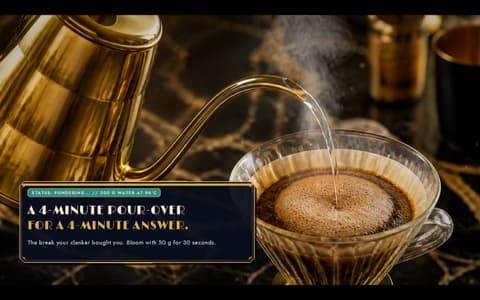
one more time astra did just a little bit better i mean argon just got very lazy in the actual cup here so there's our first test of 3d generation this of course isn't always indicative of a model's performance but it's something that google just called out and leaned into so heavily that i wanted to see if it matches up to their blog posts and at least in this generation it wasn't even freaking close to their blog posts of course this also is a one -shot but i mean it should be somewhat closer so for our next test let's get into something that is maybe a little somewhat closer so for our next test let's get into something that is bit more tactical for you in your everyday and it's creating a launch video so here is the prompt make a launch video for again clanker coffee make it as beautiful as possible we have this whole brand kit for clanker coffee and i'm giving it access to this skill that i've created i will include this in the blog post for you to access as well and what i've been doing is i've been using opus 5 5 to kind of reverse engineer motion graphics and launch videos that look really professional across the board. and opus has done a good job of kind of pulling out elements that go into these videos. And so we have all of that detailed in this launch video clone skill. So the agents have access to that, which should make the outputs much better. And then I also say, too, the graphics must be photo real. So product shots, you know, must look like a real commercial shoot.
And we give them access to GPT Image Gen 2 .5 and Blender via Python scripts as well. So they might be leaning on Blender to actually create these product shots and Blender to actually create these product shots instead of just using image generation. instead of just using Image Gen. So we'll again see how well they do with 3D and how well they put this together into some sort of cohesive video. So with that, let's take a look at these. And we'll just hit play here.
Jesus. all right i was so distracted by the sound design that i didn't even look at these generations the actual music selection is very good it's using the 11 labs api to just build a soundtrack it's a feel which is very good. It's using the 11labs API to just build the soundtrack. It feels very much like, you know, kind of an old school Art Deco type soundtrack, if that makes any sense. Sounds good. The sound effects, though, need quite a bit of work.
The agents are not quite there yet in actually generating these. So I'm just going to mute this from here on out. Let's just quickly scrub through these different generations. So this is actually pretty cool that it was able to with either, I'm assuming this is Blender, the way it just moves this a little bit. This could just be something that it generated with GPT Image Gen and then found a way to actually move the image that's impressive you know it does feel kind of like a powerpoint presentation but i guess that's fine i didn't actually specify you know that i wanted it to be a little bit more like a launch video but it still looks good i mean this is all generated in 3d you can see the bag here very realistic looking nice lighting even this backdrop here all of that is generated with blender and then the rest of this i think this is gpt image gen you can just kind of tell when they generated with blender versus image gen like this is definitely blender okay it goes back all right and then we have this liquid coming out this is actually really impressive look how detailed the and then we have liquid is if if only we could get that liquid in the previous bottle pour that's nice okay i thought the steam was moving but the actual you know water with the coffee grounds is moving that's very impressive and then just another bag so it didn't actually have a whole lot of variation in the different 3d generations it did however bag again looks great and then we have this coffee moving be moving somehow this looks like something maybe it did with gpt image and then just got it to somehow this looks like something maybe it did with gpt image gen and just move and then we have these bags we got this nice reflection here look at this marble countertop that's very impressive and then we're back to just that bag shot nice little logo animation at the end boom okay so that's column a next up column b just gonna mute the sound we're gonna play this through this looks like it's okay all right yeah it's coming in much faster however it's pretty aggressive these bags aren't bad I wonder what the music sounds like. Okay, it's like faster -paced jazz.
We've got, yeah, kind of a weird mug there. It's trying. You can see it's trying to be photoreal. Yeah, again, not exactly something that you would actually use as a video, but it is a good test if we just extract what was done here. So this is ImageGen. Hey, we've got some nice little floating particles.
That's a nice little touch. Brought in this kind of gold. All these little cards in the UI. They're a little bit messy and it's just something that, you know, wouldn't be They're a little bit messy. included in an actual, you know, social video. Here's some image gen.
Sure, why not? And it just shakes here. That's kind of odd. Some more image gen. Okay. And then it gets into the actual blender renders here.
Pretty good. Not as realistic as the other bags. We've got some nice movement, some nice change in lighting, some more movement here. Nice little marble countertop with some good reflections. Way too much text on screen here. And then we've lost a lot of detail in the actual cold brew bottle and this mug it's a little lot of detail in the actual cold brew bottle.
blobby again it's trying to be photoreal though we can see an attempt at lighting an attempt at glass and we've got some more cards here showing up like look at this text i mean come on anyone ever read this good to know for the future problem yeah i mean look at this we have some nice reflection in this marble here this here looks a little stretched and odd and the mug as you zoom in it even does have you know a nice little camera push in that's pretty impressive mug again zoom in it even does have you know a nice little camera push in that's pretty impressive looks very funky at the bottom but it looks very well done at the top and then it keeps zooming in and then we just have some gpt image down here more cards incredible amount of text that nobody would ever read so there we go definitely some feedback to give on a prompt like this in the future let's take a look at column c here play mute that audio nice all right impressive stuff impressive stuff i'm just curious let's just play a second of this audio all right yeah this one's definitely the most impressive i liked how it you know you hit enter all right yeah this one's definitely the most impressive i liked how it you know hit enter that's a nice little light up of the eyes and then it goes to the actual eyes yeah this is what i'm talking about i knew the models were capable of this so it feels like the different scenes are connected you've got this little robot with the coffee really cool generation here i wonder if it used gpt image gen and then found a way to light up those eyes here the actual pot doesn't look very realistic but it tried i like this kind of like camera tilt here this is a little funky these like different bubbles but again it's attempting these are like different bubbles but to do things and then a nice little zoom in we just have a little bit of text on screen like that's much more realistic than the last version and then i really like when it starts showing off the different bags i mean look the way it came in like this this is very impressive nice very smooth camera movement like look at this motion blur this is the kind of stuff these models would not be able to do very well and then like even the easing here where it just very gradually slows down like the camera movement it feels very natural boom and then slows down like the camera movement it feels very natural swipe and then slow down very cool even the music and the sound design it's not as aggressive showing off all the different bags yeah this one's definitely the best the only thing was just the 3d work at the beginning but that's definitely number one and let's take a look at column d the last one i'm going to try to play this audio if it gets annoying i will mute it okay that's annoying all right looks like just some gpt image gen stuff okay image and stuff again all right tried something less realistic looking of a bag i like that light sweep in the in the back there okay nice it's showing off the different flavors that's nice okay bag we've lost total Okay, the bag. We've lost total detail on the bottle, too. detail in the bottle too A nice little zoom in. All right, yeah, I like the reflections there. That's pretty good, but the bottle just does not look that realistic. Okay, so there we go.
I'd have to say, just from it not looking like a commercial, even though the 3D work is better than column D, I'm going to say this one's last. I'm going to say this one's number two, this one's number three. Okay, Gemini Argon. Sorry. Sorry, Argon. I actually thought that this was Argon because the 3D work in that bottle was not good.
It actually did a much better job at 3D work in this task here. But I mean, just like the amount of text on screen, it just did not feel like a proper, you know, commercial or, you know, social video, like everything was just so aggressive. And yeah, just lost a lot of detail. But again, at least it went photo real. It didn't like finish the photo real task, but it didn't look like an illustration like it did in the last 3D generation. So Argon number four, and then number three, Fable 5 won.
Wow. Okay. Number two, GPT -6 Astra, Opus 5 .5 again. Opus 5 .5, I'm telling you. Opus 5 .5 is on a generational run right now with these model tests. I think it won all of the Muse Wonders, and then it also has won all of these, and it won in my model release video for itself.
It won every single one, I believe. Just the sheer creativity to start with this hit enter idea and then seeing the light enter idea and then seeing the the light here and revealing what these lights being lit up are in the next scene is just like the type of like cinematic type thinking that these models just do so poorly on where opus just seems to get it again like some 3d work could have been done better this nice camera movement here only a little bit of text on the screen and this swipe here with the motion blur really got me like i've yet to see that from a model not to mention the actual 3d bag work so that is a product launch video let's take a look at costs overall so we'll actual 3d bag work so that is a product launch video start with argon ten dollars 17 million input tokens 436 000 output tokens took 80 minutes gpt6 astra cost 28 19 million input 83 000 output 81 minutes and then fable 5 .1 62 million input 242 000 output took a whopping 302 minutes yeah this thing just did not stop and it was not even close. So interestingly, Fable 5 .1, you know, very close not even close so interestingly to Argon for much more expensive, five times more expensive costs. But again, you would just be using Opus 5 .5 anyway and getting a much better generation or GPT -6 Astra and getting a relatively better generation for a little bit more expensive. So Astra, $28, 19 million input, 83 ,000 output, 81 minutes, and then Opus 109 million input, 313 ,000 output, and took again a whopping 318 minutes. 13 ,000 output and took, again, a whopping 318 minutes.
So there we go. There is another test where Argon coming in last, but it was really close between Fable 5 .1 and Argon. By the way, too, this is API equivalent pricing on Gemini Argon. I am using their subscription. I was on the $99 a month plan, but it only was able to get through about one build, this 3D cold brew bottle before it already hit daily usage limits. So usage goes pretty fast on Argon.
I would say a little faster than codex or cloud code. So something to keep in mind. And also worth mentioning, subscribe and codex or cloud code so something to keep in mind and also worth mentioning subscribe to the channel if you haven't already because i'm now the proud owner of a muse subscription a couple cloud code subscriptions

Comments
Sign in to join the conversation.