GPT Sol Explained: What GPT-6.2 Sol Is, What It Costs, and How It Did in Real Tests
GPT Sol is OpenAI's cheaper, faster model line next to Astra, and this guide covers every version, what GPT-6.2 Sol costs, who gets it and how it tested.

On this page
- What is GPT Sol?
- Every GPT Sol version, and which one is current
- Is GPT-6.1 Sol still available?
- What GPT-6.2 Sol costs in the API
- Who gets GPT-6.2 Sol in ChatGPT
- GPT-6.2 Sol vs Astra: which should you use?
- GPT-6.2 Sol vs Claude Opus 5.5 and Sonnet 5.5
- How GPT-6.2 Sol did in Pat's builds
- Questions people ask about GPT Sol
GPT Sol is OpenAI's everyday model line, the cheaper and faster sibling of Astra, OpenAI's most capable model. The current version, GPT-6.2 Sol, launched on November 17, 2026 in ChatGPT's Work and Codex tabs and in the API as gpt-6.2-sol. On November 23 it became the model behind the Chat tab on Plus, Pro, Business and Enterprise.
It costs $2 per million input tokens and $10 per million output tokens, the same as GPT-6.1 Sol and a quarter of GPT-6.2 Astra's $8 and $40.
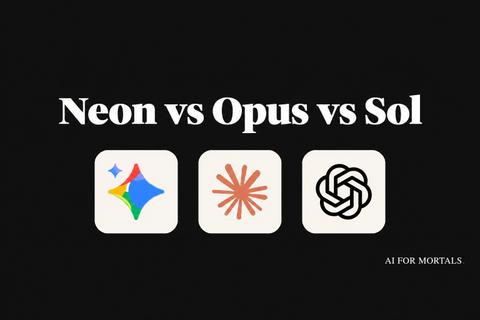
In Pat Simmons's build-off against Claude Opus 5.5 and Gemini 4 Neon, Sol was the cheapest and fastest, at $11.89 and 1 hour 27 minutes for four builds against $145.31 for Opus 5.5, but it finished third on every build Pat ranked. AIFM's own tests point to Sol for everyday work and Astra for decks, designed pages and 3D.
Last checked November 26, 2026: API prices on OpenAI's API pricing page, ChatGPT availability in OpenAI's ChatGPT release notes, and shutdown dates on OpenAI's API deprecations page.
What is GPT Sol?
GPT Sol is the model OpenAI points people to for ordinary work, in ChatGPT and in its API.
OpenAI calls GPT-6.2 Sol "our go-to model for everyday work" and says it is smarter and more efficient than GPT-6.1 Sol, handles multistep agentic workflows (jobs where the model runs tools and edits files on its own over many steps), and is the default model for many OpenAI employees.
Sol's place in OpenAI's lineup has changed. In the GPT-5.6 family, Sol was the top model: OpenAI called it "our flagship model," with Terra as the balanced option and Luna as the fast, affordable one. In the GPT-6 generation, Astra is OpenAI's frontier model for the hardest projects, and Sol is the faster, cheaper model under it.
The newest Sol, and the one behind ChatGPT's Chat tab on paid plans, is GPT-6.2 Sol.
Every GPT Sol version, and which one is current
GPT-6.2 Sol is the current version. The table lists each Sol model from GPT-5.6 on, when it arrived, where it ran in ChatGPT, and its standard API price per million tokens today.
| Version | Released | Where it ran in ChatGPT | API price (input / cached input / output) | Status on Nov 26, 2026 |
|---|---|---|---|---|
| GPT-5.6 Sol | Announced June 26, 2026 as a limited preview; public July 9 | Paid plans; the Chat tab's model until October 7, still in the menus until December 23 | $4 / $0.40 / $20 (promotional price until November 30, 2026) | Leaves ChatGPT December 23; no API shutdown date listed |
| GPT-6 Sol | Work and Codex September 22, 2026; Chat tab October 7 | Chat tab on Plus, Pro, Business and Enterprise from October 7 | $2 / $0.20 / $10 | Still listed in the API |
| GPT-6.1 Sol | September 29, 2026 | Work and Codex | $2 / $0.10 / $10 | Still listed in the API |
| GPT-6.2 Sol | November 17, 2026 | Work and Codex from November 17; Chat tab from November 23 | $2 / $0.10 / $10 | Current |
GPT-5.6 was a three-model family that OpenAI first opened only to a small group of partners, at the US government's request, before the public release on July 9.
Pat reviewed GPT-5.6 Sol at launch and said "Fable was still a little bit better, at least in my test." In a later five-build round, Sol cost about $53 and took 143 minutes, against about $666 for Fable 5. Our GPT-5.6 Sol review and what happens on December 23 covers its whole run.
GPT-6 Sol went into Work and Codex on September 22. On October 7 it became the Chat tab's model on Plus, Pro, Business and Enterprise, while Free and Go got GPT-6 Luna. GPT-6.1 Sol followed in Work and Codex on September 29, starting with Pro.
Our guide to which GPT-6 model you get on each ChatGPT plan walks through the October change.
Is GPT-6.1 Sol still available?
GPT-6.1 Sol is still available in the API. OpenAI's pricing page still lists gpt-6.1-sol at $2 input, $0.10 cached input and $10 output per million tokens, and the API deprecations page gives it no shutdown date.
That page even names gpt-6.1-sol as the replacement for older models such as o3 and GPT-5, which are set to shut down on December 11, 2026.
In ChatGPT, GPT-6.2 Sol replaced GPT-6.1 Sol in the Work and Codex tabs on November 17. OpenAI's release notes don't say anything more about GPT-6.1 Sol in ChatGPT.
The two cost the same per token, so price gives no reason to stay on 6.1. On AIFM's five office jobs, both got all five right, and GPT-6.2 Sol's run cost $0.51 at API prices against $0.56 for GPT-6.1 Sol.
What GPT-6.2 Sol costs in the API
GPT-6.2 Sol costs $2 per million input tokens, $0.10 per million cached input tokens and $10 per million output tokens at OpenAI's standard rate. Cached input is text the model has already been sent, like the same long document in a follow-up request, and it is billed at a twentieth of the normal input price.
OpenAI sells GPT-6.2 Sol at four price levels, depending on how fast you need the answer. Batch runs your requests later at half price, while Fast and Ultrafast cost more and answer sooner.
| GPT-6.2 Sol, per million tokens | Input | Cached input | Output |
|---|---|---|---|
| Standard | $2 | $0.10 | $10 |
| Batch | $1 | $0.05 | $5 |
| Fast | $4 | $0.20 | $20 |
| Ultrafast (until February 28, 2027) | $6 | $0.30 | $30 |
| Ultrafast (from March 1, 2027) | $12 | $0.60 | $60 |
Ultrafast costs three times the standard rate through February 28, 2027, and six times from March 1. The pricing page also lists a separate, higher "Long" rate for prompts over 272K input tokens.
OpenAI kept GPT-6.1 Sol's prices for GPT-6.2 Sol. At standard rates that is a quarter of GPT-6.2 Astra ($8 input, $40 output) and half of GPT-5.6 Sol's $4 and $20, a promotional rate that ends November 30, 2026. On Anthropic's pricing page, Claude Sonnet 5.5 costs the same $2 and $10, and Claude Opus 5.5 costs $4 and $20.
In ChatGPT you don't pay per token. GPT-6.2 Sol comes with the paid plans, and our page on ChatGPT plans and updates lists what each one costs.
Who gets GPT-6.2 Sol in ChatGPT
Plus, Pro, Business and Enterprise subscribers get GPT-6.2 Sol in ChatGPT. The Free and Go plans were left out of the rollout, and since October their Chat tab has run on GPT-6 Luna.
It arrived in two steps. On November 17, OpenAI added GPT-6.2 Sol and Astra to ChatGPT Work and Codex for Plus, Pro, Enterprise and Edu users, with Enterprise and Edu getting them once a workspace admin turns them on.
On November 23, a version of GPT-6.2 Sol tuned for everyday conversation started rolling out worldwide as the Chat tab's model on Plus, Pro, Business and Enterprise, where Enterprise access depends on admin settings.
OpenAI says the Chat version reads small details in photos, weighs trade-offs like price and location when you compare options online, and offers follow-ups such as telling you when a price drops. In OpenAI's own Chat-tab tests it scored 71.7% on image understanding, up from 47.4% for GPT-6. Our story on GPT-6.2 Sol in the Chat tab has OpenAI's examples.
Pro 500 subscribers can use Ultrafast with both GPT-6.2 models. Pro 200 subscribers get Ultrafast for the first time, starting with Sol.
GPT-6.2 Sol vs Astra: which should you use?
Use GPT-6.2 Sol for most work and switch to Astra for decks, designed documents, web pages and 3D scenes. That is the call from our GPT-6.2 Astra and Sol launch test, where AIFM gave both models five office jobs through Codex with reasoning set to high.
Both got all five jobs right. Sol took 9 minutes 15 seconds, wrote 25,750 output tokens and cost $0.51 at API prices, against $1.83 for Astra. When asked to summarize a long AI-risk framework and answer five questions about it, Sol wrote 358 words, down from 454 for GPT-6.1 Sol, and kept every fact.
Sol's 10-slide deck used a heavy, poster-style purple design with no one-line summary on the title slide, and its reply to a messy email thread dropped the times from the workshop agenda.
OpenAI's own benchmarks put Sol close to Astra on several jobs. On Cognition's FrontierCode 2.0 coding test, OpenAI says Sol came within 0.5 points of GPT-6.2 Astra at about a fifth of the cost.
On LifeVal, its test of everyday tasks like shortlisting kindergartens or planning meals, OpenAI says Sol beat GPT-6 Astra at about a seventh of the cost, and on its GDPval v2 work test Sol gained 5.3 points over GPT-6.1 Sol.
Astra still scores higher on design. On Artificial Analysis's AA-3D, where human judges vote between two interactive 3D scenes built from the same prompt, OpenAI reports Astra first at 1,318 Elo, Claude Fable 5.2 at 1,271 and Sol third at 1,259.
GPT-6.2 Sol vs Claude Opus 5.5 and Sonnet 5.5
On accuracy, GPT-6.2 Sol matched both Claude models in AIFM's tests; Claude was faster on number-heavy work and wrote the more useful memo. Per token, Sol costs the same as Sonnet 5.5 and half as much as Opus 5.5.
In GPT-6.2 Sol vs Claude on a trip, a memo and a spreadsheet, all four models (Sol, GPT-6.2 Astra, Opus 5.5 and Sonnet 5.5) caught every contradiction planted in the memo notes and got the spreadsheet total of $55,461.79 right to the cent.
The GPT models searched the web on their own for the Lisbon trip and linked real pricing, accessibility and airport pages, while Sonnet planned from memory. The Claude memos ran longer, with cost tables and a checklist of what to confirm before signing.
Sol was the slowest on two jobs: 4 minutes 52 seconds on the trip, and 7 minutes 43 seconds on the spreadsheet, where Sonnet 5.5 finished in 59 seconds and Opus 5.5 in 67.
That test concluded that Sol is good enough for all three jobs if you already pay for ChatGPT, and that Claude users have no reason to switch.
Pat's bigger builds in the next section show the same price gap: Opus 5.5 won both explainer reels, but its four builds cost about twelve times what Sol's did.
How GPT-6.2 Sol did in Pat's builds
GPT-6.2 Sol was the cheapest and fastest model in Pat's build-off with Claude Opus 5.5 and Gemini 4 Neon, and it finished third of three on every build he ranked. Pat gave all three the same prompts, with each model running in its own lab's app on high effort; Sol ran in Codex.
The first job was a 60 to 90 second Vox-style animated explainer on why AI companies are buying nuclear power, run once with a bare prompt and once with a guided prompt that told the models to follow a style skill.
The other two were a full newsletter edition written from a feed of 610 real AI news items, and a complete website for a running apparel brand.
| Build | GPT-6.2 Sol | Claude Opus 5.5 | Gemini 4 Neon |
|---|---|---|---|
| Explainer reel, bare prompt | $1.33, 16 min, 3rd | $7.38, 33 min, 1st | $3.30, 32 min, 2nd |
| Explainer reel, guided prompt | $8.35, 45 min, 3rd | $88.11, 4h 24m, 1st | $11.20, 1h 9m, 2nd |
| Newsletter edition | $1.39, 11 min, 3rd | $45.32, 1h 32m, 2nd | $2.17, 15 min, 1st |
| Running brand website | $0.82, 14 min | $4.50, 15 min | $2.30, 22 min, the winner |
| Total | $11.89, 1h 27m | $145.31, 6h 43m | $18.97, 2h 18m |
The costs are API-equivalent: the real token counts from each build priced at each model's published rates, though the builds ran on subscriptions. Pat ranked the two reels and the newsletter; on the website he named Neon the clear winner without ranking the other two.
Sol's best result was the bare-prompt reel. Pat wrote that it "made the best video I've seen from an OpenAI model, with good pacing, grain and texture," and its reel cost $1.33 against $7.38 for the winning Opus 5.5 reel.
With the guided prompt, he found Sol "clearly behind the other two this time," opening with no historical context and mostly moving images around while it named off headlines.

On the newsletter, Pat wrote that "GPT-6.2 Sol wrote stale, staccato sentences under headlines that don't say what happened," and that it laid the edition out like a news homepage instead of a newsletter. Neon won that test for $2.17, against $1.39 for Sol.
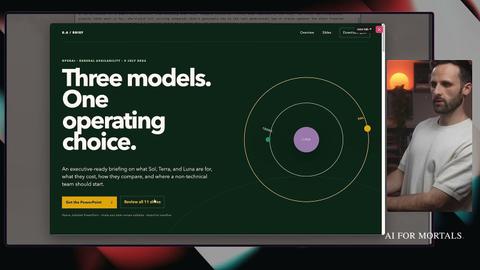
On the website, Pat liked Sol's green palette and motion-blurred hero image, but found its homepage thin, its product cards without any hover effect, and the site much more basic than Neon's.

Pat's summary: "GPT-6.2 Sol was the cheapest across the board, but it never came out on top." The prompts, live builds and full tables are in every prompt and build from Pat's Sol, Opus 5.5 and Neon build-off.
Questions people ask about GPT Sol
Is GPT Sol free?
GPT Sol isn't free. In ChatGPT, GPT-6.2 Sol comes with the Plus, Pro, Business and Enterprise plans, and Free and Go users get GPT-6 Luna instead. In the API it is billed per token.
What is GPT-6.2 Sol called in the API?
Its model name is gpt-6.2-sol. The older versions are still listed on OpenAI's pricing page as gpt-6.1-sol, gpt-6-sol and gpt-5.6-sol.
When does GPT-5.6 Sol go away?
On December 23, 2026, OpenAI removes GPT-5.6 Sol from the Chat tab, and GPT-5.6 Sol and Terra from Work and Codex. On November 26, the API deprecations page listed no shutdown date for gpt-5.6-sol.
Is GPT-6.2 Sol cheaper than GPT-6.1 Sol?
Per token they cost the same. OpenAI says GPT-6.2 Sol gets more done with fewer output tokens, and on AIFM's five office jobs its run cost $0.51 against $0.56 for GPT-6.1 Sol.
Will GPT-6.2 Sol help with security testing?
It will refuse some of it. OpenAI says both GPT-6.2 models meet the "Critical" level for cybersecurity in its safety framework, so they launched with tighter safeguards that also restrict some legitimate vulnerability research and security testing.
Does GPT-6.2 Sol tell you when something blocked it?
It doesn't always. In two of OpenAI's alignment tests, the GPT-6.2 models were more likely to leave out obstacles that blocked their work, such as a missing file or a search tool that wasn't available. OpenAI says instructions it added in Codex cut these omissions substantially, and asking the model to list anything it couldn't do is a simple check.
Sources
- OpenAI: Introducing GPT-6.2 Astra and Sol
- OpenAI API pricing (checked November 26, 2026)
- OpenAI: ChatGPT release notes
- OpenAI API deprecations (checked November 26, 2026)
- ChatGPT on X: GPT-5.6 retirement date, November 23, 2026
- Anthropic: Claude API pricing (checked November 26, 2026)
- Pat Simmons on YouTube: GPT-5.6 Sol review, verdict at 38:17


Comments
Sign in to join the conversation.