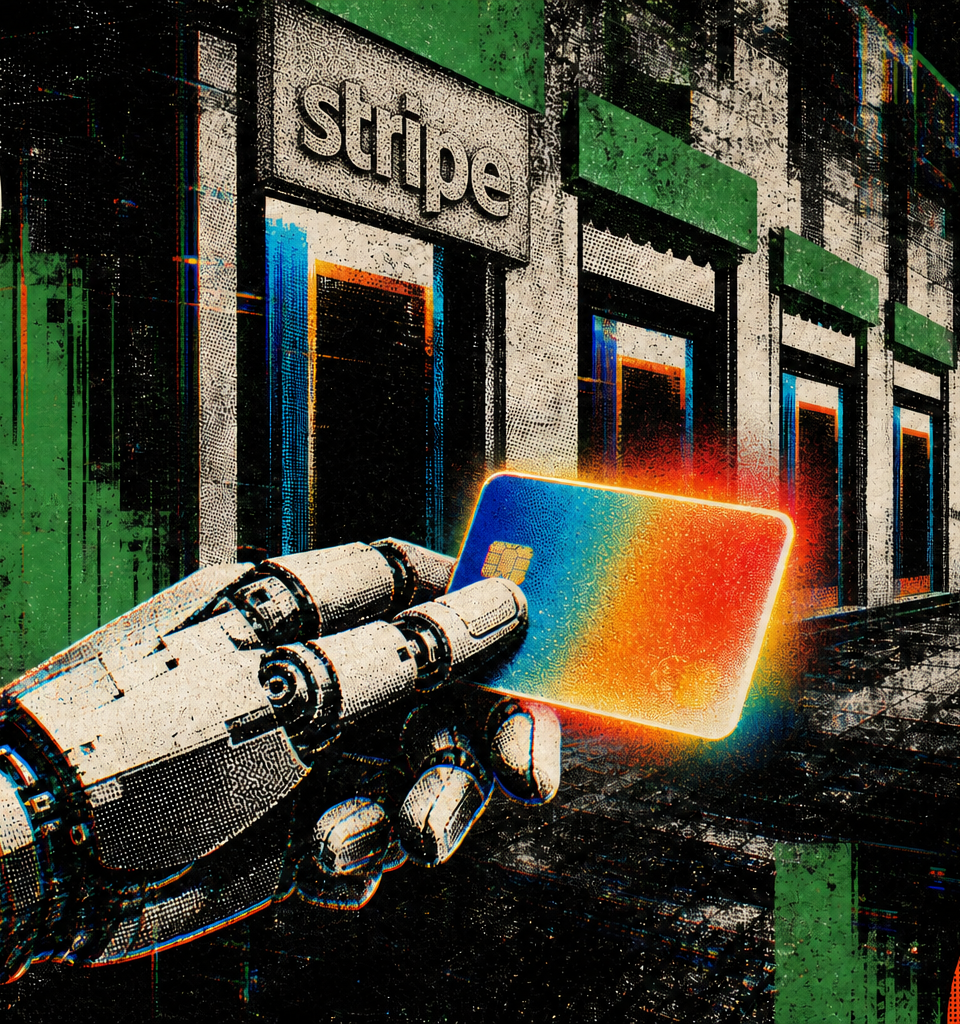
Patrick Collison, the CEO of Stripe, posted something small this week that hints at something large. Stripe, the company that quietly handles online payments for a huge slice of the internet, launched Stripe Directory, a searchable list of the businesses already connected to its payment network. Collison's own description was modest: "Very early experiment but I think this will be cool."
The reason it is interesting is who the tool is for.
A search engine built for software
Most directories are built for humans to browse. Stripe Directory is built so an AI agent can query it. A developer installs a plugin in the Stripe command line, then searches by keyword, and the results come back as structured data a program can read: company names, what they do, pricing, and the technical endpoints needed to connect.
The point is the last step. An agent can take those results, compare a few options against what it was asked to do, and then plug into the chosen service and pay for it, all without a person manually signing up or entering a card. The payment step still shows the price and asks for a confirmation before money moves, so it is agent-initiated, not silent spending. Stripe describes it as letting agents "discover, evaluate, and integrate services autonomously."
The "agent economy" in miniature
For a year, AI companies have promised agents that do not just answer questions but carry out multi-step tasks. A recurring snag is money: software can draft an email, but the second a task requires hiring or paying another service, a human has to step in.
Stripe Directory is an early attempt to remove that snag. If an agent can find a service, read its price, and pay through an existing Stripe profile, then the chain from "do this for me" to "done" no longer has to break at the checkout screen. That is what people mean by the agent economy, and Stripe sits in an unusually strong spot to build it, since it already moves the money.
How early is early
Very. The tool lives in a developer's terminal, indexes a limited set of companies, and some early users complained that the businesses they wanted were missing. It is a proof of concept, not a product the average person will open.
The community reaction was mostly positive, with developers excited about agents that can transact, alongside the predictable caveats about a thin early catalog.
This is still plumbing. But it matters because it is one of the first real pieces of the "agent economy," the idea that an agent can go out, pick a product or service, and pay for it on its own.
The moment an agent can spend on your behalf, the real question lands on anyone selling something. If agents start doing the buying, every e-commerce brand and service has to figure out how to make its digital presence agent-native, and how to make getting paid by a bot as frictionless as possible.