What Is Google DeepMind? The Lab Behind Gemini and Who Runs It
Google DeepMind builds Gemini, Veo and Nano Banana for Google, and this guide covers who founded it, who owns it and who runs it now.

Google DeepMind is Google's AI research lab, and it builds the Gemini models along with Veo for video and Nano Banana for images. It started in 2010 as DeepMind, a London startup co-founded by Demis Hassabis, Shane Legg and Mustafa Suleyman, which Google bought in 2014 and merged with its own Google Brain team in April 2023.
Google owns it, and Alphabet owns Google. Hassabis ran the lab as CEO until August 2026, when he became its chair and Koray Kavukcuoglu took over day-to-day leadership. You can't sign up for DeepMind itself: you use its work through the Gemini app, which has a free plan.
What is Google DeepMind?
Google DeepMind is the unit inside Google that builds the Gemini models and does Google's frontier AI research. Its About page describes it as Google Brain and DeepMind brought together "into a single, focused team".
The lab's own site lists what it makes: the Gemini models, Nano Banana image models, Veo video models, Lyria for music, Genie for interactive worlds, Gemini Robotics and the open Gemma models. It also runs science projects such as AlphaFold, which predicts the 3D shapes of proteins, AlphaGenome for reading the human genome and WeatherNext for weather forecasts.
So when people ask what Google DeepMind is used for, the short answer is two jobs. It builds the Gemini models that Google's products use, and it applies AI to science problems.
Who owns Gemini AI?
Google owns Gemini, and Google DeepMind is the team that builds the Gemini models. Google itself belongs to Alphabet. Alphabet's website says "Google will become a wholly-owned subsidiary of Alphabet," so Alphabet is the ultimate owner of both Google DeepMind and Gemini.
Gemini is also the name of Google's AI assistant app. The app used to be called Bard, and Google renamed it Gemini on February 8, 2024 because "Gemini represents our most capable family of models." That's why "what is Google's AI called" has one answer today: Gemini, for the app and for the models behind it.
If you searched "Gemini CEO", you may want a different company. Gemini, the crypto platform at gemini.com, has nothing to do with Google. Its About page lists Tyler Winklevoss as CEO and Cameron Winklevoss as President.
Demis Hassabis: DeepMind's co-founder, now its chair
Demis Hassabis co-founded DeepMind in 2010 and ran it until August 2026. Since August 5, 2026 he has been Chair of Google DeepMind and Chief Scientist of Alphabet. Google announced the change in a memo from Sundar Pichai, CEO of Google and Alphabet.
In his own note in that post, Hassabis wrote that he was handing over the day-to-day running of the lab "so that I have the time and space to focus on the big picture." Pichai's message says Hassabis is "continuing to lead Isomorphic Labs", the AI drug discovery company that Isomorphic's site says Hassabis founded in 2021.
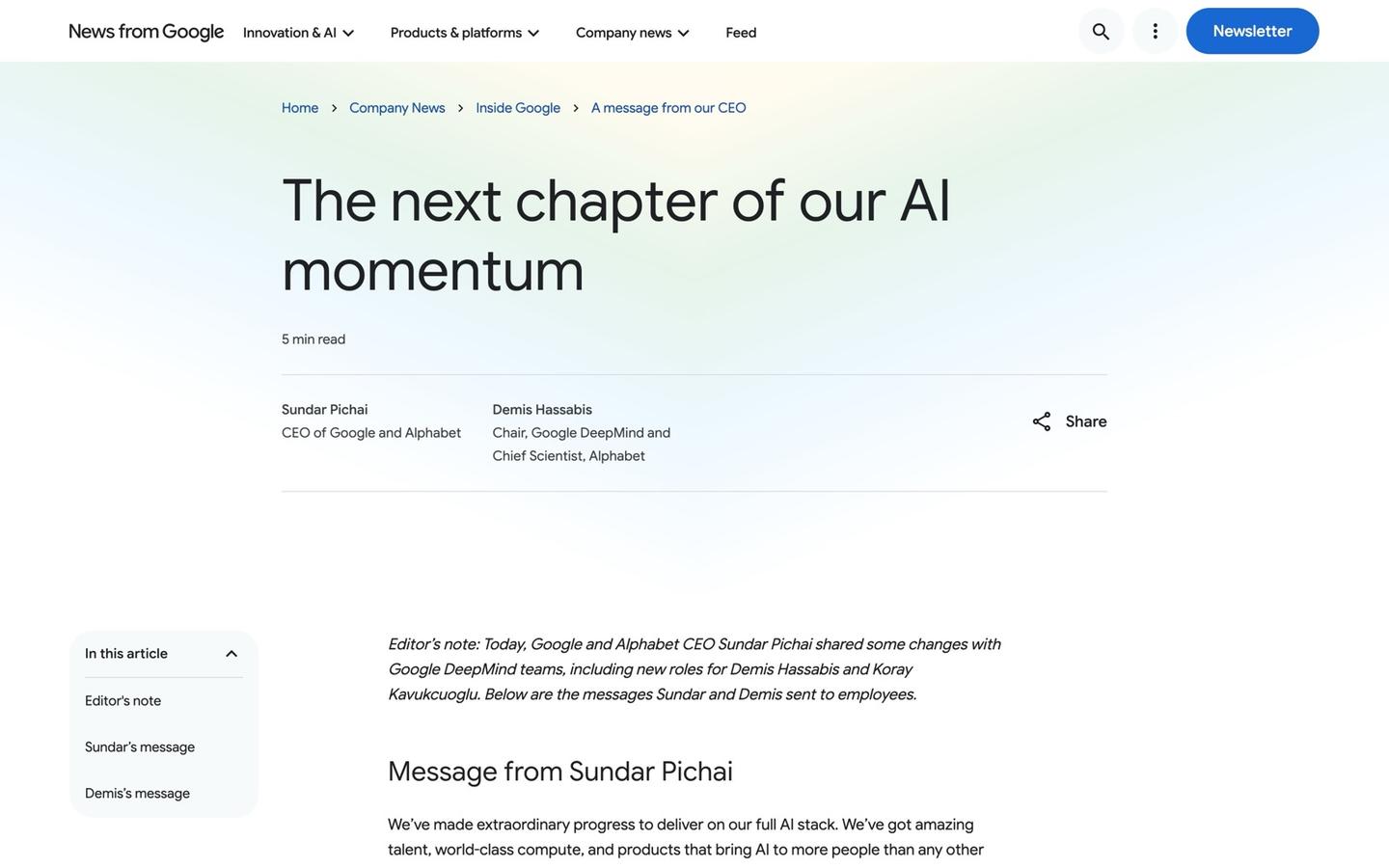
The person who runs Google DeepMind now is Koray Kavukcuoglu. The same memo made him SVP of Google DeepMind, reporting to Pichai, in charge of "Gemini model development, Frontier AI research, and the Gemini app and developer teams." He had been the lab's chief technology officer and has worked at DeepMind for 13 years. Google DeepMind's About page still captions Hassabis as "Co-founder and CEO" as of November 25, 2026, which is why you'll see both titles online.
Hassabis also shares a Nobel Prize. The 2024 Nobel Prize in Chemistry went half to David Baker "for computational protein design" and half jointly to Hassabis and John Jumper "for protein structure prediction", the work behind AlphaFold.
Mustafa Suleyman, another co-founder, joined Microsoft in March 2024 to form Microsoft AI, the group behind Copilot.
How DeepMind became part of Google
DeepMind became part of Google in two steps: Google bought the startup in 2014, and in April 2023 it merged DeepMind with its own Google Brain team to form Google DeepMind. Since then it has been a unit inside Google.
The startup began in 2010. In his note announcing the merger, Hassabis wrote: "When we launched DeepMind back in 2010, many people thought general AI was a farfetched science fiction technology that was decades away from being a reality."
Google bought the London company in January 2014. Google never published the price. TechCrunch reported, citing The Information, that it was "more than $500 million", and added that DeepMind confirmed the deal but "couldn't disclose deal terms." Treat any figure you see as a press report.
In March 2016, DeepMind's AlphaGo program beat Go champion Lee Sedol 4-1 in Seoul, in a match DeepMind says more than 200 million people watched.
Google Brain was the other half. According to Google DeepMind's About page, Brain started in 2011 at X, the moonshot factory, and in 2017 invented the Transformer, the design almost every large language model is built on. Brain's work also led to Bard, the chatbot that became the Gemini app.
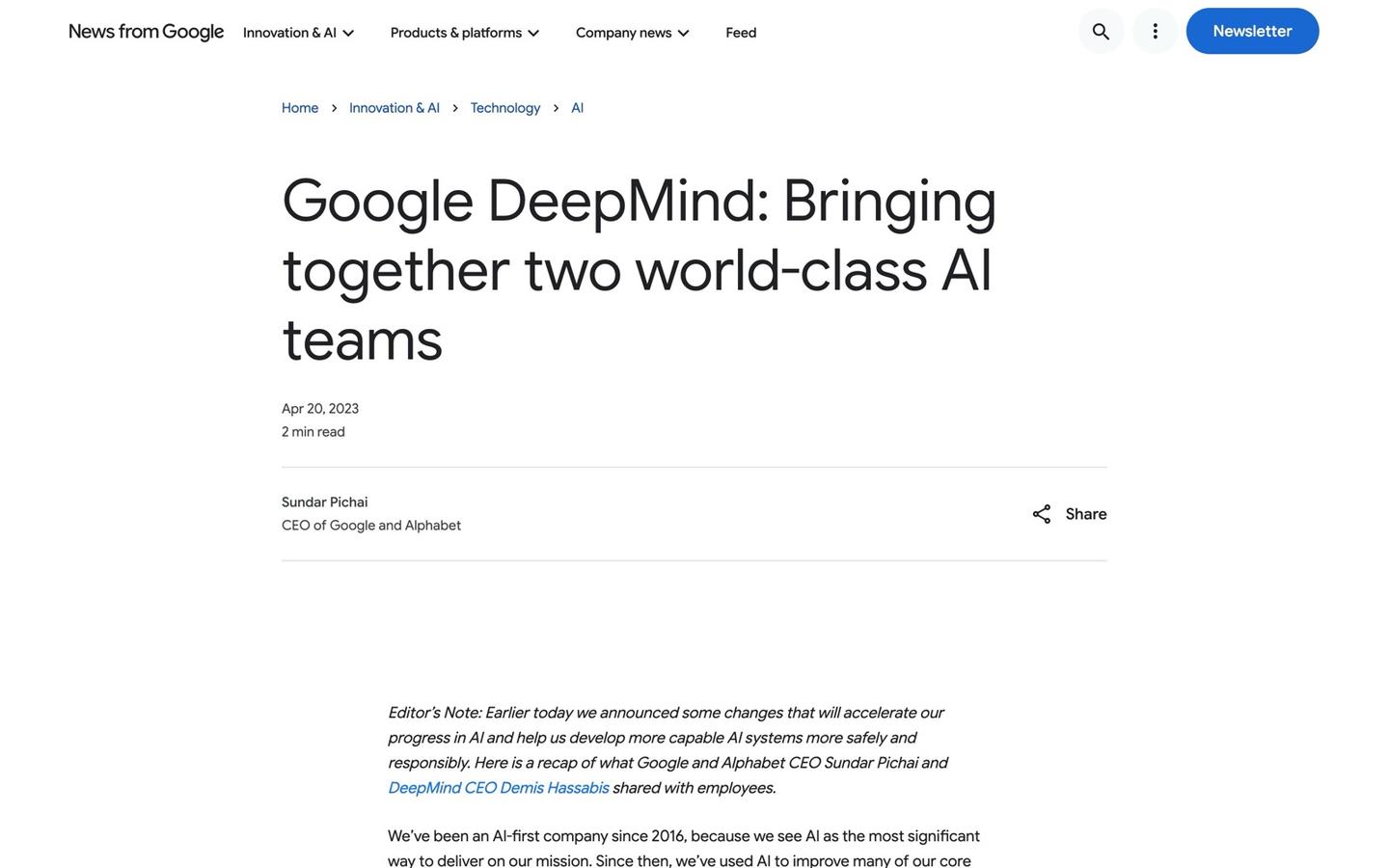
On April 20, 2023, Pichai announced a new unit "called Google DeepMind" that would "bring together two leading research groups in the AI field: the Brain team from Google Research, and DeepMind," with Hassabis as CEO. So Google DeepMind vs Google Brain has a short answer: Brain no longer exists as its own team, because it is part of Google DeepMind.
What Google DeepMind makes: Gemini, Veo, Nano Banana
Google DeepMind makes the Gemini models, the Veo video models and the Nano Banana image models, plus the science tools it's known for, like AlphaFold. Some Google AI products come from other teams, though, including Gemini Notebook, which was called NotebookLM until July 2026.
| Product | What it does | Who built it |
|---|---|---|
| Gemini models (Gemini 4 Carbon, Neon, Argon, Hydrogen) | The AI models behind the Gemini app and Google's other AI features | Google DeepMind |
| Gemini app | Google's AI assistant, called Bard until February 2024 | Google; since August 2026 the app team is overseen by Google DeepMind's SVP |
| Veo | Makes video clips, with sound, from a text description | Google DeepMind |
| Nano Banana | Makes and edits images; the nickname for Google's Gemini Image models | Google DeepMind |
| Gemini Notebook (formerly NotebookLM) | A research tool that analyzes the sources you give it | Google Labs |
| AlphaFold | Predicts the 3D structure of proteins, launched in 2020 | DeepMind |
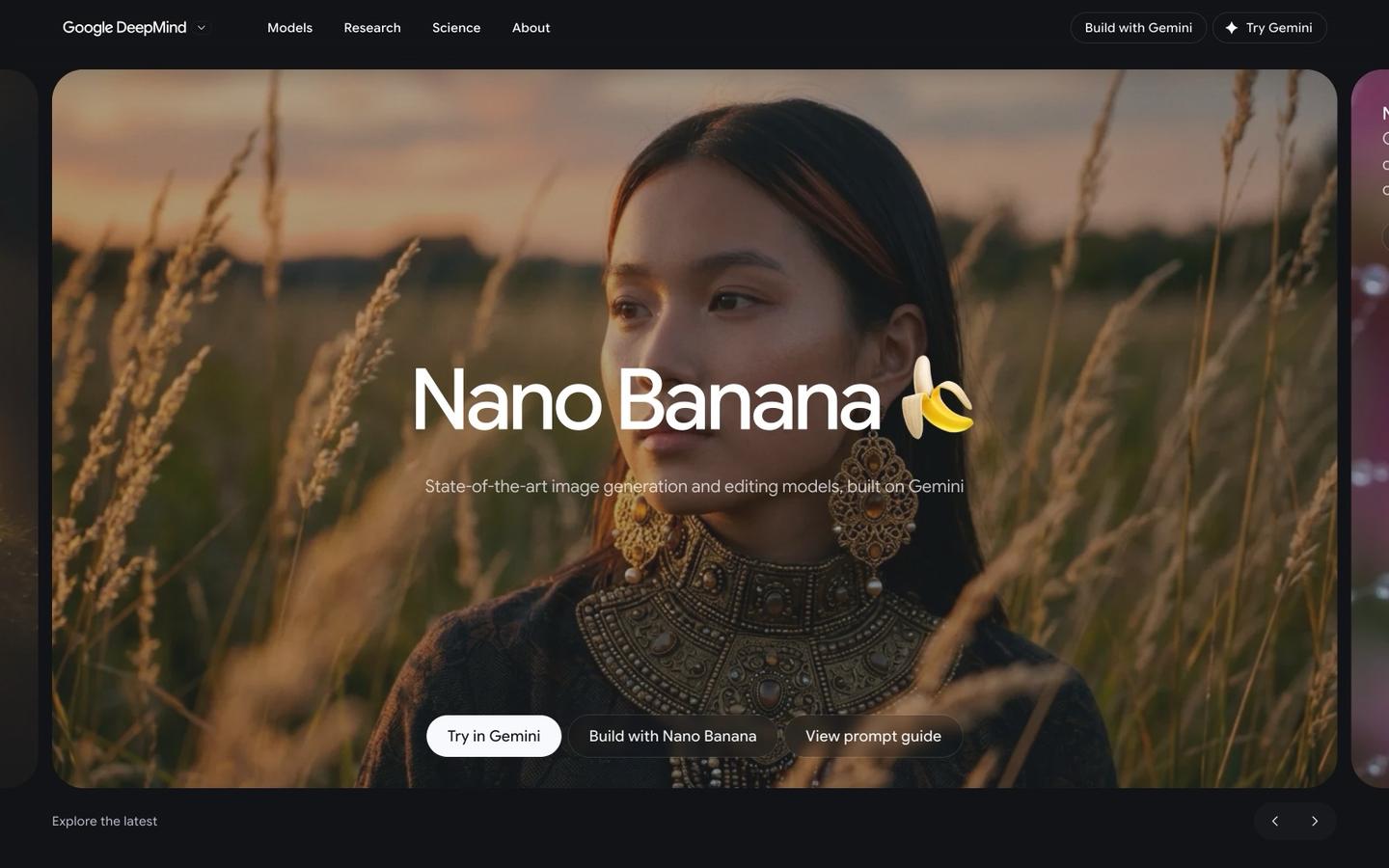
Nano Banana is Google DeepMind's name for its Gemini Image models, and the lab's page describes them as "image generation and editing models, built on Gemini." Each version has a technical name too: Nano Banana Pro is Gemini 3 Pro Image, Nano Banana 2 is Gemini 3.1 Flash Image, and Nano Banana 2 Lite is Gemini 3.1 Flash-Lite Image. We track releases on our Nano Banana page.
Veo is the lab's video model, which its page calls "Our leading video generation model". You can use it in the Gemini app or in Google Flow, and our Veo page logs each update.
NotebookLM came from Google Labs, Google's team for AI experiments. Google introduced it in July 2023 as "an experimental offering from Google Labs", and on July 16, 2026 it renamed NotebookLM to Gemini Notebook, calling it "the same standalone product". The changes are on our NotebookLM page.
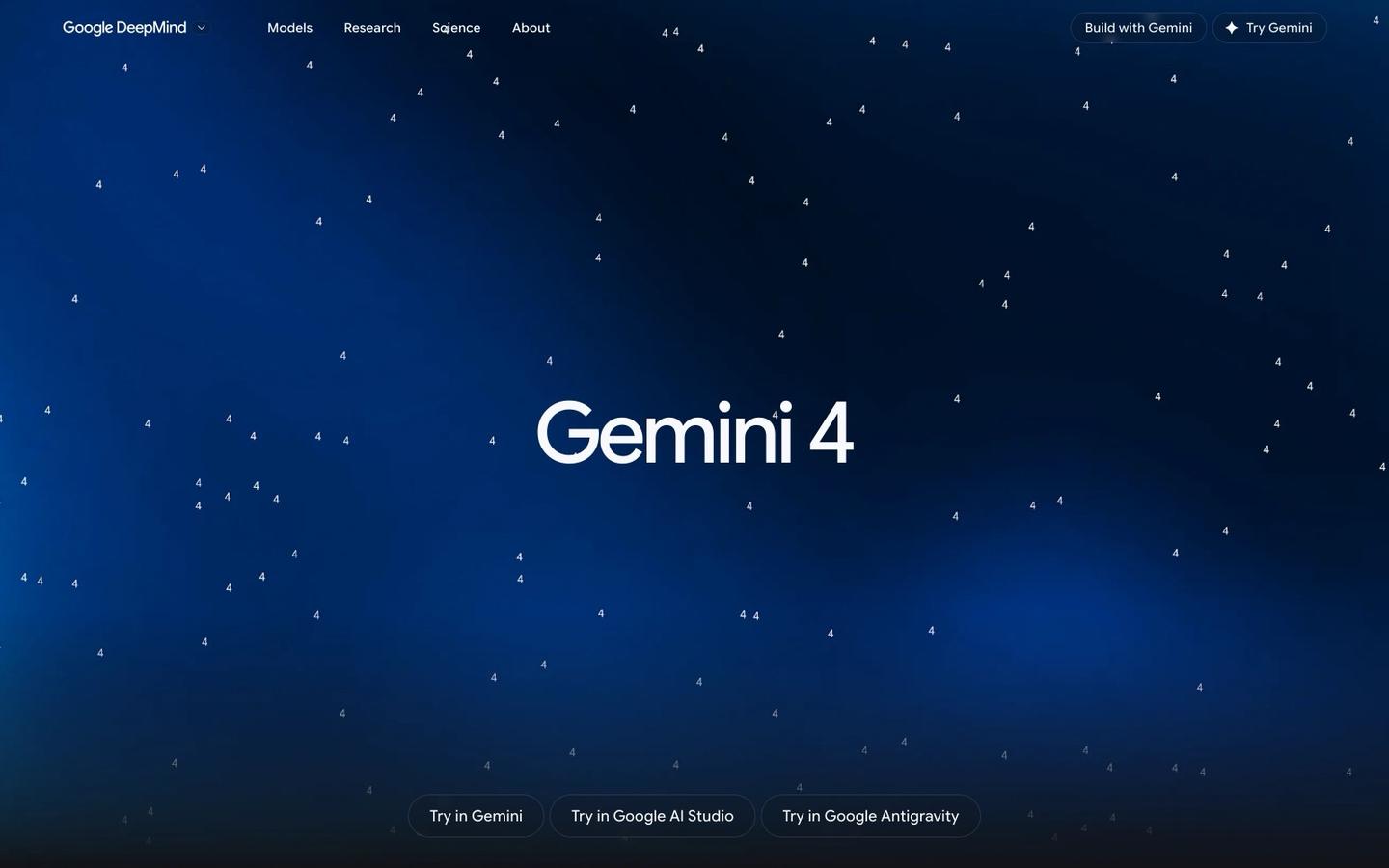
If you are comparing Google DeepMind vs Gemini, Google DeepMind is the lab and Gemini is what it makes. As for what the lab is working on now, its site listed Gemini 4 Neon, Gemini 4 Hydrogen and Genie 4, a model that generates interactive worlds, among its November 2026 releases. For a running list across all of Google, see everything Google has shipped in AI.
Is Google DeepMind free to use?
Google DeepMind has no sign-up of its own, but you can use its models for free. The Gemini app's free plan costs "$0 / month with a Google Account" and includes automatic model selection, image generation, Deep Research and Gemini Live, according to Google's plans page.
Paying gets you more usage and Google's stronger models. These are the US prices we saw on November 25, 2026:
| Plan | US price | Gemini model Google lists for it |
|---|---|---|
| Free | $0 a month | Automatic model selection (no model named) |
| Google AI Plus | $4.99 a month | Gemini 4 Hydrogen, with 2x the Free usage limits |
| Google AI Pro | $19.99 a month | Gemini 4 Neon and Hydrogen, with 4x the Free usage limits |
| Google AI Ultra | $99.99 or $199.99 a month | Gemini 4 Carbon, Neon and Hydrogen, with 5x or 20x the Pro usage limits |
Google was also running a Black Friday offer on select plans when we checked, so the price at checkout may be lower for a while. Our Gemini app page follows changes to the app and its models.
Developers get a free tier as well. Google's API pricing page lists a free tier with "Limited access to certain models", free input and output tokens, and Google AI Studio access. On that tier Google notes that your content is "used to improve our products."
Where Pat has tested Gemini
Pat Simmons hasn't reviewed Google DeepMind as a company, because it's a lab and there's no product to test. He has tested the Gemini models it makes. On his YouTube channel he reviewed Gemini 4 Argon (October 14, 2026) and Gemini 4 Carbon (November 12, 2026), and he put Gemini 4 Carbon and Gemini 4 Neon in two build-offs, where several models build the same apps.
Our posts from those tests give the verdicts. In Pat's Gemini 4 Carbon vs Argon test, the short version is: "use Gemini 4 Argon for most work, and bring in Gemini 4 Carbon when Argon gets a long, multi-step problem wrong."
When we ran Gemini against ChatGPT and Claude on the same five office jobs, the result was that "Gemini 4 Neon, Opus 5.5 and GPT-6.2 Sol all got our five office jobs right, so the choice comes down to speed, price and style." Our Gemini 4 Neon explainer covers who gets that model and what it costs.
Questions people ask about Google DeepMind
Is Google DeepMind a separate company?
No. Pichai's 2023 announcement set up Google DeepMind as a unit inside Google, and its leader, Koray Kavukcuoglu, reports to Pichai.
How much did Google pay for DeepMind?
Google never said. The figure reported at the time of the January 2014 deal was more than $500 million.
Who is the CEO of Google DeepMind?
Since August 5, 2026, Koray Kavukcuoglu has led Google DeepMind as its SVP, and Demis Hassabis is its chair. Hassabis held the CEO title from the 2023 merger until then.
Who created Nano Banana?
Google DeepMind. Nano Banana is the nickname for its Gemini Image models.
Who created NotebookLM?
Google Labs. Google now calls it Gemini Notebook.
Is DeepMind part of Google?
Yes. Google bought DeepMind in 2014, and it has been part of Google DeepMind since the April 2023 merger.
Sources
- Google DeepMind (homepage, checked November 25, 2026)
- The next chapter of our AI momentum (Google, August 5, 2026)
- Google AI plans (Google, checked November 25, 2026)


Comments
Sign in to join the conversation.