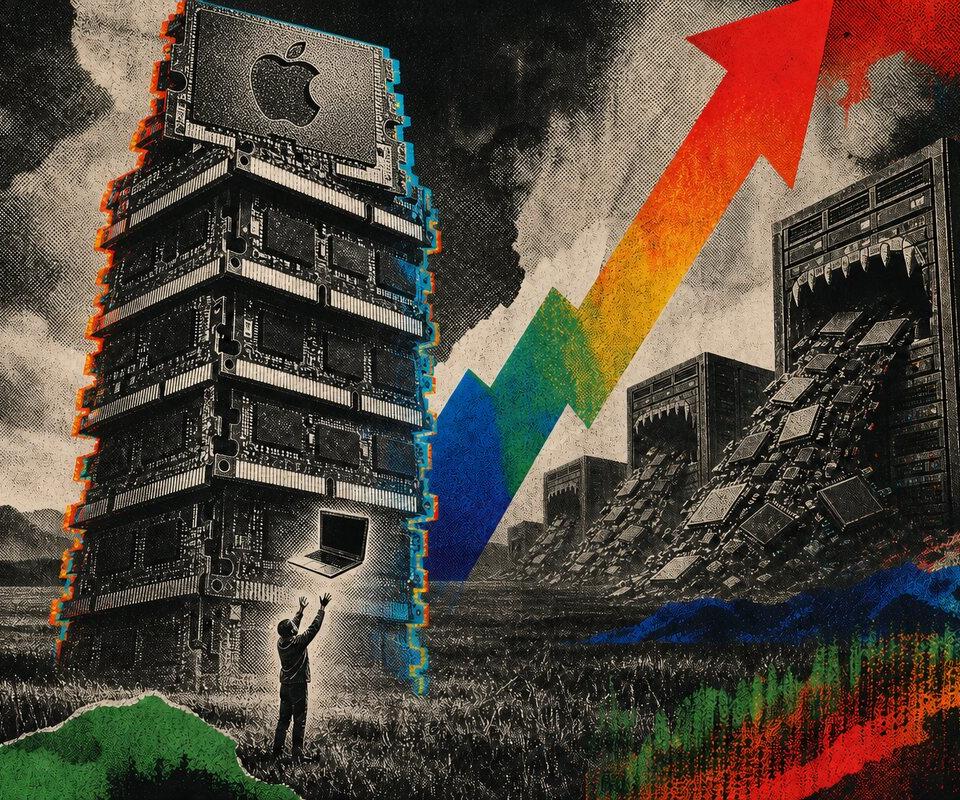
For most people, the AI boom has been something happening in the distance: enormous data centers, enormous numbers, none of it touching daily life. On Thursday it landed on the shelf at the Apple Store. Apple raised the starting prices on its Macs, iPads, and several other products, and pointed the finger squarely at the cost of memory chips.
What got more expensive
The increases hit Apple's most popular lines. The MacBook Air's base price moved from $1,099 to $1,299. The 14-inch MacBook Pro went from $1,699 to $1,999. The entry MacBook Neo rose from $599 to $699, the 11-inch iPad Pro from $999 to $1,199, and the iPad Air from $599 to $749. HomePod, HomePod mini, and Apple TV got global bumps too, and the largest single-model increase reached 25%. Apple, which usually holds its base prices steady for years, said it could no longer absorb the rising component costs on its own.
Blame the memory shortage
The trigger is a steep run-up in the price of memory and storage chips, the DRAM and flash storage that every computer and phone needs. According to industry tracker TrendForce, the price of DRAM rose as much as 98% in the first quarter of 2026 and is set to climb another 58% to 63% this quarter. Chip-watchers have started calling it "RAMageddon."
The cause is the AI data-center buildout. Companies racing to train and run AI models are buying memory in enormous volumes, with firms like Nvidia signing long-term supply deals that lock up capacity faster than manufacturers can add it. That leaves consumer-device makers like Apple competing for what is left, at much higher prices.
It is bigger than Apple
Apple is just the most visible name. The same shortage is expected to ripple across the industry. Research firm IDC projects the PC market will shrink about 11% this year and the smartphone market will see its biggest annual decline on record, close to 14%, as higher memory costs push prices up and buyers hold off. Apple's own shares fell after the announcement. Reaction online ran overwhelmingly sour, with most commenters calling the hikes greedy, though the underlying cause is an industry-wide squeeze rather than a uniquely Apple decision.
I don't want to be the guy telling you to stockpile toilet paper in March 2020, but the memory shortage behind these price hikes is only forecast to deepen.
Between rising prices and the government starting to gate which AI models you can use, owning your own setup, open-source models on a machine you control, is starting to make real sense for anyone with the budget.