Google's Gemini Glasses Go on Sale December 10, From $395
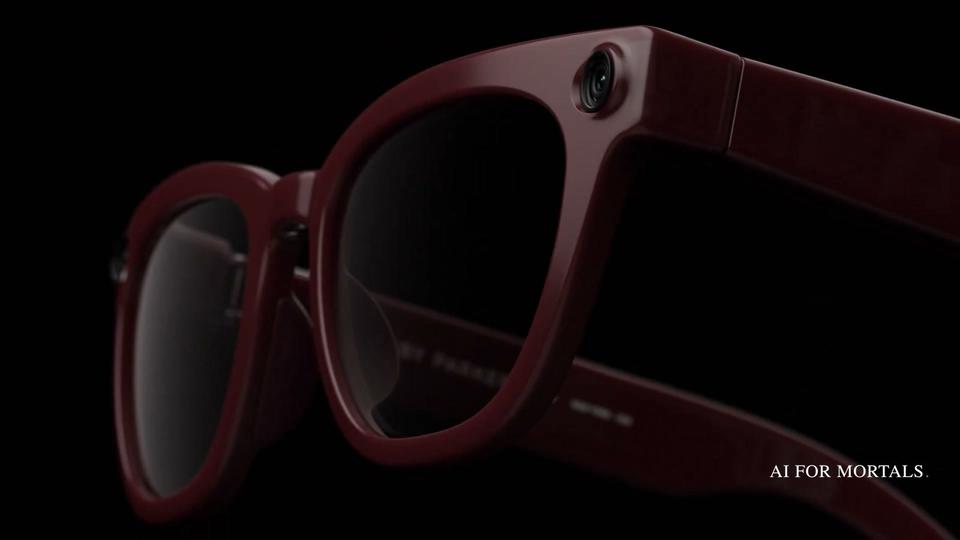
Google's new Gemini glasses from Warby Parker and Gentle Monster have a camera and speakers but no screen, and pre-orders are open in the US and South Korea.
 AI for Mortals Staff
Google opened pre-orders for its smart glasses, which Google calls "intelligent eyewear": regular-looking frames with Gemini built in, designed by Warby Parker and Gentle Monster and engineered by Samsung.
They start at $395 and go on sale online and in stores on December 10, in the US and South Korea.
Google smart glasses price, styles and where to buy them
Warby Parker has three styles, Alden, Reid and Wren, as regular glasses or sunglasses in Pine, Saddle or Jet Black. They start at $395, with a wide range of prescription, width and lens options.

Gentle Monster has six bolder designs, in colors including dark red, pink, gray and yellow, with tinted, clear, blue or brown lenses. They start at $449, and most frames take prescription lenses.
You can pre-order now online or in Warby Parker and Gentle Monster stores. Warby Parker offers a guided demo at more than 360 of its stores, and select Google Stores have them to try on too.
What Gemini on the glasses can do without a screen
The glasses have no display. Everything comes through a camera, microphones and small open-ear speakers that aim the sound into your ears. You say "Hey Gemini" or tap the frame, and Gemini answers out loud.
Google's examples cover most of a normal day:
- Ask about what you're looking at, like the story behind a street mural or a pick from a bookshelf of new arrivals.
- Check your calendar from a poster. Look at an event flyer and ask whether you're free.
- Add things to a list. Look at a near-empty carton and add it to your grocery list, or ask where your next meeting is.
- Get walking directions from Google Maps, spoken turn by turn in your ear.
- Translate a conversation as people speak, in more than 70 languages, with the language picked up automatically. This needs the Google Translate app on your phone.
- Take photos and videos with the 12-megapixel camera, by pressing a button or asking Gemini.
- Play music and audiobooks from YouTube Music, Spotify, Apple Music or Audible, take calls and reply to messages.

For people who are blind or have low vision, the glasses include Gemini's Guided Vision, which describes what's in front of you, and a link to Aira, a service where a trained person sees through your camera and talks you through it. Both work only with Android phones for now.
If you've talked to Gemini hands-free in the car, now on Apple CarPlay too, the glasses work the same way: you speak, and Gemini answers out loud.
Which phones work with Google's Gemini glasses
The glasses need a phone connected over Bluetooth for Gemini and music. Taking a photo, changing the volume and checking the battery work without it. Google's FAQ lists these phones:
- iPhone 13 or newer with at least 6GB of memory (in practice the iPhone 13 Pro and later), on iOS 26.6 or later
- Pixel 7 or newer, on the September 2026 Android 17 update or later
- Samsung Galaxy S or Z series phones on One UI 9 or later
You also need a Google account from the US or South Korea, and you have to be 18 or older.
You won't need a paid Gemini plan for any of the glasses' features, according to Engadget, and iPhone owners get the same features as Android users apart from Guided Vision and Aira, which work only with Android phones for now.
The frames weigh around 41 grams and last up to nine hours of mixed use. The case recharges them up to seven times and gets them to 60% in about 30 minutes, and they handle splashes and sweat (IPX4).
How Google says it protects you and the people nearby
The loudest reaction to the launch was about the camera. A lot of people called them "creep glasses," worried about being filmed by someone who looks like they're just wearing glasses.
Google published a separate post on privacy the same day. Its main promises:
- What the camera shows Gemini isn't kept. It isn't saved in your Gemini History, and it isn't used to train AI models or target ads.
- Faces get blurred. The glasses are designed to redact the faces of people nearby before Gemini processes the image.
- A light comes on when you shoot. An outward-facing light flashes for a photo and pulses through a video, with a sound when you start and stop. If the light is covered or tampered with, the glasses are built to refuse to record.
- There's an off switch. Sliding it turns off the camera, microphones and Gemini, and they work as plain glasses.
- Gemini waits for its wake word. In standby it doesn't send what you say to Google, though Google admits a noise that sounds like "Hey Gemini" can wake it.
Wearers also have to agree not to record people without permission, not to record in sensitive places and not to cover the light. Google says breaking those rules breaks its terms of service and can get your glasses disabled.
Google's posts describe the light for photos and videos you save. They don't say whether it lights up when Gemini looks through the camera to answer a question.
Google's Gemini glasses vs Ray-Ban Meta Gen 3
Meta's Ray-Ban Meta Gen 3 glasses, the closest match to Google's, start at $449, so Google's Warby Parker frames come in $54 cheaper. Both have a 12-megapixel camera, speakers in the arms and an assistant you talk to, and neither has a screen.
Several early testers said Gemini on Google's glasses is more capable than Meta AI on the Ray-Bans, and their examples lean on Google apps many people already use, like adding a concert flyer's details straight to Google Calendar. If you're comparing the assistants themselves, here's how Meta AI stacks up against Gemini, ChatGPT and Claude.
Google's glasses also skip one thing Meta's offer: you can't livestream to social apps from them, though you can share your view live in a Google Meet call.
The other reactions split three ways. Some people said they'd rather have a screen in the lens than a camera on the frame. People outside the US and South Korea, and Android owners without a Pixel or Galaxy phone, can't use them yet. And a smaller group doesn't see why anyone needs smart glasses at all.
Sources
- Google: The new intelligent eyewear collections are available for pre-order
- Google: Designing for privacy on intelligent eyewear
- Google: Intelligent eyewear and FAQ
- The Verge: Google's Android XR glasses hands-on
- Engadget: Android XR smartglasses hands-on
- PCMag: Ray-Ban Meta (Gen 3) review
- CNET: Google and Samsung's intelligent eyewear hands-on





Comments
Sign in to join the conversation.