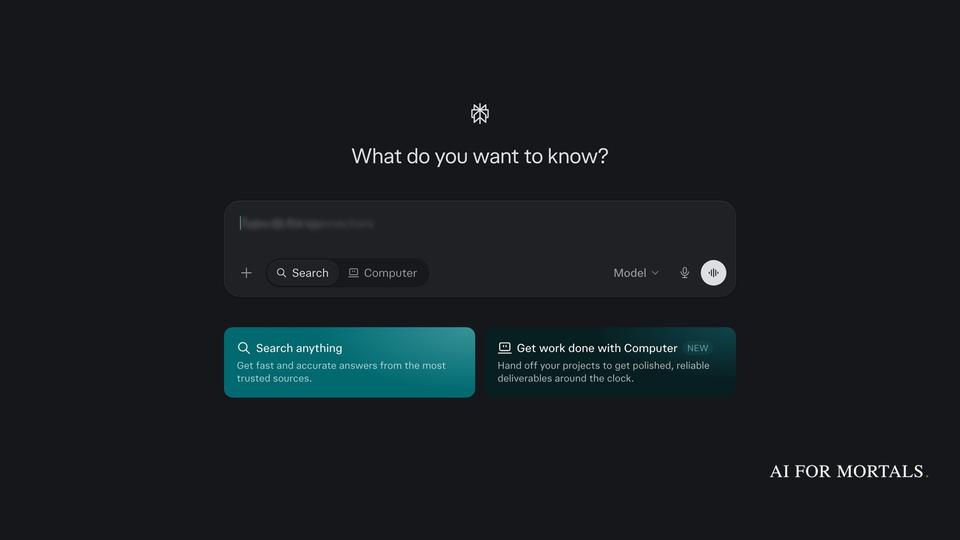
What Is a GPT Wrapper? How They Work, Real Examples, and Whether Perplexity Is One
A GPT wrapper is an app built on someone else's AI model, and what you pay for is what it adds on top, such as instructions, files or search.

A GPT wrapper is an app built on someone else's AI model. It sends your request to a model such as OpenAI's GPT through the company's API (the connection developers use to send text to a model from their own code and get the answer back), then adds its own screen, hidden instructions, data or workflow before it shows you the answer. OpenAI's developer quickstart shows how small that core is: create an API key, send a request, print the reply.
The term often comes with a shrug. For you, the useful question is what the app adds that ChatGPT alone doesn't: your files, a shortcut for one job, live web search or a tool it connects to. Perplexity is a special case, because it offers models from several companies plus models of its own.
Last checked November 18, 2026: OpenAI's API prices and ChatGPT's plan prices on their pricing pages, OpenAI's developer docs, Perplexity's help center and developer docs, and OpenAI's custom GPT retirement notice, all linked below.
What is a GPT wrapper?
A GPT wrapper is an app that uses OpenAI's GPT models (or, loosely, any company's AI model) for its thinking and supplies everything around them itself. The model writes the answers. The wrapper decides what you see, what extra instructions the model gets, which files or data go along with your request and what happens to the answer afterwards.
The name comes from the shape of the thing: a layer of the app's own design wrapped around a model it rents. Anyone with an API key can call the same GPT models, which is why the label often gets used as a put-down, and why a wrapper is only as useful as the layer it adds.
How does a GPT wrapper work?
A GPT wrapper works in three steps: it takes what you typed or uploaded, sends it to the model through the API together with its own hidden instructions, and shows you the reply in its own screen. Everything you see is the app's; only the answer comes from the model.
The API call is the core. In OpenAI's quickstart, a developer creates an API key, then sends a request naming a model (the example uses GPT-6.2 Astra) and some input text, and the reply comes back as text for the app to show however it likes.
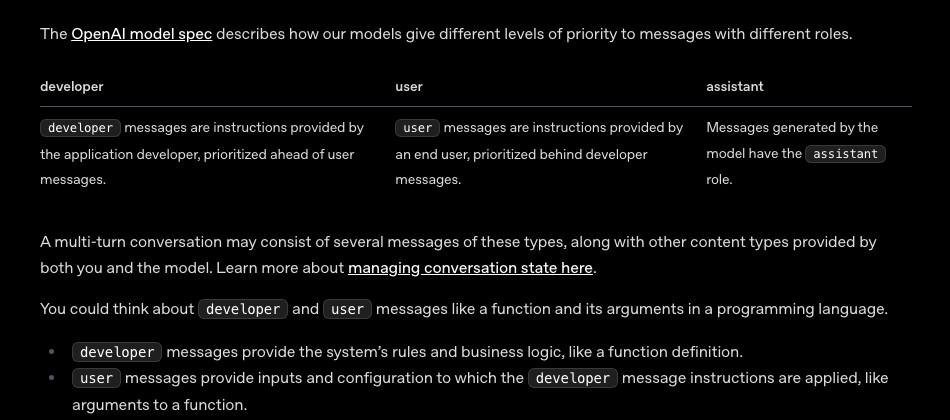
The hidden instructions are what make one wrapper behave differently from another. People often call them a system prompt. OpenAI's text generation guide calls them "instructions" or "developer" messages and says the instructions "take priority over user messages." In practice, the app's developer writes the rules once (for example, "you summarize contracts in plain English, three bullets, no legal advice"), and every message you type is answered under those rules, which you never type yourself.
The rest is the app's own work: the screen, the files or data it sends along with your question, the tools it connects to and the price it charges you. The table splits a wrapper into those layers.
| Layer | Who supplies it | What the sources say |
|---|---|---|
| The model that writes the answer | OpenAI (or another model company), through its API | OpenAI's quickstart: create an API key, send a request naming a model, get text back |
| Hidden instructions | The app's developer | OpenAI's text guide: developer messages are "prioritized ahead of user messages" |
| The screen you use | The app | The API returns text; the app decides how to show it |
| Your files or the app's data | You and the app | AI PDF works on the PDF files you give it; Perplexity adds its own web search and citations |
| Connections to other tools | The app | Perplexity says it adds its own "search, citations, tools, prompts, safety systems, and usage limits" to the models it offers |
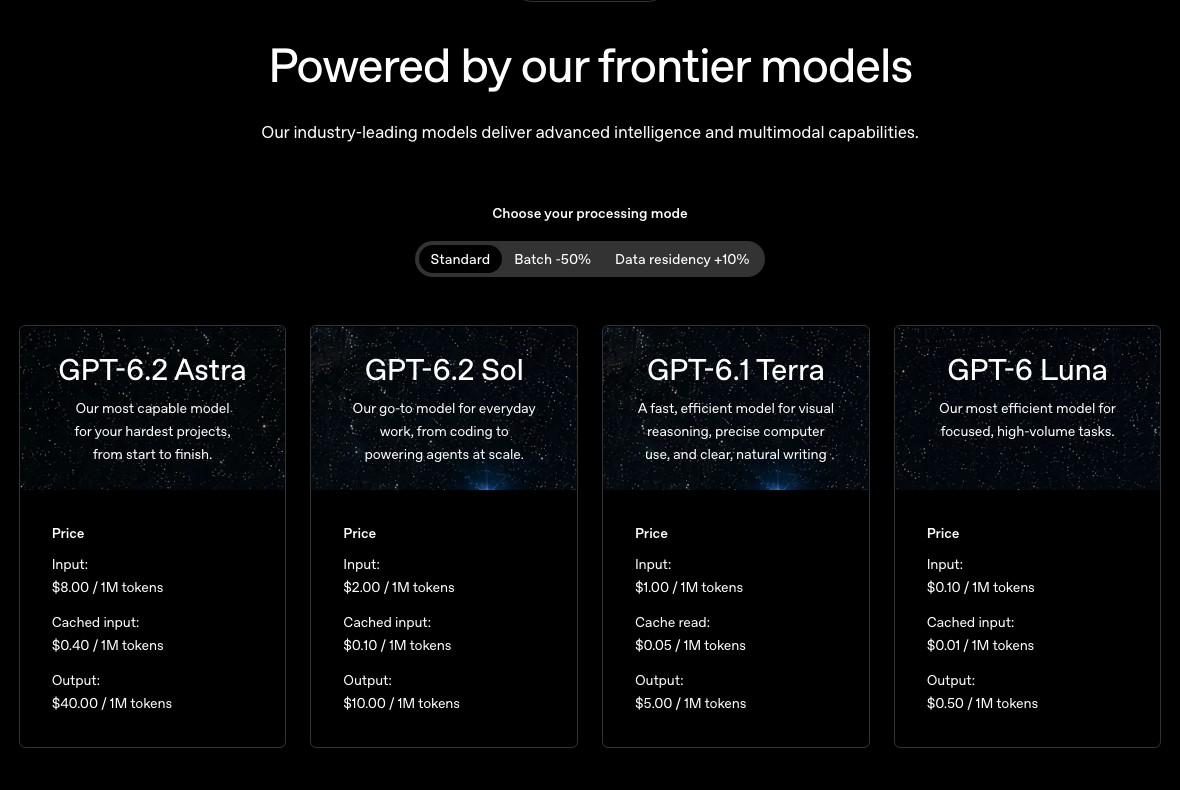
| What it costs | OpenAI bills the app per token; the app sets your price | OpenAI's API pricing page: GPT-6.2 Sol is $2.00 per million input tokens and $10.00 per million output tokens |
Is Perplexity a ChatGPT wrapper?
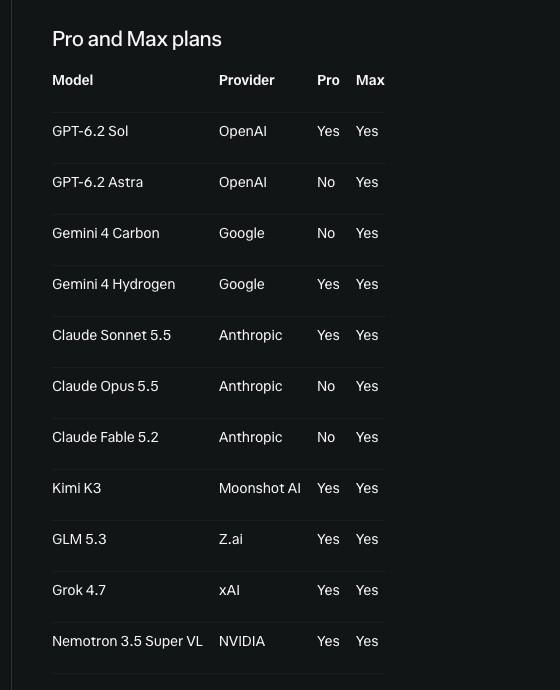
Perplexity runs on several companies' models plus its own, so it is more than a wrapper around one GPT. Its help center says Perplexity "combines web search with models built by Perplexity and by leading third-party providers," and paid subscribers can pick from a list of models from OpenAI, Google, Anthropic, Moonshot AI, Z.ai, xAI and NVIDIA.
Its own model shows up in its developer docs, which list Sonar and describe it as "Perplexity's grounded search model." Perplexity's help page also says its default model is "optimized for quick searches and web browsing" and is available to free and Pro users.
When you do pick GPT inside Perplexity, you get something different from ChatGPT. Perplexity's help center says it "integrates these models with its own search, citations, tools, prompts, safety systems, and usage limits," so "a model in Perplexity can behave differently from the same model in the provider's standalone product."
For the GPT rows, Perplexity works the way a wrapper does, with a search engine as the layer it adds. For the full picture of what each one costs and does, see our Perplexity tool page and our Perplexity vs ChatGPT comparison.
Is a custom GPT a wrapper?
A custom GPT is the simplest kind of GPT wrapper: ChatGPT set up once for one job, with its own instructions, optional files and tools, used inside ChatGPT instead of a separate app. Our guide to what a custom GPT is and what replaces it covers how they are built.
Custom GPTs are going away. OpenAI's retirement FAQ says custom GPTs "are scheduled to retire on Dec 11, 2026," and that on that date "custom GPTs and their GPT pages become inaccessible." FedRAMP workspaces and some Enterprise workspaces with an approved deferral get until Feb 11, 2027.
OpenAI is moving GPT creators to plugins, which it says "can bring reusable instructions, reference files, and connected apps together." The FAQ covers custom GPTs inside ChatGPT and says nothing about apps built separately on OpenAI's API.
GPT wrapper examples
Each example below uses another company's model, as its own pages or its founder's interview describe. The list is in no particular order and isn't a ranking.
AI PDF
AI PDF is a tool to summarize, chat with and organize your PDF files, and its cofounder and CEO Vicente Silveira was told his GPT wrapper startup would fail. Instead, in November 2024 it had "about 500,000 registered users, nearly 3,000 paying subscribers, and over 2 million conversations in the GPT store," according to a podcast interview with Silveira. The layer it adds is a specialized home for your PDFs.
Perplexity
Perplexity offers GPT-6.2 Sol and GPT-6.2 Astra alongside models from six other providers and its own Sonar, and wraps all of them in its own search and citations, as the section above shows.
Custom GPTs in ChatGPT
Each custom GPT is instructions and files packed on top of ChatGPT for one job. ChatGPT's pricing page lists custom GPTs as part of the Plus and Pro plans, and they retire on December 11, 2026.
Voice apps built on GPT-Realtime
OpenAI sells its live voice model, GPT-Realtime-2.1, through the API, priced per token on its pricing page. Any voice agent a company builds on it is a wrapper of the same kind: OpenAI's model, with the company's own instructions and app around it. Our explainer on what GPT Realtime does and costs has the details.
Why do people say "it's just a GPT wrapper"?
People say "it's just a GPT wrapper" when they think an app adds too little on top of a model anyone can rent. Any developer can rent the same model at OpenAI's published prices, so an app whose only layer is a prompt and a nicer screen is easy to copy, and easy for OpenAI to make unnecessary by adding the same feature to ChatGPT.
The price list shows how open that access is. OpenAI's API pricing page lists its standard per-token rates for anyone to see, from $0.10 per million input tokens for GPT-6 Luna to $8.00 for GPT-6.2 Astra. A token is a small chunk of text that the model reads or writes.
AI PDF's story shows the worry in practice. When OpenAI let ChatGPT users upload documents, the consensus was that AI PDF "and all the other GPT wrappers out there, were toast," and some of its competitors closed. AI PDF kept building as a specialized tool and kept growing.
The label describes how an app is built. Whether it is worth paying for depends on what its layer adds.
Should you pay for a wrapper or just use ChatGPT?
Pay for a wrapper when it does something for one job that ChatGPT doesn't, and compare its price with ChatGPT's own plans first. ChatGPT's pricing page lists Free at $0, Go at $8 a month, Plus at $20 a month and Pro from $100 a month, and our ChatGPT pricing guide breaks down what each plan includes.
Your ChatGPT subscription doesn't cover a wrapper's use of the model. OpenAI's pricing page says its "APIs are billed separately from ChatGPT Plus, Business, Enterprise and Edu," so the app pays OpenAI per token and charges you its own price on top.
Four checks before you subscribe, built from what the layers above can and can't add:
- Does it work with data ChatGPT doesn't have, such as your company's documents or a live search index?
- Does it connect to a tool you use every day?
- Does it save you steps on a job you repeat?
- Does it say which model it runs on?
If the answer to the first three is no, a ChatGPT project or a saved prompt in the plan you already pay for may do the same job. If an app only names "AI" and never the model, you can't compare it with ChatGPT on the thing doing the writing.
Questions people ask
Does my ChatGPT Plus plan pay for the wrappers I use?
No. OpenAI bills API use separately from ChatGPT Plus, Business, Enterprise and Edu, so each wrapper pays OpenAI on its own account.
Does a Perplexity subscription include API access?
No. Perplexity's help center says "Perplexity API usage and billing are separate from every subscription plan, and the API has its own model catalog."
Is GPT in Perplexity the same as GPT in ChatGPT?
Perplexity says no: it adds its own search, citations, tools, prompts, safety systems and usage limits, so the same model "can behave differently" there.
Can I build my own GPT wrapper?
Yes. OpenAI's quickstart starts with creating an API key and sending one request from a few lines of code, and ChatGPT's Pro plan includes "up to $500 in monthly API credits to build your own apps and agents." Pat Simmons has built his own apps with AI models, and our OpenAI company page covers OpenAI's models and products.
What happens to my custom GPTs on December 11?
OpenAI says custom GPTs and their GPT pages become inaccessible on that date, unless your workspace has the later Feb 11, 2027 date. Its FAQ asks creators to migrate and test a replacement before then.
What does it cost an app to run on GPT?
It depends on the model and how much text goes through it. At OpenAI's standard rates, GPT-6.2 Sol costs $2.00 per million input tokens and $10.00 per million output tokens, and GPT-6 Luna costs $0.10 and $0.50.
Sources
- Developer quickstart (OpenAI)
- Text generation guide (OpenAI)
- API pricing (OpenAI)
- ChatGPT plans and pricing (OpenAI)
- Custom GPT retirement and migration FAQ (OpenAI)
- What advanced AI models are included in my subscription? (Perplexity)
- Perplexity's default model and how it compares to Pro (Perplexity)
- Agent API models (Perplexity docs)
- His GPT Wrapper Has Half a Million Users (Every)

Comments
Sign in to join the conversation.