The prompt
# Build a premium 3D NEO robot experience

Act as a product designer, reference researcher, Blender artist, and frontend engineer. Create a faithful, premium redesign study of the official 1X NEO page: https://www.1x.tech/neo. Treat this as a client-style design exercise. The central improvement is a complete, interactive 3D robot in a softly lit studio, followed by an engaging scroll experience using the brand's existing visual language and real product footage.

Build the robot first and show me the actual 3D result before integrating the marketing website.

## Available references and setup

If the accompanying NEO starter kit is present, read `README.md`, open `REFERENCE_INDEX.html`, and inspect `research/ROBOT.md`, `research/BRAND.md`, `research/BLENDER.md`, `assets/manifest.json`, and `assets/video-manifest.json`. All paths are relative to the extracted kit. The images, screenshots, and video frames are references from the official website; they are not generated robot renders. Keep them intact and write your new work to separate folders.

This project must work without access to the creator's computer, earlier projects, generated models, renders, special skills, or paid generation services. Inspect the tools actually available. Use Blender's Python API (`bpy`) for reproducible modeling, rendering, and export. Use a Blender MCP connection for live inspection if available; otherwise use an isolated Blender process and saved Python scripts. If Blender is missing, finish the research and PRD, then explain the specific installation needed. Never present a reference photograph as the 3D deliverable.

If the kit is missing, start from the official product and order pages, https://www.1x.tech/neo and https://www.1x.tech/order. Collect your own references from those pages and their linked official sources. Do not assume that a file named in this prompt exists. Record original URLs and retrieval dates. Public source URLs can change. Do not use similarly named domains as substitutes for 1X.

## Phase 1 — Research and PRD

Inspect the full official page on desktop and mobile. Study the logo, navigation and its scroll states, typography, spacing, rounded media panels, glass play controls, CTAs, icons, product copy, and closing studio portrait. Inspect pixels as well as DOM/CSS. Distinguish measured source details from proposed changes.

Build a multi-view robot reference board covering the face, profile, full body, shoulders, textile construction, hands, shoes, ear rings, and any usable rear views. Compare the Tan, Gray, and Dark Brown order images, targeting the Tan campaign exterior. Use video frames to resolve details. Do not mix exposed engineering hand imagery with the finished campaign appearance without explaining why.

Write `PRD.md` with the intended experience, model deliverables, source inventory, interaction plan, implementation approach, milestone acceptance criteria, performance targets, and remaining uncertainty. Make practical implementation decisions and continue into the robot milestone.

## Phase 2 — Complete robot and studio

Create a source-faithful, fully three-dimensional Tan NEO in Blender. The primary silhouette reference in the kit is `assets/images/order-neo-body-96a45b2e.webp`; the face is `assets/images/order-neo-face-c9e24d8e.webp`; the profile is `assets/images/order-neo-cc3c7adf.webp`; the shoe reference is `assets/images/order-neos-boots-192c3ddc.webp`. The intended studio mood is `assets/images/neo-gamma-2102d301.webp`, the closing image from the product page. Its old CMS label is not a reliable product-generation identifier.

Match the elongated soft head, two physical camera lenses and bezels, oval illuminated ear perimeters, neck separation, shoulders, torso and pelvis proportions, diagonal chest/abdomen textile regions, ribbing, seams, cuffs, articulated five-finger hands, ankle hems, and knit shoes with distinct soles. Use the published height, approximately 1.6764 metres, for overall scale; document other dimensions as estimates. Match large shapes before spending time on fine texture.

Model the back, sides, underside, palms, feet, and gaps between limbs. Reference coverage is incomplete: there is no validated clean rear campaign view in the supplied set. Some introduction-film frames that appear useful at first are actually front views. Inspect every claimed view. Document inferred geometry and keep it visually plausible. Avoid invented sci-fi details.

Use a neutral studio with broad soft light, restrained highlights, a gentle floor shadow, and a quiet pale background. Recreate the closing portrait's lower-body opacity fade in presentation while keeping the underlying model complete. Provide a separate inspection view with the fade disabled. The original fade is embedded in the source image's alpha channel.

Maintain an editable Blender master and a reproducible script workflow. Keep source observations separate from modeling estimates. Fit and compare front, side, and three-quarter silhouettes under simple shading before refining fabric, lenses, lights, and materials. Review actual renders and correct visible errors; an inventory of modeled parts is not evidence of likeness.

Export a GLB that preserves the intended appearance in a browser. Bake unsupported procedural material effects into portable PBR maps as needed. Check normals, UVs, texture color spaces, scale, transparency, and material roughness after export. Reopen the saved Blender file in a fresh process and inspect the exported GLB independently.

Present the editable `.blend`, the `.glb`, a freely rotatable browser viewer, a complete 360-degree orbit, and front/profile/back/three-quarter comparison images. Include a concise uncertainty and remaining-quality report. A photograph, generated illustration, billboard, image sequence, or generic primitive mannequin does not satisfy this milestone. Pause for my review here before marketing-page integration.

## Phase 3 — Website after model review

Use the approved robot as the first thing visitors see. Preserve 1X's quiet, warm, premium tone. The September 2026 reference measurements are a starting point: page `#f7f7f7`, ink `rgba(0,0,0,.72)`, dark logo `#41403c`, media corners 80px desktop / 48px mobile, pill buttons, and glass controls using white at 16% opacity with 24px backdrop blur. Major headings are approximately 56px desktop / 30px mobile; body text 24px / 16px. Refer to `assets/brand/tokens.json` and the screenshots for context rather than imposing fixed widths on every screen.

Use the original SVG logo and icons from the kit. The source font is ABC Diatype. Font binaries are not included: use a properly licensed copy if supplied, or a clean system sans fallback and state that substitution. Rebuild clean components; do not ship captured analytics or copy the original app's hidden markup.

Design a scroll-controlled studio sequence with a smooth complete robot rotation and a few deliberate pauses or camera moves for the face, hands, textile, and feet. Start with one sticky canvas and a normalized scroll timeline; roughly four viewport heights is a candidate desktop length, to be tuned in the browser. Keep native scrolling and avoid trapping the user. The first frame must already look composed and intentional.

Transition into large, rounded panels showing original product demonstrations, with restrained feature callouts, accessible glass playback controls, and purposeful connections between the robot and footage. Source video links and observations are in `assets/video-manifest.json`; do not assume local MP4 files are supplied. Use native HLS where supported, a compatible player where necessary, or a verified local derivative with provenance. Preserve captions and review crops on mobile. Start playback muted when automatic; provide pause, mute, and explicit play controls.

Call out only supported product features. Treat performance and capability claims as manufacturer statements. Clearly distinguish expert-assisted operation from autonomous behavior; a demonstration clip alone does not prove autonomy. Recheck time-sensitive specifications, pricing, availability, and order links before writing them into the page.

React, TypeScript, Three.js / React Three Fiber, and GSAP ScrollTrigger are a reasonable default, but adapt to the existing project. Keep one renderer, resize it correctly, pause work offscreen, and use a responsive render budget. Aim for a compressed model around 8 MB on desktop and 4 MB on mobile if achievable without sacrificing likeness. These are targets to measure, not promises. Lazy-load video and secondary media.

Provide keyboard-accessible navigation and media controls, visible focus states, sufficient contrast, and a useful `prefers-reduced-motion` mode. Include a matching loading poster, a clear load-error fallback, touch-friendly model inspection, and a mobile experience that remains useful without long pinned motion. Use official outbound order links; this prototype does not need payment collection.

## Delivery and verification

Deliver the research/PRD, editable model, modeling scripts, browser export, inspection viewer, final website source, and concise run instructions. Keep references, generated work, and optimized runtime assets in separate folders. Track source URLs and inference notes. This educational reference kit does not confer a commercial media or font license; obtain appropriate assets and permissions for a production release.

Verify the saved master, exported model, full rotation, resemblance from multiple angles, desktop/mobile layout, playback, links, keyboard use, reduced motion, and actual loading behavior. Report what was tested and any remaining limitations honestly. Deliver a working local project; publish the finished redesign only if I ask.
The exact prompt GPT-6 Astra received, from the article.
The builds
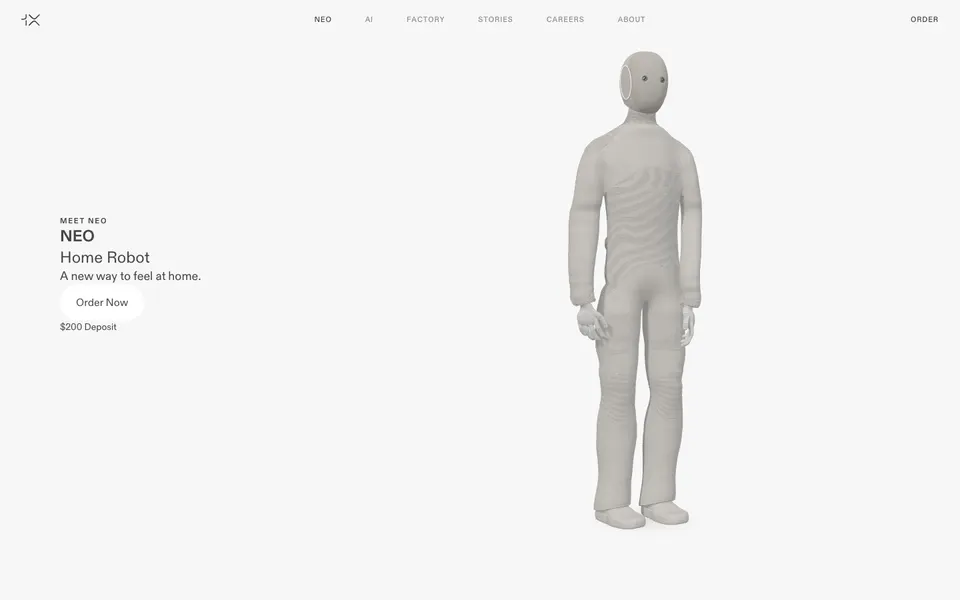
GPT-6 Astra · Screenshot of the buildRuns in your browser
Featured in
I Gave GPT 6 Astra Blender Access (The Results Are INSANE)
This build’s chapter starts at 23:12.
Written by
Pat Simmons. Pat tests AI models and tools on his YouTube channel.