What Is a Prompt Engineer? The Job, the Pay, the Techniques and Free Courses to Learn It
What a prompt engineer does, what the job pays according to Indeed and live listings, the techniques OpenAI, Anthropic and Google recommend, and the courses to learn it.

On this page
- What does a prompt engineer do?
- How much does a prompt engineer make?
- Is prompt engineering difficult to learn?
- Prompt engineering techniques, with examples to copy
- How to prompt engineer in ChatGPT, Claude and Gemini: 5 steps
- Free prompt engineering courses from OpenAI, Anthropic and Google
- What our 27-run prompt test found
- Questions people ask about prompt engineers
A prompt engineer writes, tests and improves the instructions (prompts) that AI models like ChatGPT, Claude and Gemini follow, so the answers come out accurate, consistent and in the format a business needs. Google Cloud describes prompt engineering as designing and refining prompts that steer an AI model toward the response you want, and a prompt engineer is the person doing that work.
Neither Anthropic's nor OpenAI's job board listed a role titled prompt engineer when we checked; both ask for prompt engineering as a skill inside broader jobs, such as applied AI engineer and content designer. Indeed puts the average US base salary for jobs titled prompt engineer at $119,958 a year. You can learn the core skill for free: Anthropic's Claude Academy courses are free, and OpenAI, Anthropic and Google all publish their prompting guides in their developer docs.
Last checked November 18, 2026: Indeed's salary and job-description pages, live listings on Anthropic's and OpenAI's job boards, the three vendors' prompting guides and each course page, all linked below where each fact comes from.
What does a prompt engineer do?
A prompt engineer writes prompts for a specific job, tests what the AI sends back, and keeps rewriting until the answers are reliable. Indeed's prompt engineer job description (last updated May 12, 2026) also calls the role "Prompt Designer" and lists these duties for employers to include in a posting:
- Designing or writing prompts for specific AI outcomes
- Refining prompts with other teams
- Analyzing how the AI performs and updating the process
- Keeping up with research on best practices
- Preparing data used to update or train machine learning systems
- Reporting on AI outcomes and performance
- Working with other teams on risks and ethical concerns
Indeed says the work shows up in content creation, customer service chatbots and data analysis, and that prompt engineers may report to an IT lead, a lead data scientist, or a manager in marketing or customer service.
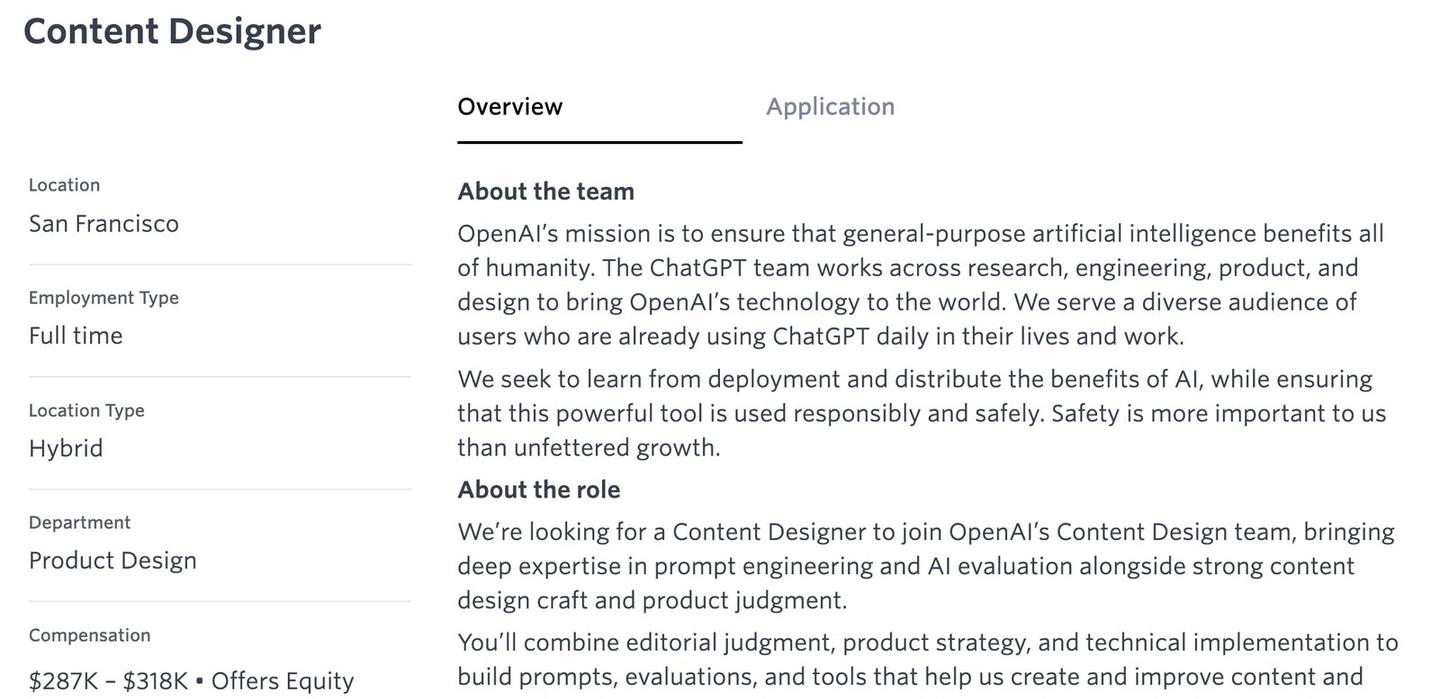
Live listings at the AI labs show where the skill lives in practice. Anthropic's Applied AI Engineer, Enterprise role lists "advanced prompt engineering" as one part of the production experience it wants, next to agent development and evaluation frameworks. OpenAI is hiring a Content Designer with "deep expertise in prompt engineering and AI evaluation" to design prompt frameworks for ChatGPT's product messaging and build the systems that grade the results.
Anthropic's own prompt engineering overview puts testing first: start with a clear definition of success, a way to test against it and a first draft, before you change a word of the prompt. Once the instructions work, a prompt engineer often saves them as a system prompt, the standing instructions a chatbot reads before every chat (our guide covers how to write your own Claude system prompt).
How much does a prompt engineer make?
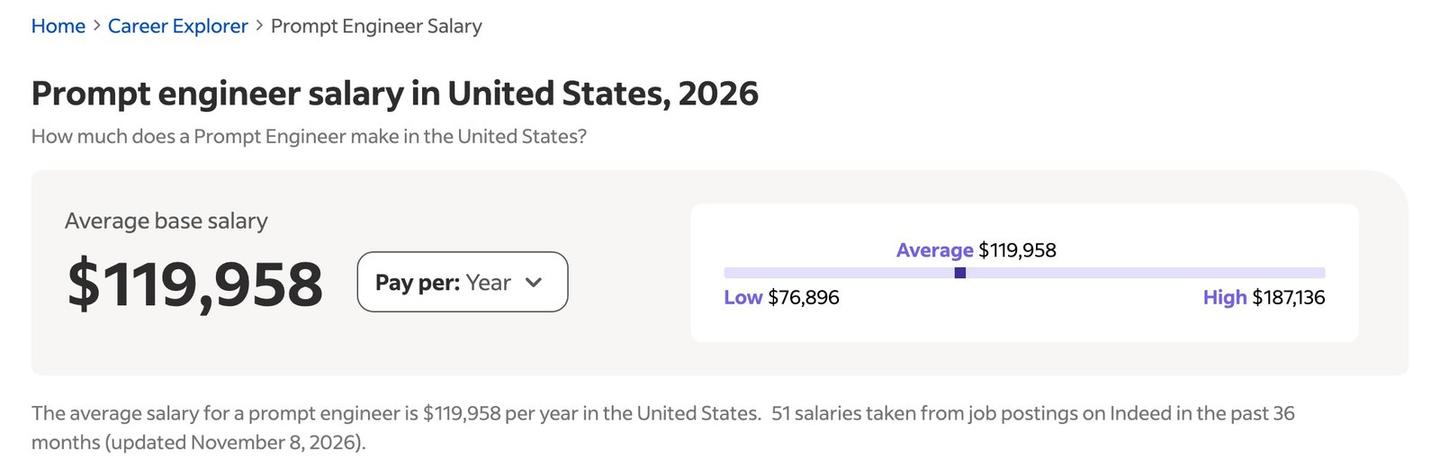
Jobs titled prompt engineer pay $119,958 a year on average in the US, according to Indeed's salary page, which is based on 51 salaries from job postings on Indeed over the past 36 months (updated November 8, 2026). Indeed puts the low end at $76,896 and the high end at $187,136.
Roles at the AI labs that list prompt engineering as one of several skills post much higher ranges, and they also ask for programming and production experience. These are the figures on the pages we checked:
| Source | Role | Pay listed | Checked |
|---|---|---|---|
| Indeed (51 US job postings) | Prompt engineer | $119,958 average base ($76,896 low, $187,136 high) | Nov 18, 2026 |
| Indeed, highest-paying companies | Prompt engineer at Lockheed Martin / Scale AI | $230,000 / $213,800 a year | Nov 18, 2026 |
| Anthropic job board | Applied AI Engineer, Enterprise | $200,000 to $320,000 a year | Nov 18, 2026 |
| OpenAI job board | Content Designer | $287K to $318K plus equity | Nov 18, 2026 |
| OpenAI job board | Applied AI Engineer, Codex Core Agent | $230K to $385K plus equity | Nov 18, 2026 |
Whether prompt engineering is a high-paying job depends on the role. The Indeed average sits at about $120,000, and the lab roles above pay $200,000 or more, but they want much more than prompts. The Codex listing asks for strong Python and experience shipping machine learning or AI-powered products, and the OpenAI Content Designer role asks for 5+ years in content design or a related field.
Among cities, Indeed lists the highest averages in Los Angeles ($141,784), New York ($140,291) and San Francisco ($129,585).
Is prompt engineering difficult to learn?
The basic skill is writing clear, specific instructions and checking the result, and OpenAI, Anthropic and Google each teach it in plain language in their prompting guides. Anthropic's best-practices page gives a test anyone can use: "Show your prompt to a colleague with minimal context on the task and ask them to follow it. If they'd be confused, Claude will be too."
Jobs that use the skill ask for more. Indeed's job description lists coding, SQL or other data reporting, analytical skills, prompt-writing and content-writing skills, and familiarity with ChatGPT and other AI tools. It adds that prompt designers in marketing departments are "much more concerned with the actual content," while some prompt engineer jobs need basic coding or an understanding of machine learning.
The courses split the same way. DeepLearning.AI calls its prompt engineering course beginner-friendly but expects basic Python, and Anthropic's tutorial runs from beginner chapters on prompt structure to advanced ones on avoiding made-up answers and building complex prompts for legal and financial work.
Prompt engineering techniques, with examples to copy
OpenAI, Anthropic and Google recommend largely the same techniques in their prompting guides: clear instructions, context, examples, a set output format, and testing until the prompt holds up. The table gives each one in plain words, with a line you can paste and the guides that recommend it.
| Technique | What it means | Example line | Recommended by |
|---|---|---|---|
| Be clear and specific | Say exactly what you want, including anything beyond the bare task | "Summarize this report in five bullet points for a manager who has two minutes." | Anthropic, Google, OpenAI |
| Give context and the reason | Add the facts the AI can't know and why a rule exists | "Keep it under 100 words, because it will be read on a phone." | Anthropic, Google, OpenAI |
| Show examples (few-shot) | Paste a few samples of the output you want so it copies the pattern | "Here are two past replies I liked: [paste]. Write the next one the same way." | Anthropic, Google, OpenAI |
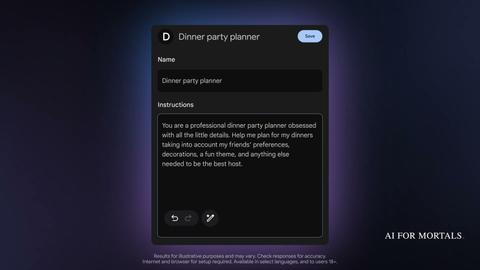
| Give it a role | One line on who the AI is acting as | "You are a customer support agent for a furniture store." | Anthropic, OpenAI |
| Mark off the parts | Wrap instructions, documents and examples in tags or headings so they don't blur together | "<instructions>...</instructions> <document>...</document>" | Anthropic, Google, OpenAI |
| Set the output format | Say the length, shape and style of the answer | "Answer as a table with three columns: task, owner, deadline." | Anthropic, Google |
| Break the task into steps | Number the steps, or run one prompt per step and pass each answer to the next | "First list the claims in this draft. Then check each one against the attached report." | Anthropic, Google |
| Test and iterate | Run the prompt several times, check the answers and reword what fails | "Here is your answer and what's wrong with it: [notes]. Rewrite my prompt so this doesn't happen again." | Anthropic, Google, OpenAI |
The example lines are ours; the techniques come from OpenAI's prompt engineering guide, Anthropic's prompting best practices and Google's Gemini prompt design strategies.
Google's guide says, "We recommend to always include few-shot examples in your prompts," and it says clear examples can replace some instructions. It also warns that too many examples can make the model copy them too closely. Anthropic says examples work best when they mirror your real task, cover the odd cases, and sit in their own <example> tags so Claude can tell them apart from instructions.
Here is a prompt that uses several of the techniques at once (a role, context with a reason, tags around the material and a set format). Swap in your own details:
You are helping a customer support team at [company].

Write a reply to the customer email below. Keep it under 120 words, because most customers read on their phones. Use our refund policy exactly as written and don't promise anything it doesn't cover.

<policy>
[paste the policy]
</policy>

<email>
[paste the customer's email]
</email>

Give me only the reply, with no notes before or after it.
How to prompt engineer in ChatGPT, Claude and Gemini: 5 steps
Decide what a good answer looks like, write a short first draft, run it several times, fix what fails, and save the version that works. The steps are the same in all three apps.
1. Write down what a good answer looks like
List the things the answer must do, such as "under 150 words" or "uses only the numbers in my file." Anthropic's overview puts this first, ahead of any prompt writing, because you need a way to tell whether a change helped.
2. Write a short first draft
A good prompt gives the task, the reader, your facts, the format and what to skip. This is the template from our guide on how to write a good AI prompt:
[What you want, in one sentence.] It's for [who will read it and why]. [Any facts it needs: dates, rules, numbers.] Keep it [length and format]. [Anything to leave out.]
For ChatGPT and other OpenAI models, OpenAI's guide suggests a longer prompt in four parts, usually in this order: identity (the assistant's purpose and style), instructions, examples, and context such as your own data.
3. Let the AI improve the draft
ChatGPT, Claude and Gemini will each rewrite a prompt for you if you ask, and OpenAI and Anthropic also offer prompt-writing tools on their developer platforms. Our guide shows how to make ChatGPT, Claude or Gemini write your prompt with one template that works in all three.
4. Run it several times and check each answer
Run the same prompt several times and compare every answer with your list from step 1. OpenAI recommends building tests that measure prompt behavior so you can track it as you make changes or switch models. A simple version is a yes/no checklist; you can turn your corrections into a checklist that grades a prompt and paste it back in.
5. Save the version that works
Keep the final prompt with blanks for the parts that change. If it's a set of standing rules, put it in Claude's Instructions, ChatGPT's custom instructions or a Gem in Gemini, so every chat starts with it.
Free prompt engineering courses from OpenAI, Anthropic and Google
Anthropic's Claude Academy courses are free, and the OpenAI-backed course on DeepLearning.AI is free for a limited time during that platform's beta. Google's prompting training now sits inside a paid certificate.
Anthropic: the interactive prompt engineering tutorial
Anthropic's Interactive Prompt Engineering Tutorial is a public project on GitHub with 9 chapters and exercises, grouped as beginner (prompt structure, being clear, roles), intermediate (separating data from instructions, formatting, thinking step by step, examples) and advanced (avoiding made-up answers, complex prompts for real industries).
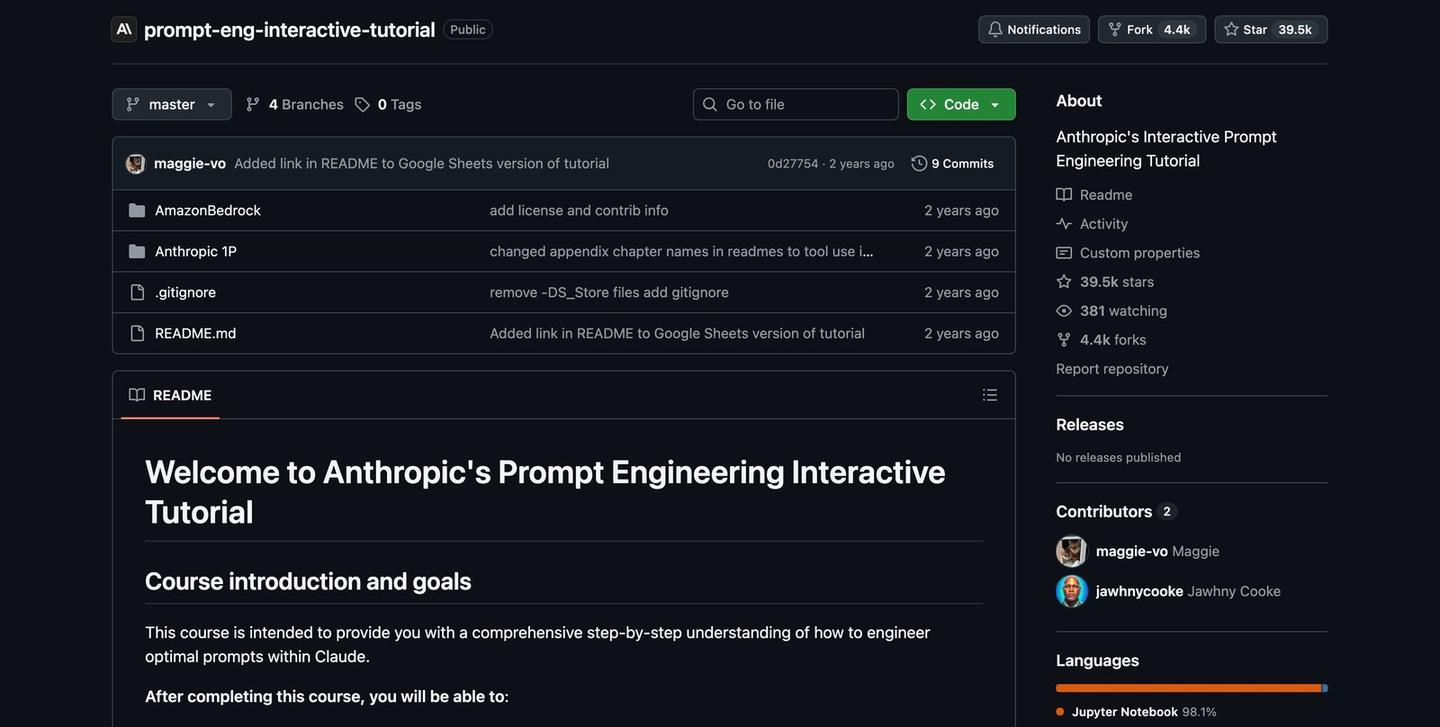
Running the exercises needs an Anthropic API key; without one, the tutorial points you to a static answer key, and there is also a Google Sheets version. Anthropic's overview notes the tutorial was written for Claude 3 models, so where it differs from the current best-practices page, follow the newer page.
Anthropic: Claude Academy
Claude Academy describes itself as "Free courses on Claude and AI, from Anthropic." Its course list includes Claude 101, on using Claude for everyday work tasks, and AI Fluency: Framework & Foundations, on working with AI effectively and safely.
OpenAI and DeepLearning.AI: ChatGPT Prompt Engineering for Developers
ChatGPT Prompt Engineering for Developers is taught by Isa Fulford of OpenAI and Andrew Ng, and DeepLearning.AI runs it in partnership with OpenAI. The page lists 9 lessons and 7 code examples, says it is beginner-friendly but needs basic Python, and says "Course access is free for a limited time during the DeepLearning.AI learning platform beta."
Google: AI Professional Certificate (paid)
Google's old Prompting Essentials address now redirects to the Google AI Professional Certificate, which costs $49 a month in the US and Canada and runs through Coursera, Google Skills and Udemy. Its first course, AI Fundamentals, covers prompting, and enrolling includes three months of Google AI Pro at no cost.
What our 27-run prompt test found
Short prompts with the right facts did as well as long ones. In our test of long, trimmed and bare Claude prompts, Claude Opus 5.5 handled three everyday jobs (meeting notes, an angry customer email and a sales spreadsheet), each written three ways and run three times, and all 27 runs got the main answers right, including the traps planted in each task.
Four kinds of lines changed the answers: facts Claude couldn't know (like a refund policy), the length, the format, and what to leave out. "You are a world-class expert," "take a deep breath and think step by step," "check your work three times," "don't be lazy," "this is CRITICAL" and an offered $200 tip changed nothing we could measure.
Some long-prompt rules cost time. The long spreadsheet prompt made Claude write out all of its math, so those answers came out about twice as long as the bare prompt's.
The test ran on Claude only, with nine runs per job, which is a small sample. Google's Gemini guide points the same way when it says to "avoid unnecessary or overly persuasive language," and Anthropic's guide says a role line in the system prompt focuses Claude's behavior and tone and that "even a single sentence makes a difference." For prompts on bigger jobs, including whole app builds, see 12 Claude prompts we ran, with the results.
Questions people ask about prompt engineers
What is an AI prompt engineer?
An AI prompt engineer and a prompt engineer are the same job: someone who writes and tests the prompts an AI model follows for a business task. Indeed's job description also uses the title prompt designer for it.
Do you need to know how to code?
It depends on the job. Indeed says some prompt engineer roles need basic coding or an understanding of machine learning, while prompt designers in marketing focus on the content itself, and the AI-lab listings above ask for Python or production programming experience.
Which companies pay prompt engineers the most?
On Indeed's list of highest-paying companies for the title, Lockheed Martin averages $230,000 a year and Scale AI $213,800, based on Indeed job postings from the past 36 months.
Is "think step by step" still a prompt engineering technique?
Anthropic's tutorial still teaches it in its chapter on thinking step by step, but that tutorial was written for Claude 3 models. In our 27-run test on Claude Opus 5.5, "think step by step" changed nothing we could measure.
What does a prompt engineer do in ChatGPT?
In ChatGPT the work is the same: write the prompt, run it, check the answers and reword what fails. For apps built on OpenAI's models, OpenAI's guide puts reusable instructions in a "developer" message that takes priority over what the user types.
Sources
- What is prompt engineering, Google Cloud
- Prompt Engineer Job Description, Indeed
- Prompt engineer salary in United States, 2026, Indeed
- Applied AI Engineer, Enterprise, Anthropic
- Content Designer, OpenAI
- Applied AI Engineer, Codex Core Agent, OpenAI
- Prompt engineering, OpenAI API docs
- Prompting best practices, Claude Platform Docs
- Prompt engineering overview, Claude Platform Docs
- Prompt design strategies, Google AI Studio
- Anthropic's Interactive Prompt Engineering Tutorial, GitHub
- Claude Academy, Anthropic
- ChatGPT Prompt Engineering for Developers, DeepLearning.AI
- Google AI Professional Certificate, Google
- All pages checked November 18, 2026


Comments
Sign in to join the conversation.