What Is Agentic Engineering? How It Differs From Vibe Coding
Agentic engineering means building software with AI coding agents while you set the goal and check the work, which is what separates it from vibe coding.

On this page
- What is agentic engineering?
- What is the difference between vibe coding and agentic engineering?
- Where the term came from
- How a coding agent actually works
- What is an agentic pipeline?
- What does it look like on a real build?
- What is agentic context engineering?
- Questions people ask about agentic engineering
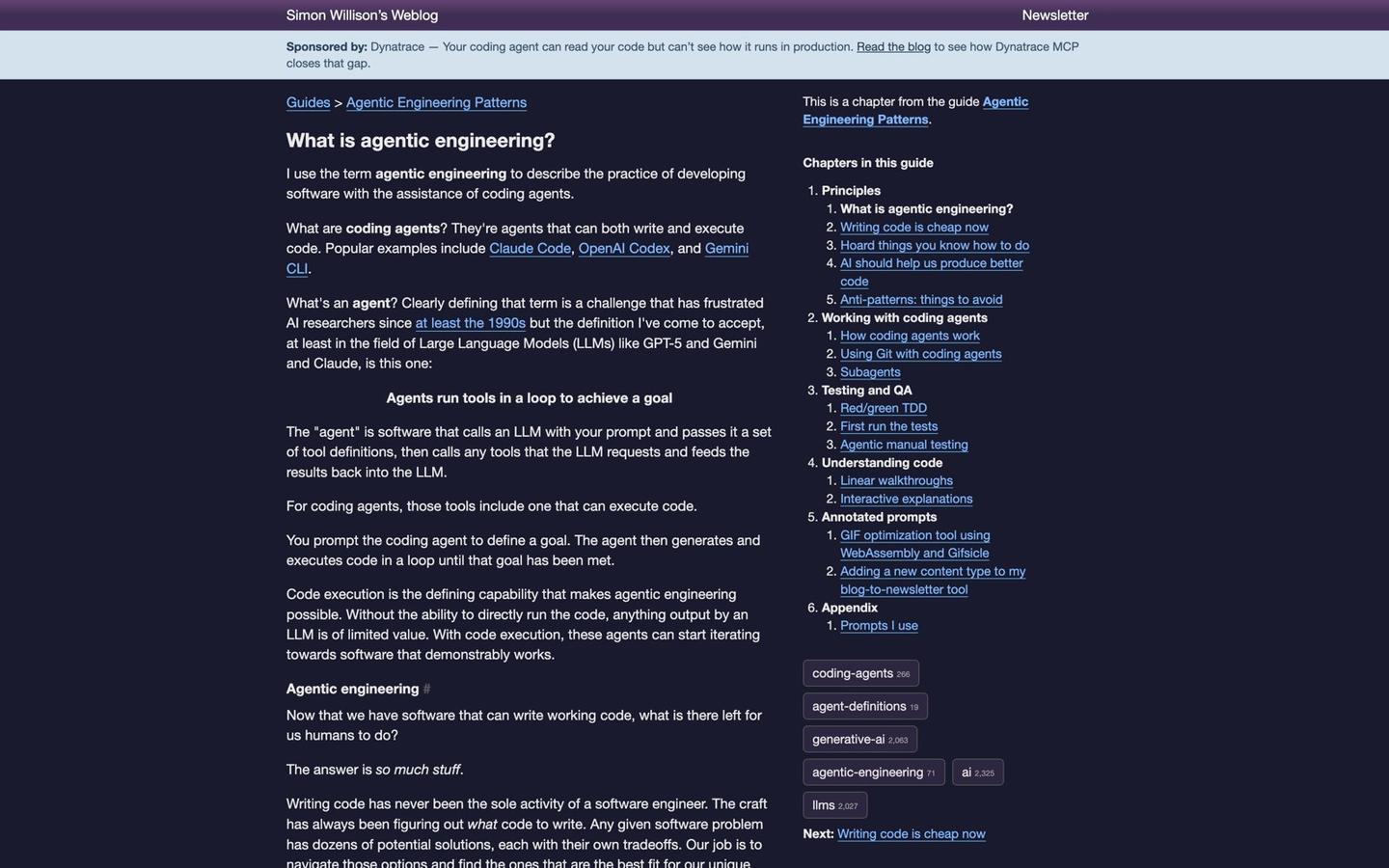
Agentic engineering is building software with AI coding agents, tools that write and run code in a loop until a goal is met, while you set the goal and check what they build. Simon Willison defines it in his Agentic Engineering Patterns guide as "the practice of developing software with the assistance of coding agents."
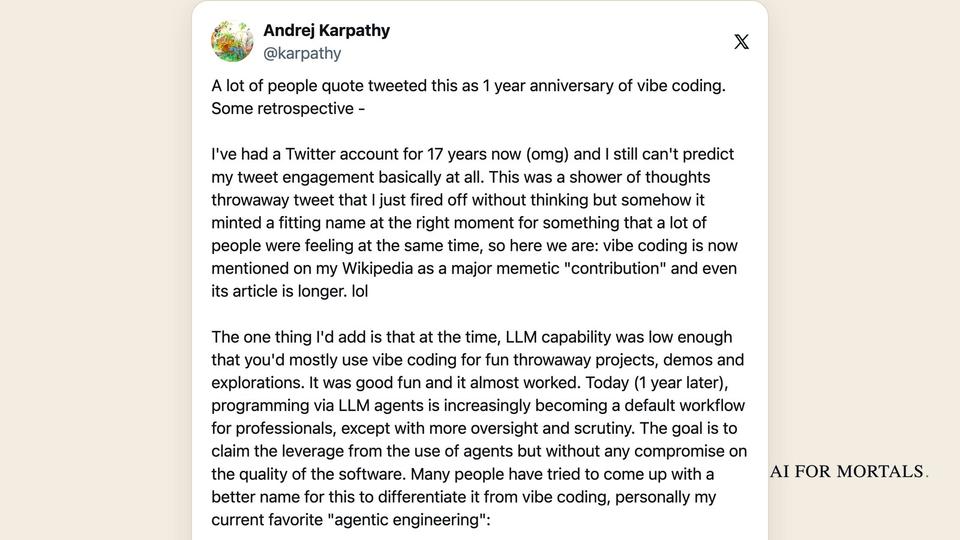
Vibe coding is the loose version, where you prompt, accept whatever code comes back and never really look at it. Willison keeps that name for unreviewed, prototype-quality code. Andrej Karpathy, who coined "vibe coding" in February 2025, later picked "agentic engineering" as his current favorite name for the more serious practice.
Last checked November 16, 2026: every definition and quote on this page, against Willison's guide, Karpathy's two posts on X and the ACE research paper.
What is agentic engineering?
Agentic engineering is the work of directing coding agents: deciding what to build, giving the agent what it needs, and checking its work until the software does the job. A coding agent is an AI tool that can both write code and run it, and Willison names Claude Code, OpenAI Codex and Gemini CLI as popular examples.
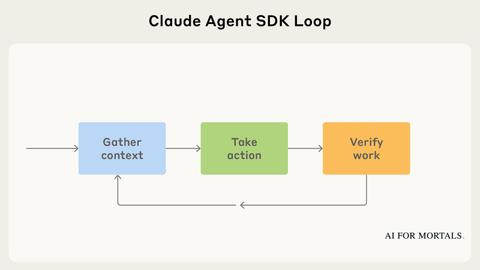
His definition of an agent fits in one line: "Agents run tools in a loop to achieve a goal." You give a coding agent the goal, and it writes and runs code, again and again, until the goal is met.
Willison calls code execution "the defining capability that makes agentic engineering possible." An agent that can run its own code can see when something breaks and keep fixing it until the software demonstrably works.
That leaves the person with three jobs in his guide. You give the agent the tools it needs, you describe the problem in the right level of detail, and you verify and iterate on the results until you are confident they solve it.
Agentic engineering is about building software. The wider idea of AI that plans its own steps and uses tools to finish a job is agentic AI, which we compare with chat-style AI in agentic AI vs generative AI.
What is the difference between vibe coding and agentic engineering?
The difference is whether anyone checks the code. In vibe coding nobody reviews it and the result is a prototype. In agentic engineering you specify the problem, verify what the agent built and iterate until the code is ready for real use, which programmers call production-ready.
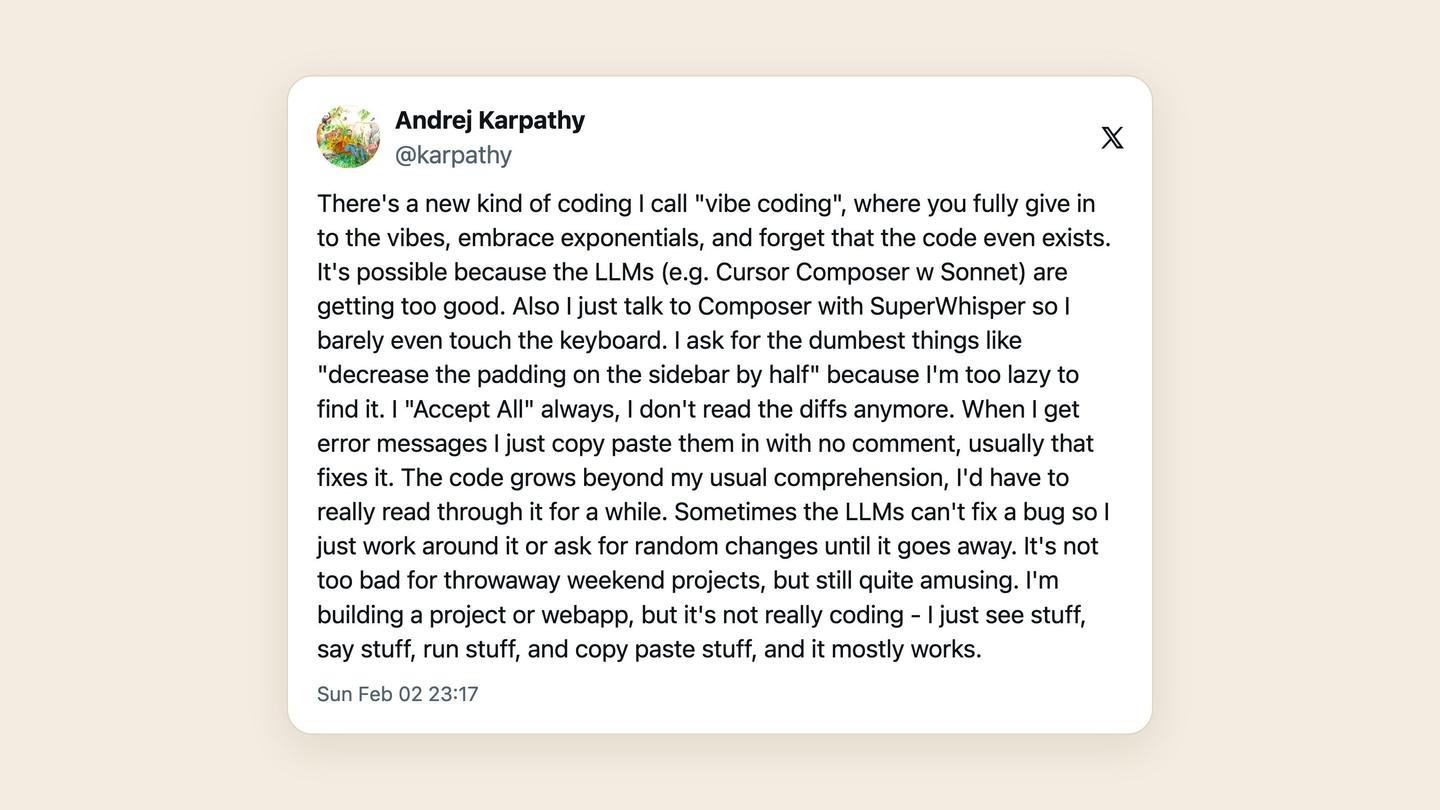
In his original post, Karpathy describes vibe coding as coding where you "forget that the code even exists." In the same post he says, "I 'Accept All' always, I don't read the diffs anymore" (the diffs are the line-by-line changes), and that the approach is "not too bad for throwaway weekend projects."
Some people use "vibe coding" for any code an AI writes. Willison calls that a mistake, because the term is more useful kept for "unreviewed, prototype-quality LLM-generated code" (LLM stands for large language model, the kind of AI behind ChatGPT and Claude). That leaves a separate name for code someone has brought up to a production-ready standard.
| Vibe coding | Agentic engineering | |
|---|---|---|
| What you do | Prompt, accept every change and paste error messages back in | Give the agent its tools, describe the problem in the right detail, then verify and iterate |
| Who reviews the code | Nobody | You, before you trust it |
| What the code is for | Throwaway projects, demos and prototypes | Software brought up to a production-ready standard |
| How you know it works | You see it run, and it "mostly works" | You check the results until you are confident they solve the problem |
The table draws on Willison's "Isn't this just vibe coding?" section and Karpathy's vibe coding post. For what people have actually made the loose way, our guide to vibe coding walks through 12 real builds and what each cost.
Where the term came from
Karpathy coined "vibe coding" in a post on X on February 2, 2025. Willison points out that this was three weeks before the original release of Claude Code.
On February 4, 2026, Karpathy looked back on the term. He says that when AI was weaker, you'd mostly use vibe coding "for fun throwaway projects, demos and explorations."
A year later, he says, "programming via LLM agents is increasingly becoming a default workflow for professionals, except with more oversight and scrutiny." Many people had tried to find a better name for that, and his answer was "personally my current favorite 'agentic engineering'."
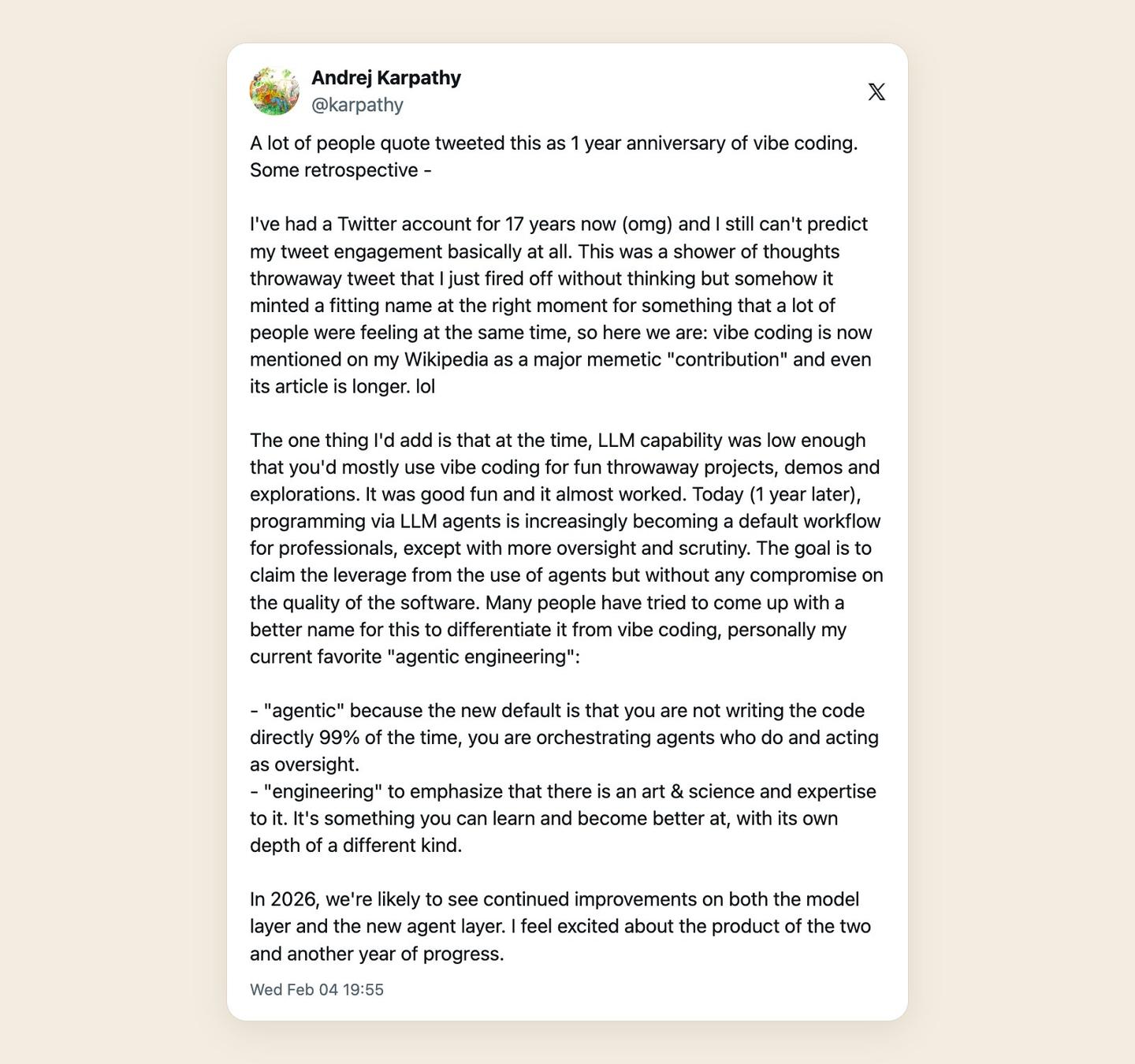
He explains both words. He chose "agentic" because "the new default is that you are not writing the code directly 99% of the time, you are orchestrating agents who do and acting as oversight." He chose "engineering" to show that "there is an art & science and expertise to it," and that it is "something you can learn and become better at."
Karpathy presents the term as his favorite among the names people tried. Willison uses it as the title of his guide and gives it the definition at the top of this page.
How a coding agent actually works
A coding agent is three parts running in a loop: an AI model, a set of hidden instructions, and a set of tools. Willison describes the agent as software wrapped around the model that extends it with "invisible prompts" and "callable tools."
The hidden instructions are the system prompt, which the agent sends at the start of every conversation without showing it to you. Willison notes these can be hundreds of lines long.
The tools are functions the model can ask the agent to run, such as a command in the computer's terminal or a piece of Python code. The model asks for a tool, the agent runs it, the result goes back to the model, and the model decides what to do next.
Willison's heading for the whole recipe is "LLM + system prompt + tools in a loop."
The loop also explains why long sessions cost more. According to Willison's chapter on how coding agents work, AI models are stateless, meaning they remember nothing between turns, so the software resends the whole conversation every time.
Providers charge by tokens (the small chunks of text a model reads and writes), so each turn of a long session costs more than the one before.
Most providers charge a lower rate for input they processed a short time earlier, and coding agents are designed to make the most of that discount by leaving earlier parts of the conversation unchanged.
What is an agentic pipeline?
An agentic pipeline is a chain of steps where an agent plans, calls tools, checks the result and moves on to the next step without a person prompting each one. It is the same loop a coding agent runs, stretched across a longer job.
In a coding project those steps can include running the existing tests, writing a change and running the tests again. Willison's guide has a chapter for several of them.
First run the tests recommends opening a session on an existing project by having the agent run its automated tests. Red/green TDD (test-driven development) has the agent write the tests first, confirm they fail, then work on the code until they pass.
Big jobs can also be split up. In the chapter on subagents, a coding agent "dispatches a fresh copy of itself" with a fresh prompt to handle one part of a task, so the main session doesn't fill up with the details.
What does it look like on a real build?
Pat Simmons gave Claude Fable 5.1, Fable 5 and Opus 5 the same five build prompts, ran each one in Claude Code with no subagent steering, let each model pick its own concept, and logged the real tokens, cost and time for every build.
The results are in his post on three models given the same five builds, with real cost and tokens.
Pat's prompt for the website build covers all three jobs from Willison's guide. It specifies the problem in detail: one self-contained web page, a concept the model picks itself, and no dark page with a neon or purple gradient, which the prompt calls "what every AI produces when told to impress."
It gives the agent a tool, a command for generating images. It also builds in the checking: "QA it for real. Open it, scroll the whole thing, resize to 1440 and 1280, and confirm nothing overflows, collides, or throws console errors."
The prompt then says "Work completely autonomously" and ends with a list of what "done" means.
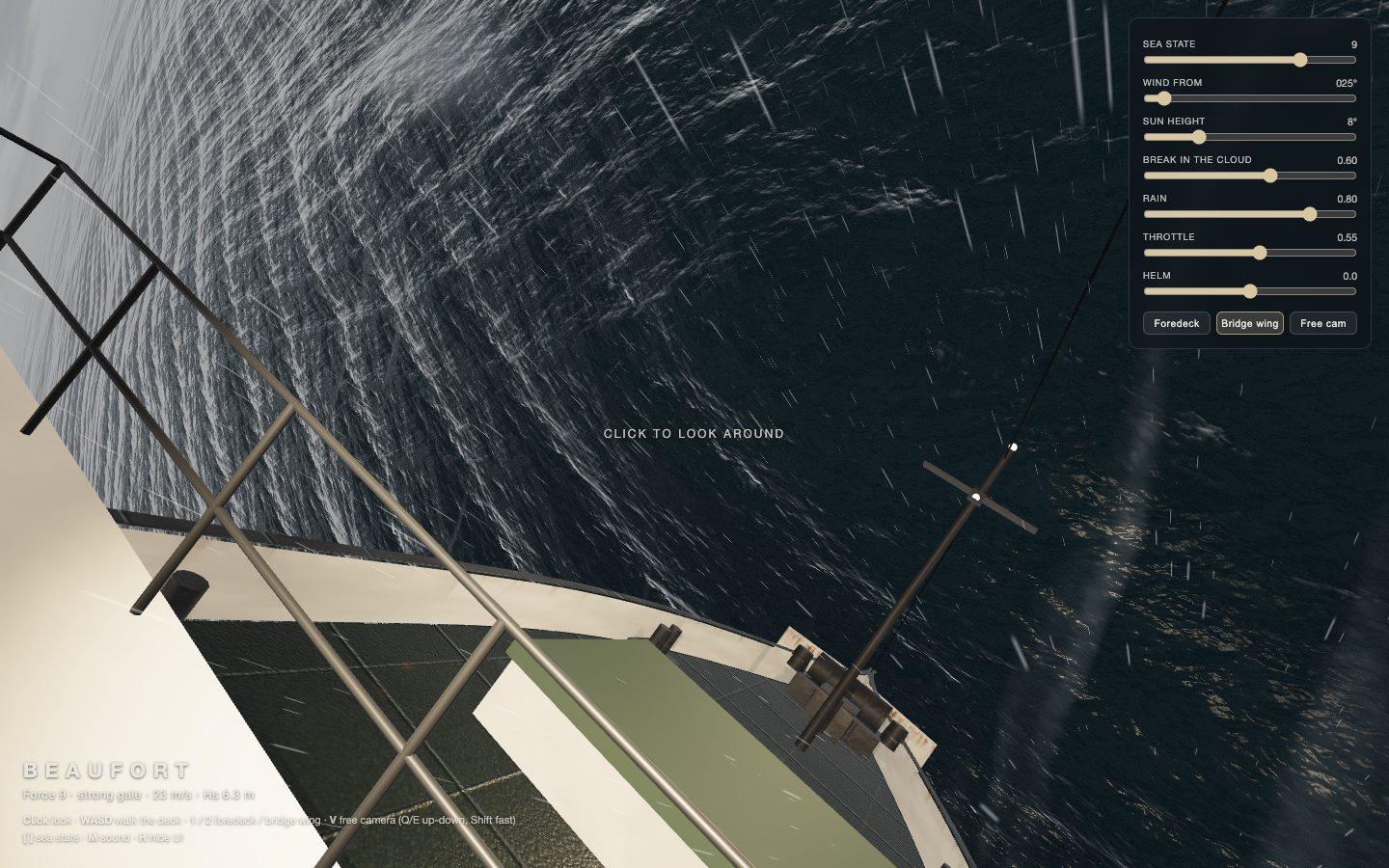
On the build where each model made a real-time 3D place you can move through, Fable 5 spent $126 and 105 minutes, and Fable 5.1 spent $39 and 39 minutes. Pat's post found that most of Fable 5.1's saving across the five builds came from doing the same job in fewer turns, and every turn an agent takes resends the conversation.
Those figures are API-equivalent costs, meaning the tokens priced at the published rates; the builds themselves ran on a Claude subscription. Pat keeps more of his work in a gallery of apps he has built with AI coding agents.
What is agentic context engineering?
Agentic context engineering is a research method for improving the instructions and memory an AI agent works from, and it is a separate idea from agentic engineering. ACE (Agentic Context Engineering) comes from a research paper submitted to arXiv on October 6, 2025.
The paper treats a model's context, the material it reads before it answers such as its system prompt and its memory, as "evolving playbooks that accumulate, refine, and organize strategies." The system updates those playbooks through three steps the paper calls generation, reflection and curation, and it can learn from whether its own actions worked, without people labeling the right answers.
Willison's guide comes at the same problem from the human side. AI models don't learn from their past mistakes, he says, but coding agents can, provided people "deliberately update our instructions" as they learn. ACE is research into having the system make those updates itself.
Questions people ask about agentic engineering
What does an agentic engineer do?
An agentic engineer directs coding agents and checks their work. In Karpathy's words, you are "orchestrating agents who do and acting as oversight," and Willison's guide adds giving the agent its tools and describing the problem in the right detail.
Is vibe coding ever the right call?
For throwaway projects, by Karpathy's account: he says it is "not too bad for throwaway weekend projects." Willison keeps the term for unreviewed, prototype-quality code.
Sources
- Simon Willison: What is agentic engineering?
- Simon Willison: How coding agents work
- Simon Willison: First run the tests
- Simon Willison: Red/green TDD
- Simon Willison: Subagents
- Andrej Karpathy on X: vibe coding (February 2, 2025)
- Andrej Karpathy on X: agentic engineering (February 4, 2026)
- Agentic Context Engineering: Evolving Contexts for Self-Improving Language Models (arXiv)




Comments
Sign in to join the conversation.