
The Best AI for Coding When You Don't Code: 21 Same-Prompt Builds, Ranked
Opus 5.5 won 16 of the 21 apps, games, websites and videos Pat Simmons had AI models build from identical prompts and ranked blind, and it cost the least of the three frontier models overall.

Updated November 5, 2026: This ranking covers all six same-prompt rounds Pat ran between September 23 and October 25, 2026, 21 ranked builds in all, with the API prices checked on November 5.
The best AI for coding right now, if you don't write code yourself, is Claude Opus 5.5. Pat Simmons gave the top models identical prompts in six rounds between September 23 and October 25, 2026, ranked every result blind (before he knew which model made which), and Opus 5.5 came first in 16 of the 21 builds. Claude Fable 5.1 won four, and OpenAI's GPT-6 Astra won one.
The builds are the kind of projects a non-programmer would ask for in plain words: website rebuilds, a coffee-ordering iPhone app, 3D games, a SpaceX Starship launch simulation, and launch videos and ads the models made by writing code. Every model got one prompt and no help, so the results show what each one does on its own.
Opus 5.5 also cost the least of the three frontier models overall. Added up across all 21 builds at API prices, it came to $977.57, against $999.78 for GPT-6 Astra and $1,613.14 for Fable 5.1. Astra was cheaper than Opus in five of the six rounds, and one website rebuild where it ran for 499 minutes and cost $357.84 pushed its total up (Pat's Gemini 4 Argon review).
If you care more about the bill than polish, DeepSeek V4.1 Flash did three builds for $3.45 in total and beat Kimi K3.1 Pro in all three, but it finished behind Opus 5.5 and Fable 5.1 every time (Kimi K3.1 Pro vs DeepSeek V4.1 Flash on three builds).
| Model | Builds won | Cost of the builds it ran | What it won |
|---|---|---|---|
 Opus 5.5 | 16 of 21 | $977.57 for 21 | 5 of 6 website rebuilds, all 5 videos and ads made in code, the Moby Dick illustration, the iPhone app, the RollerCoaster Tycoon clone, 3 of 7 mostly-3D builds |
| Fable 5.1 | 4 of 21 | $1,613.14 for 21 | Starship simulation, billiards game, Backrooms horror game, a website it picked from Awwwards |
 GPT-6 Astra | 1 of 21 | $999.78 for 21 | An Adidas running shoe modeled in Blender |
| Sonnet 5.5 | 0 of 3 | $85.40 for 3 | Placed 3rd, 2nd and 3rd of five |
 DeepSeek V4.1 Flash | 0 of 3 | $3.45 for 3 | Placed 3rd, 4th and 4th of five |
 Gemini 4 Argon | 0 of 4 | $39.54 for 4 | Last in all four |
 Kimi K3.1 Pro | 0 of 3 | $35.31 for 3 | Last in all three |
 Muse Wonder Full | 0 of 4 | $14.25 for 4 (Pat's estimate) | Last in all four |
Costs are API-equivalent: each build's real token count (tokens are the small chunks of text a model reads and writes) priced at the model's published rate, though Pat ran the builds on subscriptions. The September 25 costs are each model's own estimate from its session logs, and Muse Wonder Full's is a minimum estimate at regular Muse Wonder's API rates, because Meta sells Full only through its Muse Code plans. Every result comes from Pat's posts: the Opus 5.5 review, the Opus 5.5 vs Fable 5.1 vs GPT-6 Astra build costs, the Sonnet 5.5 review, Muse Wonder's four builds against Opus 5.5, the Gemini 4 Argon review and the Kimi K3.1 Pro review. The cost of every single build is in the table further down.
Which AI is best for code right now?
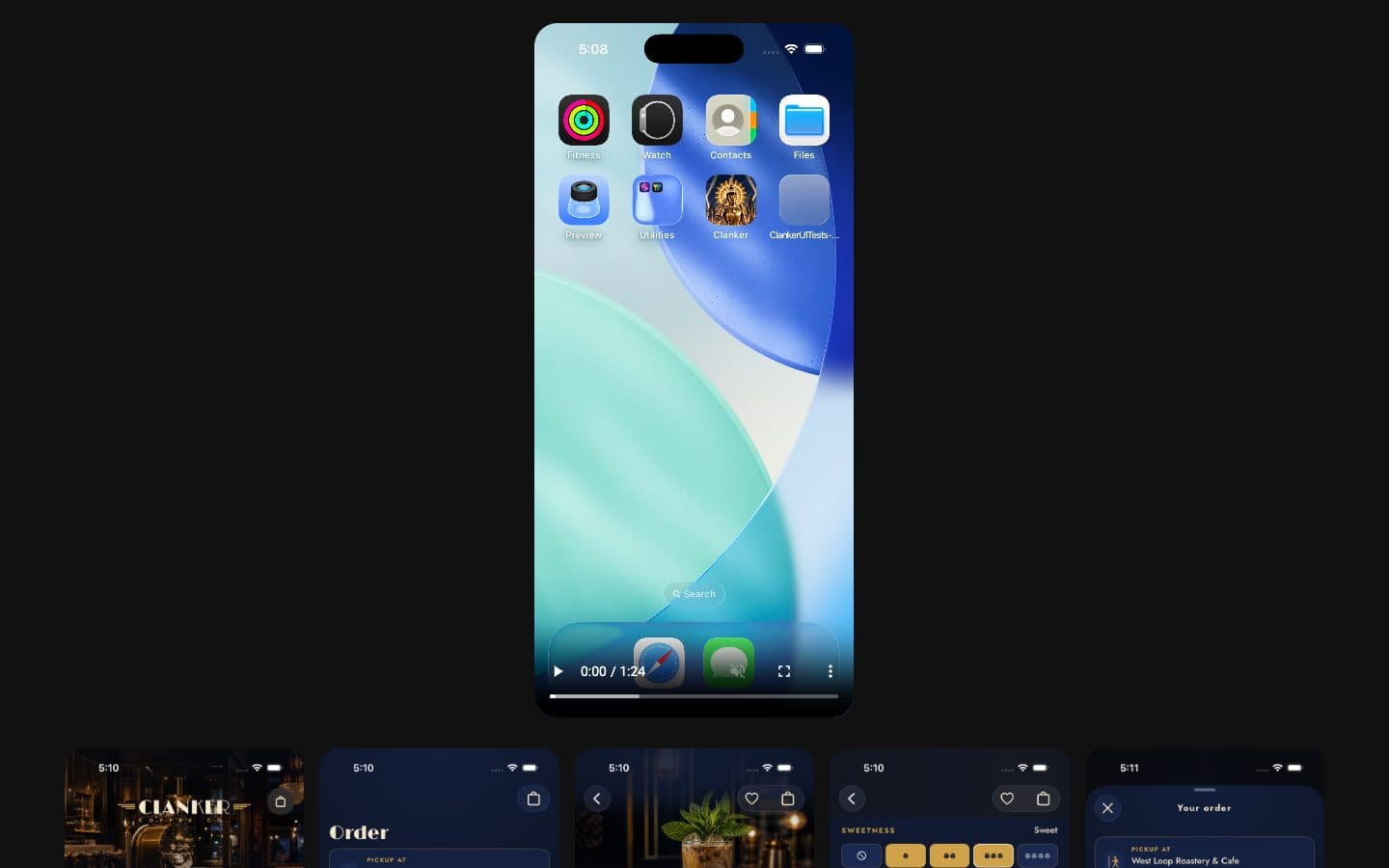
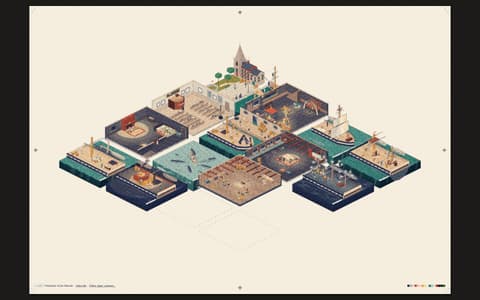
Opus 5.5 is the best AI for code in Pat's tests, and it won across every kind of job he gave it. It came first on five of the six website rebuilds, on all five videos and ads the models had to make in code, on a Moby Dick illustration drawn entirely in code, on a playable RollerCoaster Tycoon clone and on a coffee-ordering iPhone app.
One caveat on the videos: in the cold brew ad campaign, Pat said none of the four launch films was usable, but he still ranked Opus 5.5's campaign first (Muse Wonder round).
It also beat each rival head to head. Opus 5.5 placed above GPT-6 Astra in 20 of the 21 builds, losing only the Adidas shoe, and above Fable 5.1 in 17 of 21. After the September 25 round, Pat wrote that "Opus 5.5 won all three, and it wasn't especially close" (the build-off post).
The October rounds kept the same order at the top. In the Gemini 4 Argon review Opus 5.5 won all four builds, and after the second one Pat said it is "on a generational run right now with these model tests" (Gemini 4 Argon review). In his Sonnet 5.5 review he said that, apart from video editing, he's just using Opus 5.5 (Sonnet 5.5 review).
Pat's own day-to-day pick wasn't always Opus. In the September 25 post he wrote that GPT-6 Astra was still the model he used in his everyday work, "the big refactors and the multi-step site architecture, because it's so methodical that I rarely have to go back and correct it," and that Fable 5.1 is much faster but "still misses things I asked it to do" (the build-off post).
Which AI is best for 3D and games?
For 3D, Opus 5.5 and Fable 5.1 are close: each won three of the seven builds that were mostly 3D, and GPT-6 Astra won the seventh.
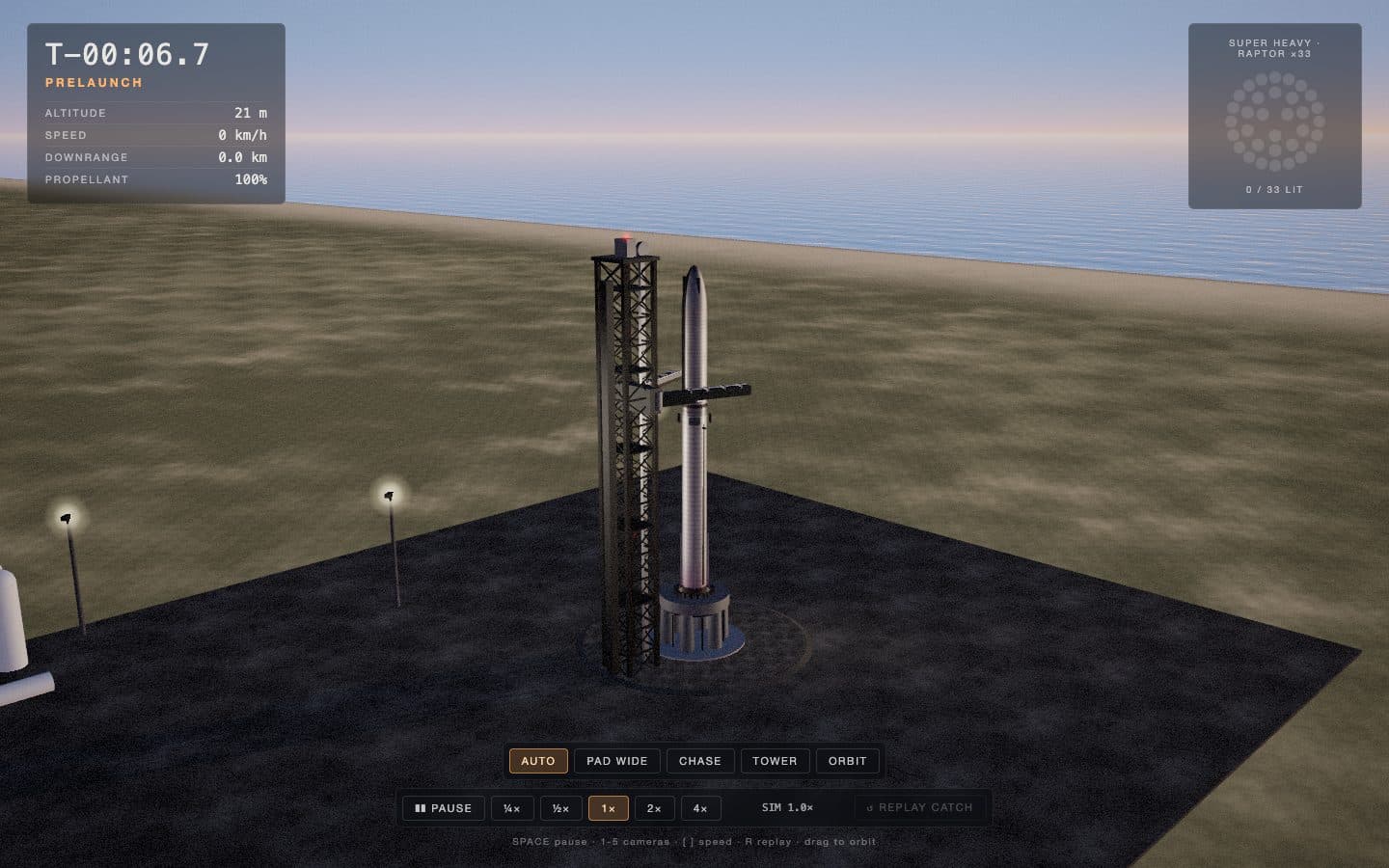
- Fable 5.1 won the SpaceX Starship launch and tower catch, the first-person billiards game and the Backrooms horror game.
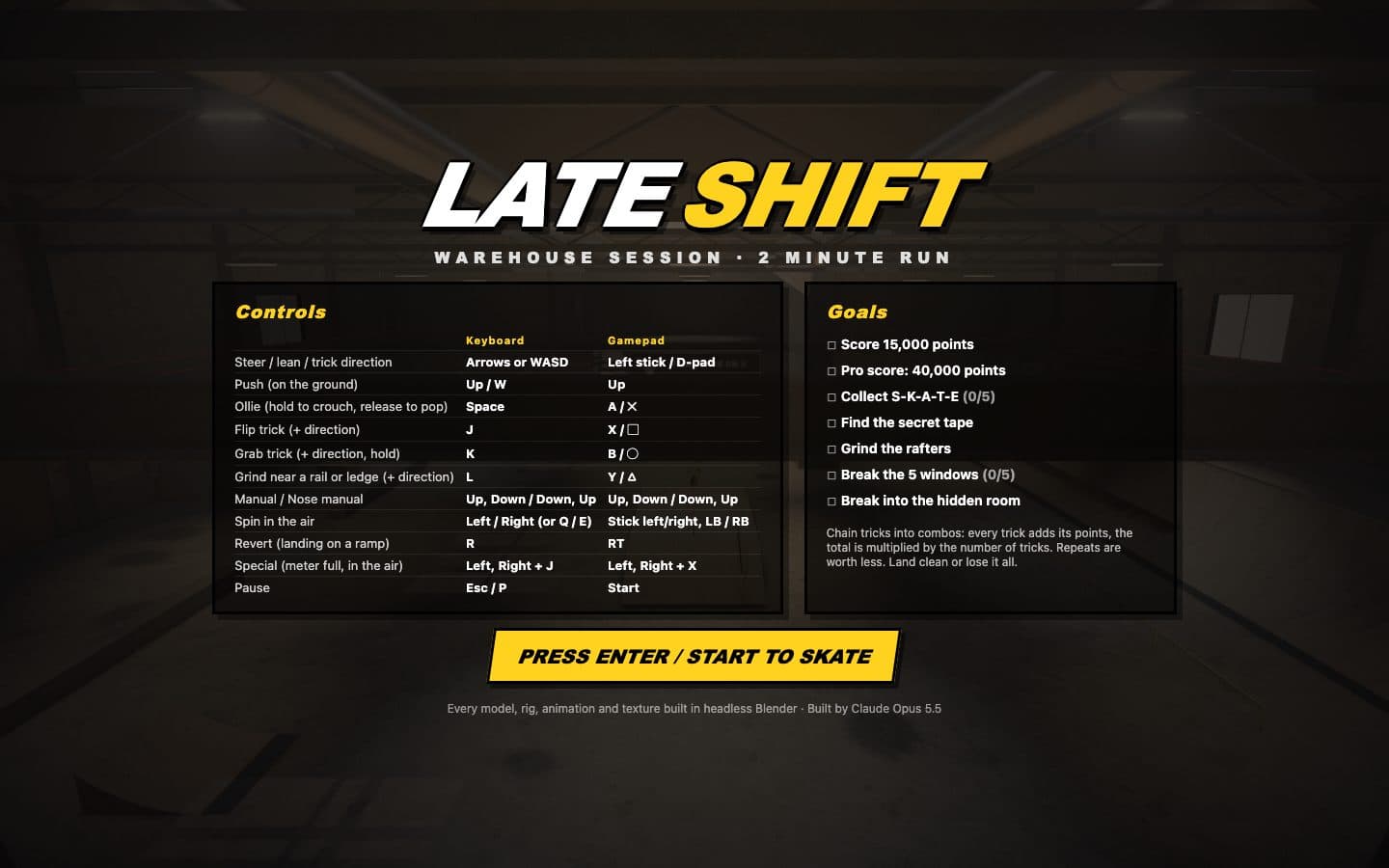
- Opus 5.5 won the Tony Hawk-style skateboarding game, the photoreal coffee bottle and the Rocket League-style car soccer game.
- GPT-6 Astra won the Adidas running shoe modeled in Blender, the free 3D program.
Pat hasn't named one 3D winner either. After the shoe, he said in his Opus 5.5 review that "Astra still might be the king of 3D," and he planned to keep testing Fable 5.1 on "really heavy coding tasks, very long running tasks" (Opus 5.5 review). In his Sonnet 5.5 review, he said that for 3D web work "it just makes more sense to hand off to Opus or Fable 5.1" than to use Sonnet 5.5 (Sonnet 5.5 review).
Fable 5.1's 3D wins weren't always the pricey ones: it cost $26.48 on the billiards game against $31.74 for Opus 5.5, but $32.99 on the Starship simulation against $22.28, and $36.09 on the horror game against $20.89. Its bills swing more than the other two, and in the October 25 round it spent $592.37 on a single video rebuild.
What's the best LLM for coding on a budget?
DeepSeek V4.1 Flash is the cheapest model that held up in Pat's builds: three builds for $3.45 in total, against $35.31 for Kimi K3.1 Pro, and it placed third, fourth and fourth of five. Pat's verdict in the Kimi review: "For heavy 3D and coding builds like mine, DeepSeek V4.1 Flash is the better open-weight pick: it beat Kimi K3.1 Pro in all three builds and cost $3.45 in total against Kimi's $35.31" (Kimi K3.1 Pro vs DeepSeek V4.1 Flash on three builds). Open-weight means anyone can download the model and run it.
In the same review he added that if cost is the only reason to look at open-weight models, "it would just make the most sense to go to a Sonnet 5.5 or a Haiku." Sonnet 5.5 is half Opus 5.5's price per token, and Pat called it "a good recommendation as a daily driver for your team" for emails, copy, reports and lighter coding (Sonnet 5.5 review).
The lower rate didn't carry over to Pat's hardest builds. Run on high effort, Sonnet 5.5 cost $85.40 across three builds against $84.24 for Opus 5.5, so he suggests leaving it on medium effort, the default in Claude Code.
Among the frontier models, GPT-6 Astra was cheaper than Opus 5.5 in five of the six rounds, for example $60.20 against $106.93 for three builds on September 25. Gemini 4 Argon and Muse Wonder Full were cheaper still, at $39.54 and an estimated $14.25 for four builds, but both came last in every build.
These are the per-token prices on each company's own page, checked November 5, 2026, in dollars per million tokens:
| Model | Input | Output | Source |
|---|---|---|---|
| Claude Fable 5.1 | $10 | $50 | Anthropic |
| GPT-6 Astra | $10 | $50 | OpenAI |
| Claude Opus 5.5 | $4 | $20 | Anthropic |
| Claude Sonnet 5.5 | $2 | $10 | Anthropic |
| DeepSeek V4.1 Flash, off-peak | $0.15 | $0.60 | DeepSeek |
| DeepSeek V4.1 Flash, peak hours | $0.30 | $1.20 | DeepSeek |
DeepSeek's peak hours are 01:00 to 04:00 and 06:00 to 10:00 UTC, Monday through Friday except Chinese public holidays, and every other hour is billed at the off-peak rate; the input prices shown are for text the model hasn't already cached, per DeepSeek's pricing page.
What each build cost
This table lists every ranked build from the six rounds, who won it, and what the three frontier models spent on it at API prices. The order from the cheapest to the priciest model flips from build to build, because how many steps a model takes to finish moves the bill more than its price per token.
| Round | Build | Winner | Opus 5.5 | Fable 5.1 | GPT-6 Astra |
|---|---|---|---|---|---|
| Sept 23 | Rebuild an Awwwards-winning website the model picks | Fable 5.1 | $47.28 | $177.58 | $144.91 |
| Sept 23 | Rebuild the Mana Yerba Mate website | Opus 5.5 | $58.59 | $107.26 | $33.07 |
| Sept 23 | Model an Adidas running shoe in Blender | GPT-6 Astra | $33.46 | $65.31 | $13.31 |
| Sept 23 | Clone RollerCoaster Tycoon | Opus 5.5 | $84.91 | $53.22 | $5.58 |
| Sept 25 | Moby Dick scenes drawn entirely in code | Opus 5.5 | $37.22 | $42.18 | $8.16 |
| Sept 25 | 20-second launch film with sound made in code | Opus 5.5 | $11.66 | $16.55 | $7.96 |
| Sept 25 | Tony Hawk-style 3D skateboarding game | Opus 5.5 | $58.05 | $32.26 | $44.08 |
| Sept 29 | Launch video for Sonnet 5.5 | Opus 5.5 | $29.68 | $50.13 | $12.33 |
| Sept 29 | 3D Backrooms horror game | Fable 5.1 | $20.89 | $36.09 | $7.28 |
| Sept 29 | Rebuild the butter.video website, 3D included | Opus 5.5 | $33.67 | $43.41 | $29.54 |
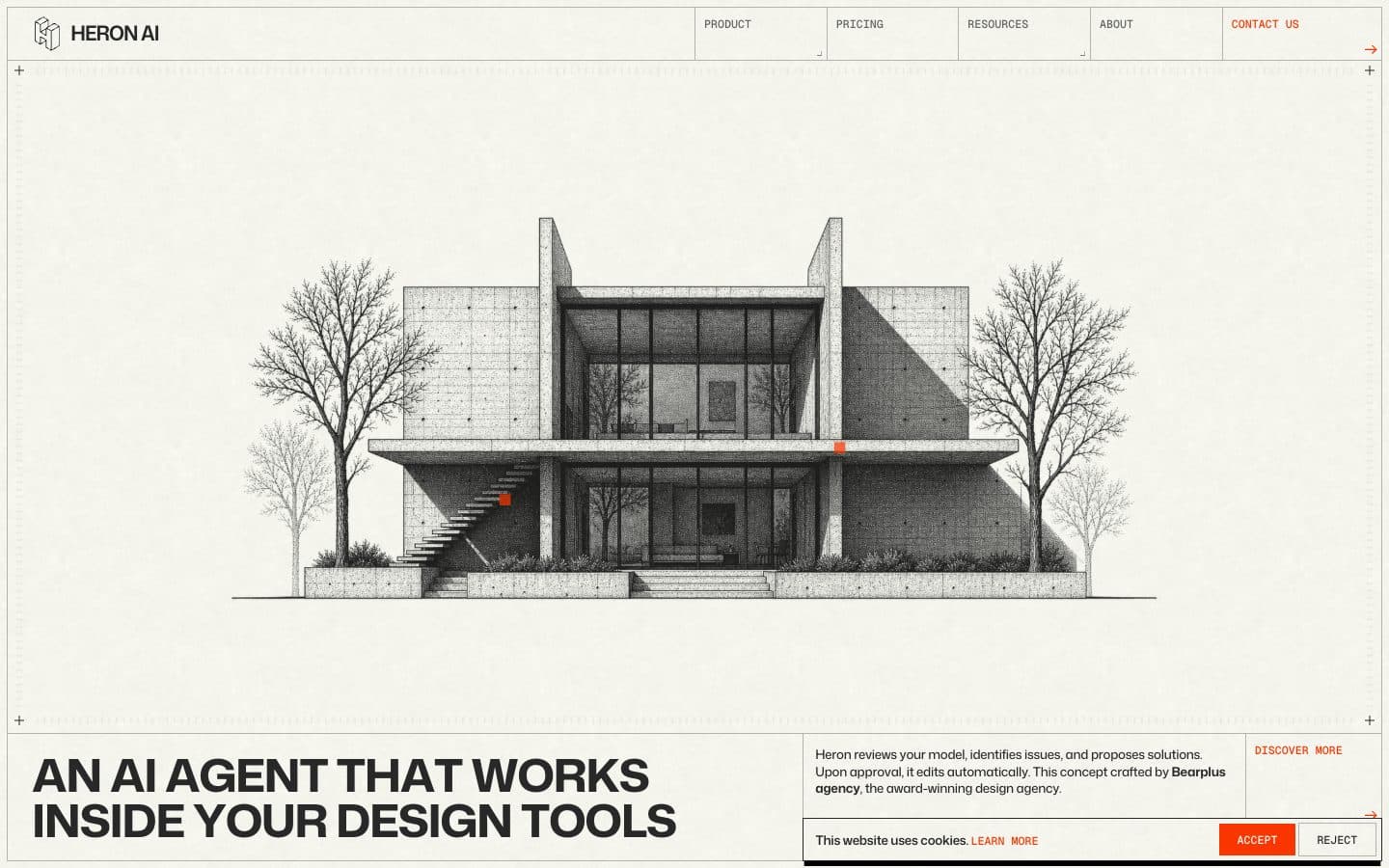
| Oct 12 | Rebuild an award-winning website (heronaiapp.com) | Opus 5.5 | $42.57 | $39.62 | $21.89 |
| Oct 12 | Full ad campaign for a cold brew launch | Opus 5.5 | $19.28 | $20.57 | $6.23 |
| Oct 12 | Coffee-ordering iPhone app | Opus 5.5 | $12.50 | $17.00 | $17.02 |
| Oct 12 | 3D Starship launch and tower catch | Fable 5.1 | $22.28 | $32.99 | $6.33 |
| Oct 14 | Photoreal 3D coffee bottle you can pour | Opus 5.5 | $29.95 | $17.96 | $8.99 |
| Oct 14 | Launch video for a coffee brand | Opus 5.5 | $44.98 | $54.26 | $28.44 |
| Oct 14 | Rocket League-style car soccer game | Opus 5.5 | $46.24 | $32.30 | $14.70 |
| Oct 14 | Rebuild the oryzo.ai website | Opus 5.5 | $67.87 | $98.56 | $357.84 |
| Oct 25 | First-person 3D billiards game | Fable 5.1 | $31.74 | $26.48 | $15.58 |
| Oct 25 | Rebuild the morphowater.com website | Opus 5.5 | $84.07 | $57.02 | $118.86 |
| Oct 25 | Shot-for-shot rebuild of Kimi's launch video | Opus 5.5 | $160.67 | $592.37 | $97.70 |
The round totals, from the same posts: Opus 5.5 spent $224.24, $106.93, $84.24, $96.64, $189.04 and $276.48; Fable 5.1 spent $403.38, $90.99, $129.63, $110.18, $203.08 and $675.88; GPT-6 Astra spent $196.87, $60.20, $49.15, $51.46, $409.96 and $232.14. Some of these builds, like the ad campaign and the launch videos, are creative jobs the models did by writing code.
Which app do you actually type into?
You type into a coding agent, an app where you describe what you want in plain English and the model writes, runs and fixes the code on your computer. In the rounds where his posts name the app, Pat ran the Claude models in Claude Code and GPT-6 Astra in Codex, each lab's own agent (Opus 5.5 review; Sonnet 5.5 review). In the October 25 round he ran Kimi K3.1 Pro in Kimi Code and DeepSeek V4.1 Flash in Claude Code through OpenRouter (Kimi K3.1 Pro review).
Pat leans on Claude for the technical wording. For the 3D ocean prompt, he had Claude look up best practice, and reading the prompt out in his July video comparing Kimi K3, Fable 5 and GPT-5.6, he said: "I have no idea what any of these terms mean, by the way. This is just Claude looking this up." That video is embedded in the earlier-rounds section below.
Claude Code and the Opus models are included in every paid Claude plan, and neither is on the Free plan. Pro costs $20 a month billed monthly ($17 a month billed yearly) and pays for Fable with usage credits, while Max ($100 a month) and Ultra ($200 a month) include Fable for up to half your weekly limit, per Claude's pricing page (checked November 5, 2026). Ultra is the $200 plan Anthropic used to call Max 20x (Claude's $200 plan is now Ultra).
To try it yourself, start with how to build your first app in Claude Code without writing code, and check what's new in Claude Code for recent changes. Every prompt from these rounds is published in full in Pat's posts linked above, so you can paste one in and compare your result.
How Pat tested
Every model got the exact same prompt with nothing added and no steering from Pat while it worked. The models ran at high reasoning effort, and in the Sonnet 5.5, Muse Wonder and Kimi K3.1 rounds they also ran in goal mode, which keeps the agent working until the prompt's own finish line is met (Sonnet 5.5 review; Muse Wonder round; Kimi K3.1 Pro review).
Pat ranked each set of builds blind, before revealing which model made which. Tokens, cost and time were logged for each run, and the costs are API-equivalent because the builds ran on subscriptions. For the website rebuilds and some launch videos, every model followed the same free skill from Pat's GitHub: Clone App Pat Pro for websites and Launch Video Clone for videos.
Pat's own caveat, from the Opus 5.5 review: the builds "were all heavy coding and design jobs, with no knowledge work and no automations, and each model got one pass at the prompt with no follow-ups, which is nothing like how you would use any of these day to day."
The page counts only ranked builds. The Sonnet 5.5 round also had a code-only demo and a Diablo-style game that were cut from the video and never ranked, so they're left out here.
Earlier rounds: Fable 5, GPT 5.6 Sol, Kimi K3 and GLM 5.2
These rounds tested models that have since been replaced, and the prices below are July 2026 prices. Newest first.
July 2026: Kimi K3 vs Fable 5 vs GPT-5.6 Sol. Pat gave all three the same five jobs (Kimi K3 vs Fable 5 vs GPT-5.6). At API prices, a 3D ocean whirlpool cost $66.86 on Kimi K3, about $263 on Fable 5 and $23.15 on GPT-5.6 Sol; a scrolling site built around an IMAX camera cost $48.78, $238.73 and $12.01; and a game where you blind the Cyclops cost $24.65, $111 and about $12. Pat noted he was on the max plans, so those are what the runs would cost without them.
In the blind website-design round he ranked GPT-5.6 Sol first, Kimi K3 second and Fable 5 third. Of the two lighter jobs, a website design and a RadioShack rebrand, he said "it was Sol that did better with Fable not that far behind and then Kimi close but still behind both of them."
His routing rule then: "If you're architecting an entire app or you need heavy complex 3D work or come up with kind of these big ideas, that's probably a Fable task. Anything in the middle of that might be Sol and then Kimi for every day as a daily driver can just be used for everything else."
July 2026: GLM 5.2 vs Kimi K3. Kimi K3 made the clearly better design site and brand identity and came out cheaper on two of the three heavy graphics builds, while GLM 5.2 wrote a research report nearly as good as Kimi's for $0.38 against $3.09 (GLM 5.2 vs Kimi K3). GLM 5.2 cost $1.40 per million input tokens and $4.40 output then, against $3 and $15 for Kimi K3. The post's rule: "knowledge work and lighter front-end goes to GLM, heavy simulation and graphics goes to Kimi, and when the quality gap is wide, ignore the price and take the better output."
June 2026: GLM 5.2 vs Opus 4.8. In a blind head-to-head, GLM 5.2 beat Opus 4.8 on 4 of the 5 clear calls: an e-commerce store, an Excalidraw clone, a Minecraft clone and an animated solar system. Opus 4.8 won the portfolio site. Pat said Opus ran his first six builds for "about a buck and a half each," about five times GLM's price, and closed with: "I'd have a hard time telling anyone not to run GLM 5.2 as a daily driver."
Questions people ask
Is Claude better than ChatGPT for coding?
In Pat's builds, Claude Opus 5.5 placed above OpenAI's GPT-6 Astra in 20 of 21 builds. Astra's one win was the Adidas shoe modeled in Blender.
Is Opus 5.5 better than Fable 5.1 for coding?
It placed above Fable 5.1 in 17 of the 21 builds and cost less in total, $977.57 against $1,613.14. Fable 5.1 lists at $10 per million input tokens and $50 output, against $4 and $20 for Opus 5.5 (Anthropic's pricing).
Can you use the best AI for coding for free?
No. Claude's Free plan doesn't include Opus or Claude Code; both start with Pro at $20 a month billed monthly (Claude's pricing page, checked November 5, 2026).
What's the cheapest AI for coding that still did decent work?
DeepSeek V4.1 Flash, at $3.45 for three builds in the October 25 round, where it beat Kimi K3.1 Pro on all three and GPT-6 Astra on the billiards game.
What's the best AI for building apps if you can't code?
Opus 5.5 in Claude Code, going by Pat's rounds. It won the coffee-ordering iPhone app, the RollerCoaster Tycoon clone and five of the six website rebuilds, all from one plain-English prompt each.
Are Gemini 4 Argon and Muse Wonder good for coding?
Not in Pat's builds. Each came last in all four of its builds against Opus 5.5, Fable 5.1 and GPT-6 Astra, and Pat wrote that "for coding and especially for 3D work I would not reach for Muse Wonder Full right now" (Muse Wonder review; Gemini 4 Argon review).
Is Sonnet 5.5 good enough for coding?
For lighter coding, Pat recommends it as a team's daily driver. In his three ranked builds it came 3rd, 2nd and 3rd of five and beat Opus 5.5 once, on the Backrooms horror game (Sonnet 5.5 review).
Sources
- AI for Mortals: Opus 5.5 review, four builds vs Fable 5.1 and GPT-6 Astra
- AI for Mortals: Opus 5.5, Fable 5.1 and GPT-6 Astra build the same app
- AI for Mortals: Sonnet 5.5 review
- AI for Mortals: Muse Wonder review and four builds
- AI for Mortals: Gemini 4 Argon review
- AI for Mortals: Kimi K3.1 Pro review
- AI for Mortals: Kimi K3 vs Fable 5 vs GPT-5.6
- AI for Mortals: GLM 5.2 vs Kimi K3
- Anthropic: Claude API pricing (checked November 5, 2026)
- Claude: plans and pricing (checked November 5, 2026)
- OpenAI: GPT-6 Astra model page (checked November 5, 2026)
- DeepSeek: models and pricing (checked November 5, 2026)



Comments
Sign in to join the conversation.